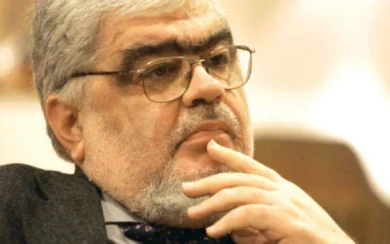
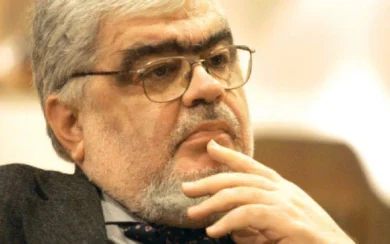
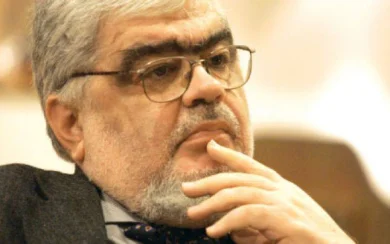
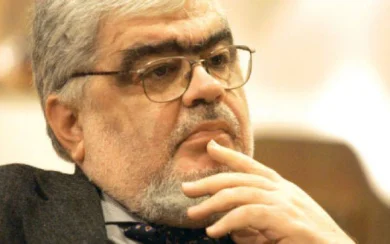
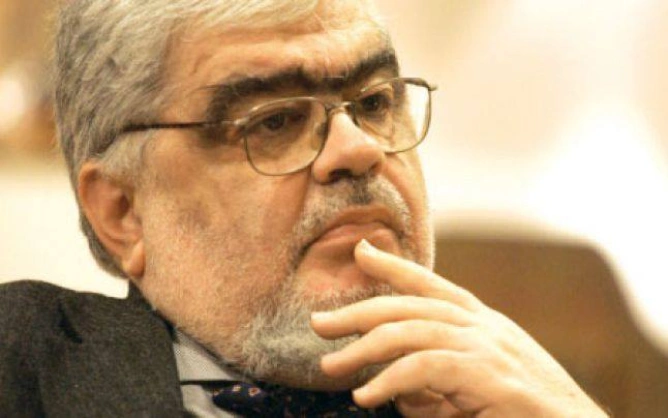
Andrei Pleșu: What Is Allowed and What Is Not



Always see our news on Google
Until not long ago, I too believed, like almost everyone else, that being “politically correct” was an ultimate version of tolerance, the pinnacle of gentleness, a supreme concern for one’s fellow human being. Before opening your mouth, you must think a thousand times about whether what you are about to say might cause emotional devastation, mental illness, or crises with no way out. You do not tell someone uncomfortable things to their face, you do not treat them with critical anger; you spare their sensitivity, complexes, and habits. You accept “difference” and respect it. Indeed, if possible, you make it clear that you feel somewhat guilty before it. The “difference” embodied by the other is, in principle, honorable. The difference that sets you apart from the other person’s difference is slightly embarrassing, if not directly suspect... The other is vulnerable simply because they are different, whereas your “difference” from them makes you arrogant and, as such, a potential pathogen of communal life. As I have said before, we are under the impact of such an emphatic “humanism” that we consider “being human” to actually mean being a “poor human being,” a frail creature whom you must treat with utmost care, hygienic precautions, and polite evasions, so that nothing you say or do might offend an infinite susceptibility.
In other words, we find ourselves in a situation that takes the Christian idea to the height of radicalism. In Scripture, we are asked to see the beam in our own eye before seeing the speck in the other person’s eye. Political correctness goes one step further. From its perspective, claiming that the other person has a speck in their eye is equivalent to having nothing but beams in one’s own eye! It is not enough simply to be polite and self-critical. You must instead be ingratiating, hypocritical, and ready to display a (justified!) contempt for yourself. Every opinion must be put through the saving fire of the conviction that you are about to be wrong, that you have just been wrong, that it is better to remain silent.
We already knew that one should not call someone who is missing an eye “one-eyed,” that it is unkind to laugh at a lame person, that physical defects cannot be objects of ridicule, that we are not all alike, but that accepting other people’s “way” is an essential condition of communal life. What I did not know, admittedly, was that contradicting an interlocutor who insists that two plus two equals five is a guilty way of inducing an inferiority complex in them, that suggesting to a stutterer that they are not suited to be a radio announcer is a cruel form of discrimination, or that considering Botox-enhanced lips a failure of true femininity is proof of crude misogyny. You are not even allowed to say that, to your taste, Botox is not attractive. No. You must like it, or at least refrain from expressing an opinion. Everyone does what they want with their own body. Have you ever thought about what a young woman who has enlarged her lips almost all the way to her ears and nose feels when you do not “endorse” her decision, especially when you say so publicly? Have you ever thought about what an omelet feels when you loudly declare that you like stew?! Do you really not realize how unfair you can be, how offensive your preference is?
I admit that it often happens to me, especially in our parts, to be so exasperated by rudeness, bad manners, boorish aggression, and blatant impoliteness that I tell myself: “For all its absurdities, perhaps a little political correctness would still be better!” (By the way, why is it called “political,” after all? Is it a matter of party, ideology, or enlistment? Is it not simply an intention—albeit an excessive one—to cleanse public morals? To sanitize the public sphere?) What seems serious to me, however, is something else. “Specialists” in “correctness” have appeared, a kind of secular “saints,” an irritating and quick-to-punish “commando,” a “caste” of custodians of optimal thinking, speech, and behavior. It is not a good idea to look among them for examples of the virtues they profess: tolerance, the right to one’s own opinion, freedom of expression, patience, forbearance, and nondiscrimination. If you do not respect the “code,” you are “damned.” “Fascist,” “reactionary,” “segregationist,” “crank,” fit to be stigmatized, if not “eliminated.” From a caring little aunt, from a tender champion of social “purification,” the soldier of political correctness becomes a dogcatcher, an inquisitorial office, an expert in “personnel selection.”
Finally, let us look on the bright side! Let us not lightly dismiss the recommendation that we should not let our mouths speak without us, that we should think ten times before uttering insults or labels that may hurt, that we should respect what is unlike us, and take heed of diversity and its legitimacy. But let us not become trapped in recipes and standardized “procedures.” Let us not imagine that we solve the problem of obesity and bring joy to fat people by calling them “horizontally challenged,” or that people of color suffer when they hear that the board used in middle-school classrooms is called, by the French, for example, a “blackboard” (and that it is therefore better to call it a “chalkboard”). Not everything that is allowed is useful, and not everything that is forbidden must function as castration!
Latest News
08:18
08:13
08:03
08:00
07:49
See more news
NEWS ON THE SAME TOPICS