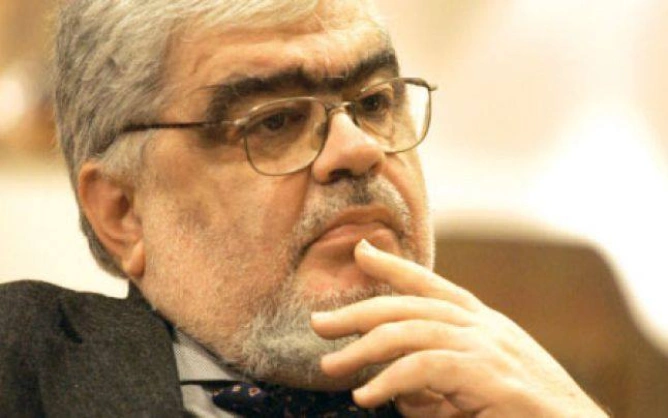
Andrei Pleșu: What do you know how to do?
Andrei Pleșu, Dilema.ro


Opinions
Foto Facebook

Always see our news on Google
"The ciocoi does not have a specific occupation reserved for himself," does not love and cannot practice any profession – says Constantin Rădulescu-Motru, in a text from 1908. "Incarnation of the desire for power," a lover of ranks, "a seeker of honors," unable to surpass the horizon of immediate satisfaction, the ciocoi does not question whether he deserves public trust, whether his social position corresponds to a certain merit, whether his need to be at the forefront has a corresponding need to be useful. He has no ideals, no convictions, only conjunctural goals and abilities.
Almost a hundred years later, Rădulescu-Motru's observation proves to still be functional. The spirit of ciocoism is reborn (survives) vigorously on our political stage and is based on the same congenital inability of the new ciocoi for any specific profession. The disease is not, however, strictly indigenous, although the local color remains unmistakable. Worldwide, the "professional" politician, the career politician, tends to sacrifice the profile of his first training, to dedicate himself to a type of activity with vague rules and arbitrary dexterities. Being a parliamentarian or minister, prefect or party leader is different from being a lawyer, economist, engineer, auto mechanic, or farmer. Gradually, the politician becomes someone who no longer knows how to do anything outside of politics. Taken briefly, few among our ruling elite would be able to respond promptly and honestly to the question: "What would you do if you left politics?" and, ultimately, "What do you know how to do?" outside the current electoral choreography. The politician is usually a teacher who has given up teaching, a doctor who has given up medicine, a shoemaker who has given up shoemaking. This is in the best case. Often, he is a poor shoemaker, a doctor more in love with the position than with the profession, a teacher without vocation. Not having (anymore) an occupation, a craft, a well-defined field of activity – this is the price that the politician must be willing to pay for access to power. The consequences are numerous and, from my point of view, serious. I will list a few of the most obvious.
Moreover, the one who has ceased to have an active competence in a given professional space comes to know less and less about the very notion of competence. Those who do not know how to do anything are increasingly less attentive to what others know how to do: in other words, they have no criteria to judge the professionalism of others and even less to respect it. In the mind of such an individual, success ceases to be coupled with the idea of endowment, applied effort, and technical skill. What matters is the "smart" management of relationships, the "superior" cunning, the combinatorial "flair." The rest are outdated naiveties, pretensions. A person without a profession will never be inclined to nurture the good evolution of professions, the cleansing of the social and legal environment in which they can prosper.
The individual who does not know how to do anything determined (even if he can mimic circumstantial or former merits) is inevitably eroded by an acute crisis of his own responsibility. The sense of responsibility cannot be formed in a vacuum. You are responsible for the work that has come "into your hands," for an achievement or a product, in which you have engaged your skills, experience, and honor. Only a good craftsman can assume responsibility for the goods he delivers, and only he can hold a poor craftsman accountable. The diminishing of responsibility leads, fatally, to a collapse of authority. The incompetent cannot impose himself on anyone, except through fraud and for short durations.
Whoever reaches high positions through criteria other than those of a well-mastered profession faces all the disadvantages of imposture. Instead of power legitimizing itself through competence, it legitimizes itself only through its own arrogant and sufficient exercise. Moreover: power ends up legitimizing incompetence. Since one does not need to know anything specific to rise to the top, it means that knowing something specific is rather an obstacle, a social handicap. Pedagogically speaking, the formal prestige of people without any profession creates ethical confusion and civil disintegration. ("The ciocoi – says Rădulescu-Motru – are the parasites of our political decrepitude" and they perniciously increase the "arbitrariness of power.")
Ultimately, the person without a profession is condemned to a very impure motivation for political action. He clings to chairs and dignities because he has nothing to return to. Since he does not (anymore) know anything else, he must remain in front until death. Loved or not, effective or not, useful or harmful, he will strive with all his might to cling to the public stage against all evidence. What else can he do? It is useless to obtain embarrassing percentages in elections, useless not to find his place in any group, useless for former allies and former adversaries to turn their backs on him. The man will stubbornly gravitate around power, with the only energy and justification that inertia can still provide, maintaining a false image of himself. When you do not know how to do anything, you are left with no choice but to fabricate a political destiny. All the worse for the voters.
https://www.dilema.ro/situatiunea/ce-stii-sa-faci
Latest News
23:13
Montenegrin authorities expelled the founder of the Russian military blog Rybar
23:02
Donald Trump announced that Russia will begin massive diesel deliveries to the US and the global market, following a discussion with Vladimir Putin
22:58
A Romanian woman was killed in Spain, and her husband, suspected of the murder, allegedly later committed suicide
22:25
A Romanian man who went missing in Italy was found dead in a river
22:21
A magnitude 7.6 earthquake occurred off the coast of Panama / Tsunami warnings were issued
See more news
NEWS ON THE SAME TOPICS

Opinions
Andrei Pleșu: About public speaking

Personalized news feed, AI-powered search, and notifications in a more interactive experience.






.webp)