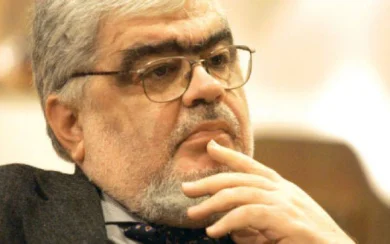
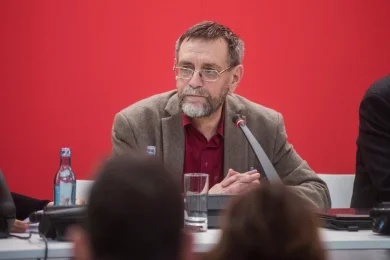
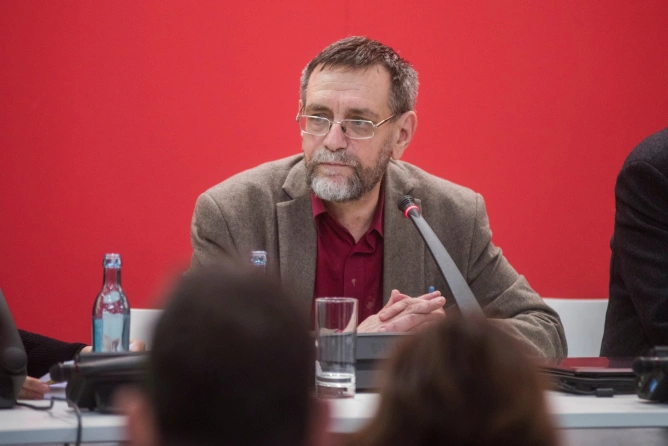
Andrei Cornea: Who Wants to Become a Politician?


Always see our news on Google
Looking at the national and international political “landscape,” I believe that anyone endowed with even a modicum of common sense and a little powers of observation cannot help but wonder at the fact that there are still candidates for the “profession” of politician. What can be going through the mind of the man or woman who ardently wishes to climb the rungs of political prominence, perhaps eventually becoming president, prime minister, minister, leader of an important party, and so on? Not to mention the numerous other, somewhat lesser but by no means negligible, posts as heads of departments and agencies of every kind. In short, why would anyone who is of sound mind, of average intelligence, not lacking in qualities and even possessing some ambitions, want to become a politician today?
To lead other people? But it is a chore merely to manage to govern yourself well, or to take care of your own. Or does he want to feel powerful, master over the lives of others? Foolish idea: the higher a politician rises, the more dependent he becomes: on his advisers, on the allies with whom he must negotiate, on public opinion, which he must court, on “vassals” whom he must “feed” well so that they do not betray him, on the intelligence services, which tell him whatever they please. His bodyguards know all his secrets, while the privacy of his family is almost contractually violated by journalists and paparazzi. His sleep may be interrupted at any moment by information that cannot wait. Food, eaten at random, does not agree with him. He gains weight, suffers palpitations and high blood pressure. He has no time for old friends; moreover, public opinion not infrequently demands that he disavow some of his old friends. The family suffers more than once. His wife (or husband) becomes a public figure, even if they do not want to. His children are cursed at school or, on the contrary, flattered merely because they are the children of “someone.” When someone praises him, he no longer knows whether that person is doing so out of conviction or wants a favor. When someone criticizes him, the politician tends to believe—and there are plenty of people ready to tell him so—that they are doing it solely out of petty self-interest, that they are paid by his enemies, or that they are simply idiots. Believing in another person’s sincerity and good faith is an exercise the politician tends to unlearn as quickly and completely as possible. But what kind of life is it when you live in eternal suspicion, seeing nothing around you but betrayal, hypocrisy and deceit?
Some will say that, in return, the politician has certain satisfactions: fulfilling a program, durably influencing the life of a country, even leaving a somewhat broader mark on history. That is the theory. But reality is different: usually, if he accomplishes something genuine, it will be contested. Others will strut about with his achievements. His merits will be diminished and attributed to others. In return, he will be berated disproportionately for a few mistakes. The envy, hatred and betrayals of rivals and even of “friends” will cast a shadow over his career. As for the broad and lasting “marks” in history, he is not the one who takes care of them, but a handful of intellectuals who despise him. The times when poets sang of the great deeds of rulers have long since passed; today their caste knows only how to disparage and defy them. The politician is left with the paltry satisfaction of writing his memoirs when there is nothing left, pouring out there the venom accumulated from the past, and then departing this world more full of resentment than almost any private citizen who has lived his life decently.
And then there is the fact that the politician feels threatened, with his life in danger, all the more so the more important he is. And if he is not actually threatened, those around him will make sure to explain that his life, so precious to the nation and humanity, is being hunted by enemies. They will surround him with thousands of precautions, protective walls, hidden cameras, doubled and tripled guards; he will no longer be able to travel through the city except under the protection of an army, nor live anywhere but in a kind of bunker. To take a quiet morning walk alone in the park—what could be more impossible for him? Would he not then be less free than the person at the very bottom of the state payroll—the cleaning woman who sweeps his office floor? And so why does he not trade places with her? Or will she, being wise, steer clear of such stupidity?
In the old days, rulers were at least recruited, more or less compulsorily, mainly from certain classes—aristocrats, princely families, hereditary social positions, families that had served the state for generations, and so on. Good or bad, those who were to rule had no choice: tradition, family, social status, personal duty and honor pushed them to assume more or less important positions in the state. But today what could induce a young man to freely choose the vocation of politician, when he has so many other careers available? And what traits must he possess?
Leaving aside a few rare exceptions, I can give only this answer: he is a failure, or on the way to failing in his profession, or frustrated in life, work, love or family; he is a resentful person angered at the world. But above all, he is someone convinced that Divine Providence chose him personally from among the several billion human beings, since otherwise His plans would have failed miserably and the world would have descended headlong into chaos. And being convinced of this desperate madness—for which he ought rather to be kept under observation in a specialized institution—the man who chooses politics is willing to endure all the torments I have mentioned, but also to torment his poor fellow human beings in every imaginable way, and even—as history shows—in some ways that put every imagination to shame.
https://www.dilema.ro/situatiunea/cine-vrea-sa-fie-om-politic
Latest News
11:30
11:15
11:04
10:57
10:46
See more news
NEWS ON THE SAME TOPICS