ANALYSIS Nvidia licenses for China: from a donation for the White House ballroom to allegations of political influence



Always see our news on Google
The scandal regarding Nvidia’s export licenses to China combines three sensitive themes: national security, the competition for artificial intelligence, and the possible influence of private money on government decisions. So far, public sources document suspicions, investigations, and alleged conflicts of interest, but not a criminal conviction of Nvidia or its director, Jensen Huang.
What happened
In 2025, the Trump administration initially blocked sales of Nvidia’s H20 chips to China, a measure then estimated to represent approximately $5.5 billion in losses for the company. Subsequently, the policy changed: the restrictions were lifted, and in December 2025 President Donald Trump approved the sale of H200 chips to China, under controlled conditions and with a 25% tax applied to the transactions.
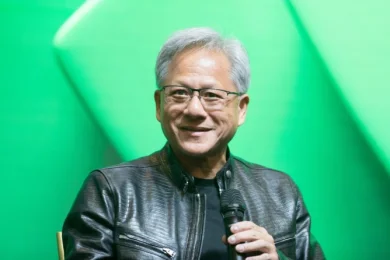
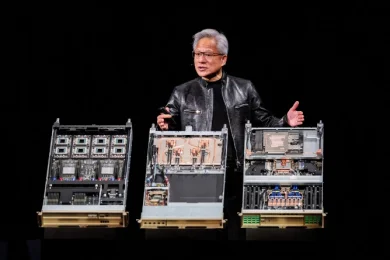
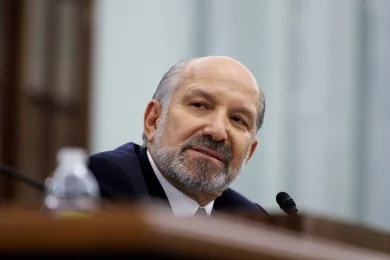
The central issue is not only whether these advanced chips should be sold to China, but also who received licenses, how buyers were vetted, and whether the political decision was influenced by the close relationship between Jensen Huang, Nvidia, and the White House. The Commerce Department, led by Howard Lutnick, is the institution that decides on and oversees export licenses for technologies relevant to national security.
The ballroom donation
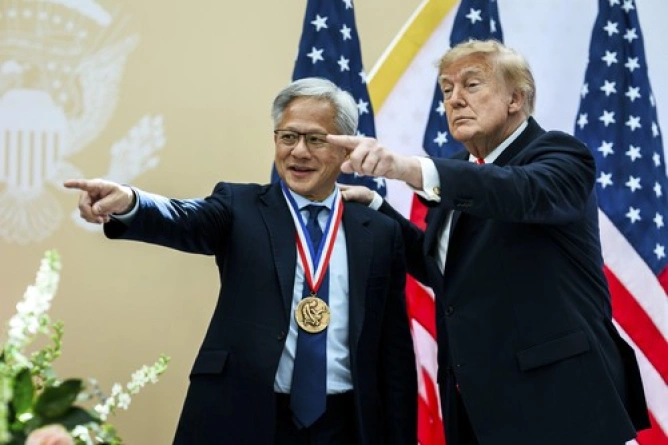
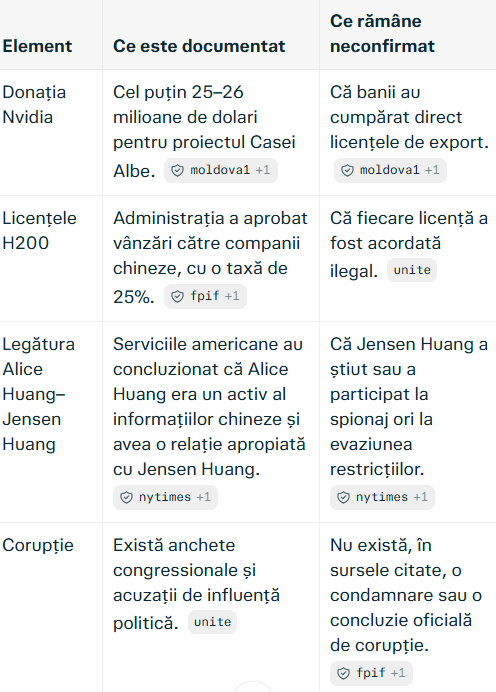
Nvidia donated at least $25 million to the White House ballroom project, according to documents cited by the press; some reports indicate a total contribution of at least $26 million from the company and Jensen Huang toward President Trump’s personal priorities. The project raised, according to documents cited by The Washington Post, approximately $333 million in private donations, with Nvidia and Apple among the largest sponsors, contributing $25 million each.
The donation is not illegal in itself, and journalists have not identified a direct, demonstrated link between the ballroom money and a favorable administration decision. However, the timing and size of the sum have fueled the legitimate question of whether a company dependent on government export decisions gained unusual political access.
Corruption allegations
Senator Ron Wyden and Representative Richard Neal opened, on November 12, 2026, an investigation into the approval of H200 sales and the mechanism by which the chips are imported into the U.S., taxed at 25%, licensed by the Commerce Department, and then exported to China. They argue that this arrangement could, in effect, function as an export tax and are calling for the preservation of documents concerning the evaluation of licenses, communications with Nvidia, and internal deliberations.
The lawmakers do not claim that there is already legal proof of corruption. However, they question whether political considerations replaced or diminished national security assessments, especially because approval of the licenses allegedly came after Nvidia’s contributions to the White House project.
Why the licenses matter
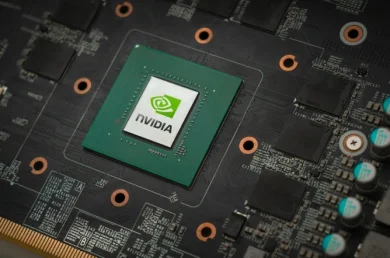
Nvidia’s H200 chips are essential for training and running large-scale artificial intelligence systems. Critics of liberalization measures say they could accelerate China’s AI capabilities, with economic and military implications; supporters of the sales argue, by contrast, that maintaining China’s access to American technology could deter Beijing from developing its own alternatives and preserve U.S. influence over the market.
A November 7 investigation by The New York Times raised a compliance issue: the Commerce Department allegedly approved dozens of Chinese firms to handle H200 chips, although some had ties to sanctioned companies or posed national security risks. One example is New Matrix, a company registered 17 months earlier, whose declared address in Beijing appeared empty and without clear records of activity, while its owners had ties to an investment fund placed on the U.S. trade blacklist in 2024.
Howard Lutnick’s role
Howard Lutnick, the Commerce Secretary, has become central to the scandal because his department decides on licenses and, according to the cited reports, treats Nvidia through a privileged channel. Colleagues in the administration and lawmakers have argued that Lutnick took a softer position toward Nvidia than other officials who wanted stricter controls on sales to Asia and China.
It has not been publicly proven that Lutnick’s decisions constitute corruption. However, the congressional investigation targets precisely this point: whether vetting buyers, approving licenses, and setting the 25% tax were carried out on national security grounds or, instead, under pressure from political and commercial relationships.
The “spy” scandal
A separate part of the case concerns Jensen Huang and Alice Huang, an executive at Megaspeed, a Singapore-based company suspected of facilitating the unauthorized transfer of Nvidia chips to China. According to The New York Times, U.S. intelligence services considered Alice Huang an asset of Chinese intelligence and believed she had direct access to Jensen Huang; Beijing rejected the report, and no one was criminally charged in the cited sources.
Important: the fact that someone close to the CEO may be considered a counterintelligence risk does not prove that Nvidia sold chips illegally or that Jensen Huang was complicit. But for a government deciding China’s access to strategic technology, such a connection turns any license into a decision with high political stakes.
Why this is an influence scandal, not merely a technical one
The scandal shows how, in a single decision, enormous commercial interests, national security, and the personal financing of the executive leader can overlap. Nvidia has a clear interest in access to the Chinese market; the Trump administration had an economic and diplomatic interest in maintaining the flow of trade; and the ballroom donation created suspicion of proximity between Nvidia and President Trump.
The essential difference is between proven corruption and an apparent conflict of interest. The former requires evidence of an illegal exchange of favors; the latter involves a situation in which public decision-makers or the company have reasonable grounds to be suspected of allowing private interests to influence a public decision. In this case, the investigations and public documents support the second scenario, while the first remains, so far, unconfirmed.
What comes next
The Neal–Wyden investigation will examine Commerce Department documents concerning H200 licenses, the taxes applied, verification of ultimate beneficiaries, and communications with Nvidia or Jensen Huang’s representatives. Separately, Democratic lawmakers have called for an immediate halt to additional exports of advanced AI chips to China, arguing that once they reach the hands of the Chinese state or affiliated entities, the capabilities acquired would be difficult to reverse.
For the public, the lesson is simple: a corporate donation to a White House project does not automatically become evidence of a bribe. But when the same company soon receives strategic export licenses and authorities appear to have ignored security warnings, the question is no longer merely “is it legal?” but also “who had access to the decision and why?”.
Analysis prepared with the support of Perplexity
Latest News
23:50
23:45
23:32
23:25
23:05
See more news
NEWS ON THE SAME TOPICS