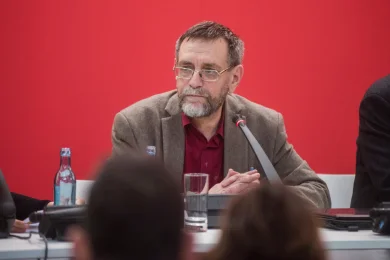
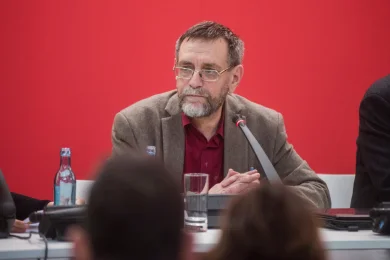
Andrei Cornea: “The good society”



Always see our news on Google
I admit that, with age, I have become increasingly interested in how I see myself in the mirror held up to me not so much (or not only) by friends and those who appreciate me, but also by my ideological opponents. In this way, I learn many instructive things about myself, but also about those who criticize me. Are they correct or not? – others will probably decide. But here is what happened to me a few days ago, from this point of view: I read a long and rather prolix text by Mr. Paul Dragoș Aligică that leaves me perplexed: at first, as I read it, I almost did not know whether Mr. Aligică was a great fan of mine – admittedly, a delirious one – or an equally delirious opponent. (It is presumably a matter of an opponent after all.) Either way, to use Socrates’ words at his trial, I cannot recognize myself in the “picture” he has made of me, in his text posted on FB on September 25 of this year. (There, Mr. Aligică came out in support of some of the criticisms Mr. Daniel Funeriu had leveled at me, to whom I replied, as best I could, in the article in the previous issue.)
Who am I, then, in Aligică’s view? “For many years, Mr. Andrei Cornea has been one of the more than important voices of the intellectual, ideological, and journalistic current associated with what is commonly called ‘the good society’. This is a network of institutions, relationships, and platforms of influence expressed through entities and groups such as the 22 magazine, the Group for Social Dialogue, and Dilema magazine, as well as through an entire structure of informal relationships and activities... From these positions, Mr. Cornea has constantly contributed, as an ideologue and journalist, to articulating developments that have shaped the climate of opinion and public life in Romania.” Doesn’t that sound like praise?
What, however, would the alleged “good society,” of which I apparently would be a “more than important” voice, have achieved? Unfortunately, nothing good: the respective networks and groups, to which I would have contributed as a kind of capo di tutti capi through “ideological and journalistic activity,” would have led to “the formation and fueling of the current climate of polarization, confusion, and hatred in Romania.” Well, now we are beginning to understand: thus, the polarization, confusion, hatred, and profound real social, cultural, and political divisions that we know of are explained, Mr. Aligică seems to suggest, not – as many of us believed – by the verbal violence of extremism, neo-Fascists, and neo-Legionaries, sometimes rebranded as “sovereigntists,” nor by the propaganda of visible or covert centers of power against the so-called “progressives,” nor by the dissemination on social networks of anti-system and anti-European narratives, where Russian influence is easy to decipher; nor are at least the bad governments of recent years, which have deepened economic and social discontent and inequalities, even named as co-authors; nor is there any mention of the combined influence of MAGA ideology and “Russian wisdom” (which was not promoted by the “good society”), nor of the war in Ukraine (on which Mr. Aligică apparently has not yet taken a firm position), nor of the seizure of the state, along with its main institutions, by circles within the intelligence services, nor of the blocking of reforms, nor of pressure on independent journalists, nor even of the contempt shown by some authorities toward education and knowledge, to say nothing of the corruption and incompetence of a large number of politicians; no, the sole responsible parties, since no one else is even mentioned in the article, are, according to Mr. Aligică, the “public intellectuals,” united in the so-called “good society,” where Andrei Cornea is “one of the more than important voices”! Yes, supposedly the “good society” has degraded Romania’s public life – although, objectively speaking, we have zero political power, little funding, tiny print runs, and an insignificant number of likes compared with the very numerous influencers outside the “good society”! And I personally, who have not been invited to television for years, who rarely give an interview anymore to Radio Romania or some cultural magazine, and even then about Plato, and who have not been contacted by foreign journalists for a very long time, would somehow be at the center of this veritable occult network! However flattered I may be by Mr. Aligică’s characterizations, I must declare that I am not the person he is talking about. Certainly, perhaps some of the groups and publications mentioned by Mr. Aligică (Dilema, 22), with which I have collaborated for many years, once played a more significant public role in the struggle for democracy, a very long time ago, in the 1990s of the last century, but more than two decades have passed since then; could it be that the very same publications, the very same groups, and the very same personalities have the exclusive responsibility for the misfortunes befalling Romania, just as they were the public enemies during the time of Iliescu, Vadim Tudor, and their comrades? For they too spoke about certain public intellectuals in roughly the same terms, except in the stylistic register of invective, not that of a pseudo-academic sobriety!
And if anyone should still have any doubt about the identity of “public enemy no. 1,” here is Mr. Aligică’s supposedly prudent, “scientific” conclusion: “It is possible that the existence of this collective phenomenon (‘the good society,’ A.C.’s note) and its wake of public influence may have contributed to the degradation and distortion of public opinion and the climate of ideas in Romania, to the excessive politicization of intellectual life, as well as to some of the political tendencies that have fueled the current political, social, and identity crisis.” Anything is possible. But is it also plausible that precisely these “public intellectuals,” and not just any of them, but specifically the democratic ones, with liberal, anti-totalitarian views and decades-long promoters of the “open society” and reforms in the European spirit, should be the nation’s foremost enemies, ahead of so many other causes and circumstances, about which Mr. Aligică does not say a word, and even ahead of other much better-known public figures? Then comes the finale – truly delirious in its not even concealed conspiratorial thinking: the phenomenon of the “good society,” where Andrei Cornea is supposedly “one of the more than important voices,” would be a “social-political phenomenon in which influence, power, and authority are exercised under the cover or veil of a presumed intellectual innocence and virtue...”. How fortunate that the Romanian world (and the Romanian Academy for some time now) has this keen observer, whom I see as politically aligned with “healthy nationalism”! He pulls down the “cover,” tears away the “veil,” and clearly shows every naïf where the devil was hiding: not in Hell, nor in the political world, nor with Putin, nor with Trump, not even “in the details,” as some say, but precisely on the pages of a few magazines with modest print runs. I am flattered, Mr. Aligică!
Latest News
21:24
21:07
20:33
20:20
20:15
See more news
NEWS ON THE SAME TOPICS