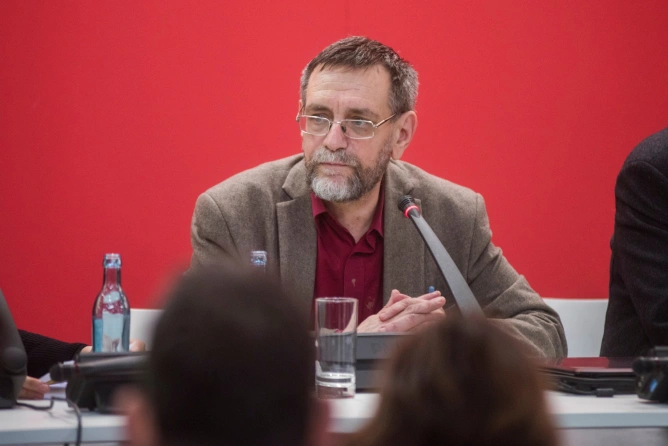
Andrei Cornea: Democracy versus networks



Always see our news on Google
At the foundation of representative parliamentary democracy lies, it seems to me, a moderately skeptical view of human nature. The “Founding Fathers” of the U.S. Constitution, the European liberals of the nineteenth century, and the social democrats and conservatives who, in the middle of the twentieth century, shaped the institutional architecture of the European Union knew that most people are usually impulsive, driven by vain passions, eager for possessions and status, and easily corruptible. They also knew that, once they become powerful, many people lose their heads and become reckless and tyrannical. Yet they believed that people, in general, can recognize their fundamental interests if properly informed, and that they will rationally choose moderate individuals as their representatives. That is why they believed that, through voting systems and the checks and balances among the powers of the state, together with the support of a free and critical press, even the most detestable aspirants to leadership would either be excluded from power or, if they nevertheless reached positions of strength, the institutional system would essentially dilute their harmfulness. A Nero or a Caligula would never be elected president or prime minister, having been discredited in advance by the press; or, if they somehow managed to get past the popular vote through duplicity or cunning, they would very quickly see their powers limited by the institutional system as well as by the press’s sound criticism. And probably no Donald Trump could have been elected president of the USA back then either!
We can put things differently as well: liberals are skeptical, even pessimistic, about human beings as such, but they are relatively optimistic regarding one of their principal creations—the institution, well-established and honed over time. Human beings are weak and often corruptible, but the traditional institution—(the judiciary, elections, the press, federalism, etc.)—can keep them under control and even partially improve them. Here, evidently, there is a contradiction between creator and creation. Can it somehow become fatal, under certain conditions? Perhaps.
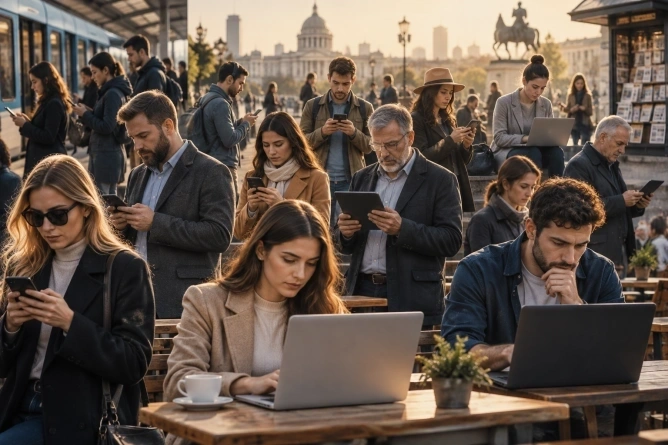
Indeed, this way of seeing things seemed reasonable and realistic for many decades; it arose during the period when the institution of the written press was unrivaled in its dominance and survived—although with some difficulty—the rise of radio and television. Nowadays, however, when we live in the age of computers, mobile phones, and especially the Internet and its direct consequences—social networks and AI—we have increasingly more doubts that it can survive. Not because people have become worse or more irrational than they have always been, nor because institutions have become so altered in their principles. The problem is that the modification of human attitudes with the help of networks and AI already significantly exceeds the traditional institutions of democracy’s own capacity for self-defense—whether they belong to the state, the quality press, or civil society. And, as has been shown many times, what almost always prevails through the use of Internet search engines in every possible way is not a moderate political attitude, but, on the contrary, extreme attitudes, maximum frustrations, and bodiless illusions. Can the liberal-democratic institution therefore still triumph in the struggle for the human mind, when it is attacked, indeed intoxicated, from all sides by the “new” information technologies, so penetrating and persuasive, and bringing such enormous profits to those who use them skillfully?
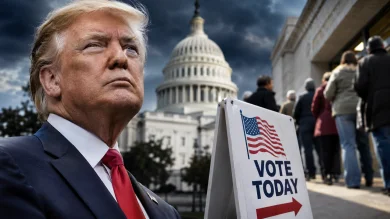
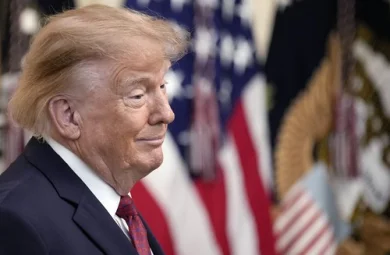
This week we will witness an important episode in this epic confrontation—the American “midterm” elections. In short, there are two fundamental questions: first, will some Americans “wake up” from the “bad dream” called Donald Trump, created largely with the help of the “new technologies” (see the endless posts on the X network, formerly Twitter), giving victory to his opponents, so that, by the end of this year, the American president will find himself without a majority in Congress and greatly weakened in terms of power, indeed even in danger of being removed from office? And the second question: in the event of a Democratic victory in these elections, will democratic institutions withstand a possible assault by President Trump’s supporters aimed at modifying the results or even annulling them? (We all know what happened in January 2021.)
The essential struggle behind the political scene, therefore, is not between Democrats and Republicans, nor even between supporters and opponents of President Trump, but between the traditional liberal-democratic institutions’ capacity for resistance and the “new technologies” based on the Internet, networks, and algorithms. We can put it another way: can the moderate skepticism toward human beings of liberal-democratic philosophy still be upheld in the present and foreseeable future, or must it be replaced by an attitude more in tune with the times we live in—a profound skepticism?
Latest News
17:35
17:35
17:34
17:32
17:18
See more news
NEWS ON THE SAME TOPICS