



EXCLUSIVE Ranking of companies in relevant online sources in Romania. Nvidia leads the visibility rankings. Dacia brings the automotive industry to the forefront of domestic debate



Always see our news on Google
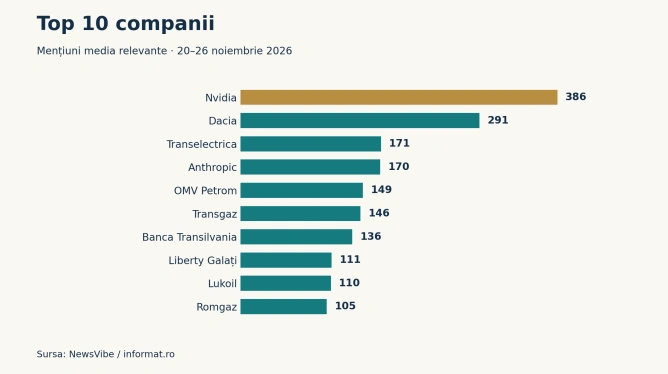
During the period November 20–26, 2026, Nvidia leads the ranking of companies, followed by Dacia. While the American giant is attracting attention through leadership changes and stock-market volatility, the Mioveni-based manufacturer is concentrating the discussion on Romania’s industrial competitiveness. Taxation and the budget occupy first place on the general economic agenda.
Two centers of interest, two types of exposure
Reports about Jensen Huang’s return to the leadership of Nvidia, the investors’ reaction, and the prospect of a possible downgrade of the company’s rating have fueled a succession of news stories. The exposure is not limited to technology: share-price developments and concerns regarding valuations in the artificial intelligence sector are turning the company into a benchmark of international financial conversation.
Dacia has a different profile. Prime Minister Luca Niculescu’s visit to Mioveni, discussions regarding energy costs, and preparations for the Rabla program for 2027 bring to the forefront the relationship between local production and economic policy.
The difference between the two leaders is therefore one of context: Nvidia appears in reports about investors’ confidence in the AI sector, while Dacia becomes a reference point for the state’s ability to respond to pressures on local industry.
Energy and finance complete the podium
Transelectrica and Transgaz benefit from a shared episode of visibility: a 6.5% wage indexation approved through government memorandums. The discussion about decision-making transparency and retaining specialists overlaps with reports on network investments and financial results. Between them, Anthropic is present mainly through its stock-market debut and the subsequent decline of its shares below the initial public offering price.
OMV Petrom has more diversified exposure, ranging from fuel prices to Neptun Deep and stock-market transactions. Banca Transilvania brings together news about its rating, expansion strategy, financing for companies, and litigation related to sanctions in the ROBOR case. Liberty Galați is attracting attention through the sale process for the steelworks and the interest of Chinese investors. Lukoil is associated with prospects for the transfer of international assets, while Romgaz is linked to the gas market, trade negotiations, and stock-market developments.
The budget and investments set the direction of the conversation
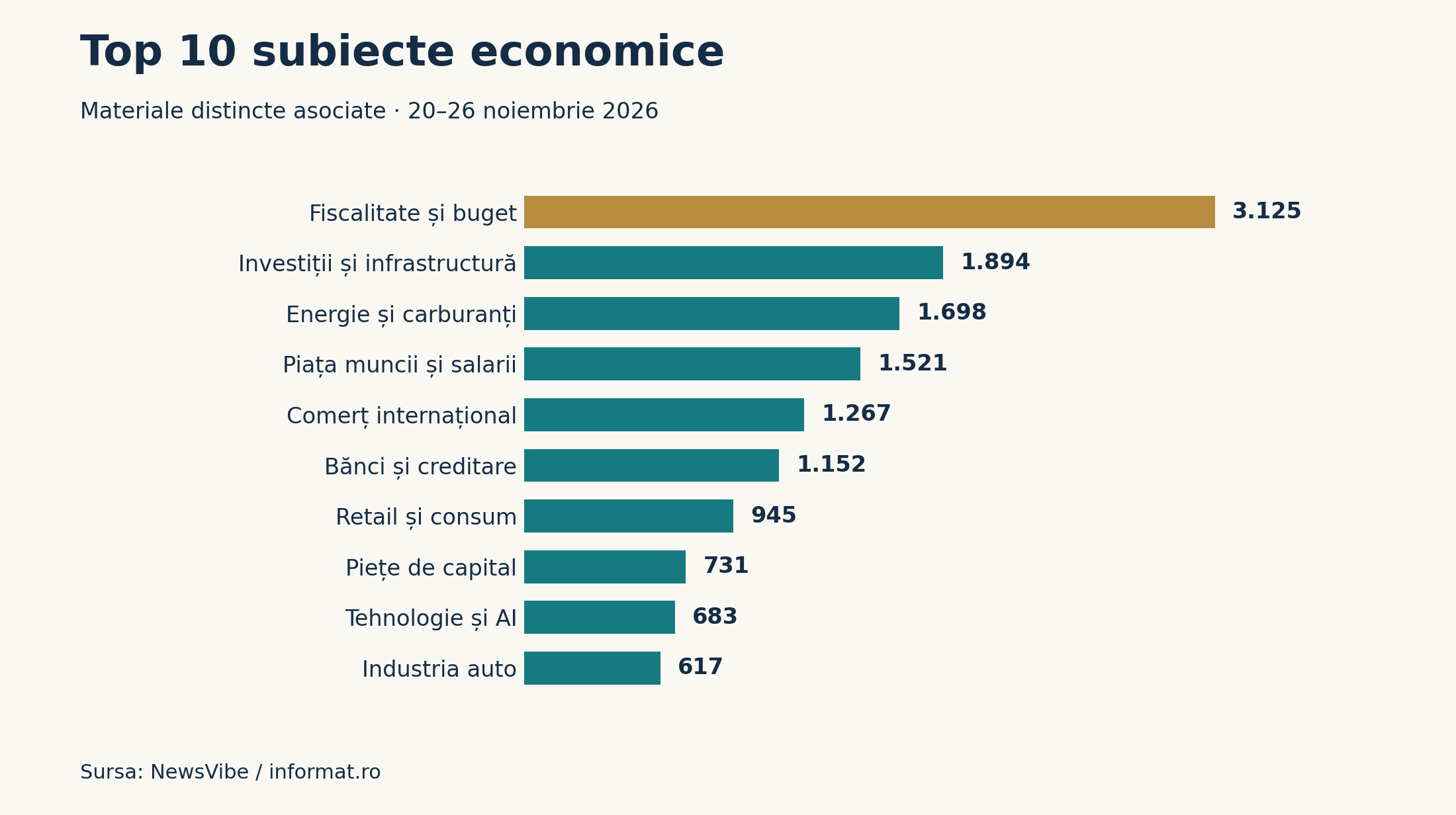
Fig. 1 — A piece of content may be associated with multiple economic topics.
Taxation and the budget lead the agenda, amid debates about the deficit, fiscal discipline, and the future of the European budget. Investments and infrastructure occupy second place, followed by energy and fuels, and the labor market and wages. These topics connect public decisions with project financing and the costs borne by companies and the population.
International trade, banks and lending add the external and financial dimensions. Retail and consumption, capital markets, technology and AI, and the automotive industry complete the ranking. The fact that Nvidia leads among companies, although technology does not dominate the general agenda, shows how strongly an internationally visible corporate event can concentrate attention.
Episodic visibility and cross-cutting presence
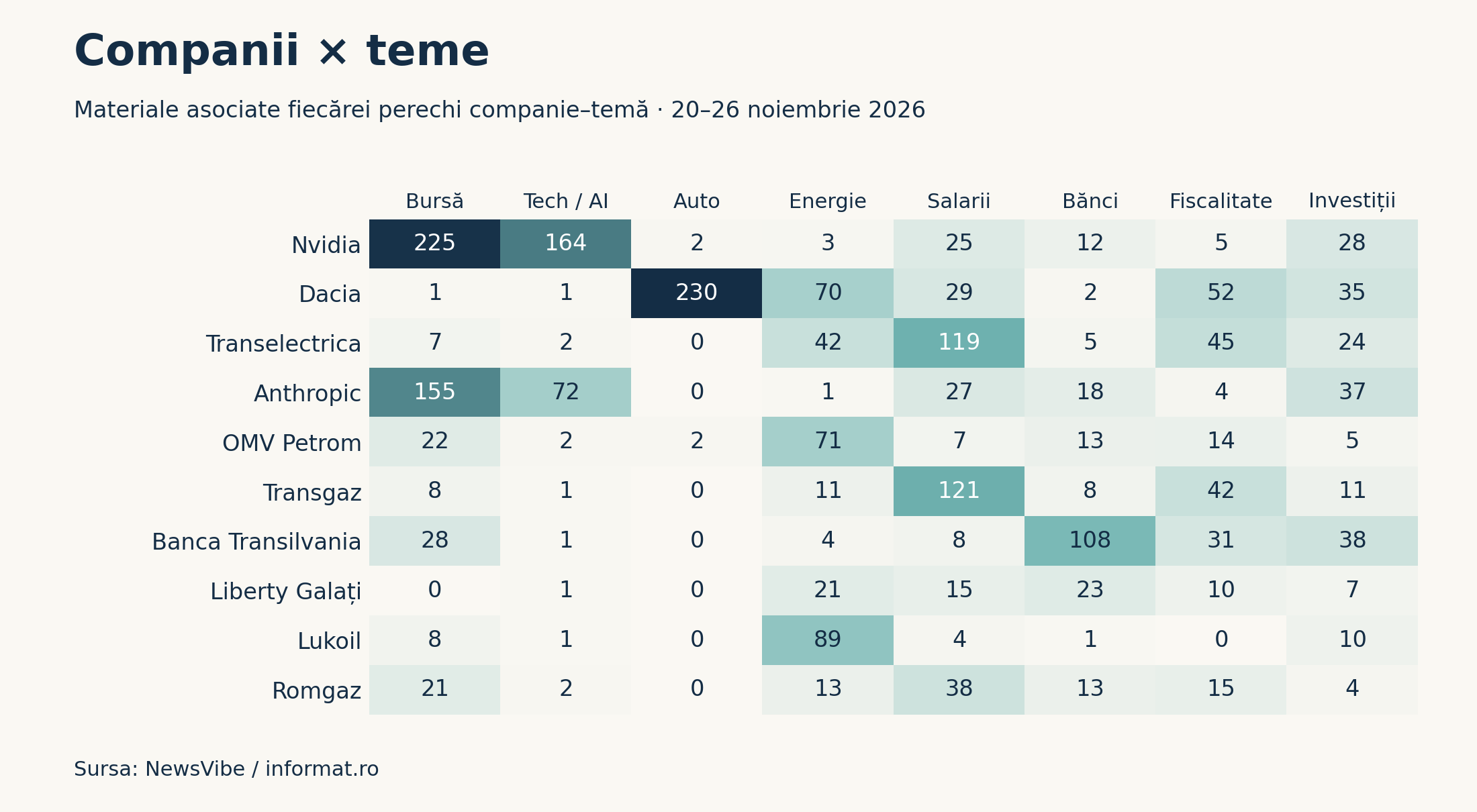
Fig. 2 — Frequency of thematic associations in the materials about each company.
The matrix highlights the proximity between Nvidia and Anthropic through capital markets and technology, as well as between Transelectrica and Transgaz through the wage-related theme. In the case of Dacia, the automotive industry remains the core of its exposure, with extensions into energy and taxation. OMV Petrom and Lukoil are linked to the energy conversation, although the former appears in more varied operational and financial contexts, while the latter depends on news about assets and supply.
Banca Transilvania stands out through lending and investments, while Liberty Galați brings industrial restructuring, financing, and jobs into the discussion. For Romgaz, reports about wages also include comparisons with other state-owned companies, which does not amount to a wage-related episode of its own. Overall, the ranking reflects the intersection of international financial volatility and domestic concerns about competitiveness, costs, and capital. Visibility is not a measure of reputation or economic performance.
*****Summary prepared with the help of a data feed provided by the media monitoring platform NewsVibe Romania. The analysis, data, and images presented were enhanced with the help of Machine Learning and Artificial Intelligence tools.
Latest News
17:00
16:59
16:54
16:47
16:36
See more news
NEWS ON THE SAME TOPICS
.webp)

















.webp)


