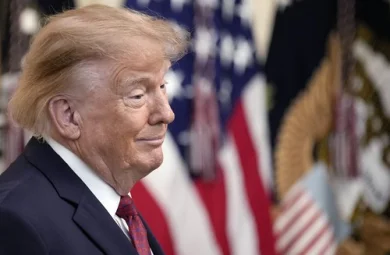
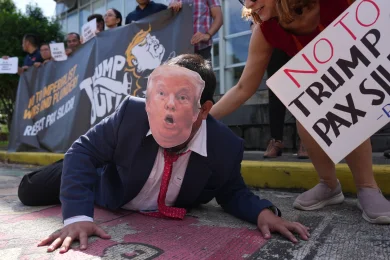
SUMMARY / America votes, Trump plays out the final 2 years of his term. The midterm elections and the discontent threatening the Republican majority in Congress



Always see our news on Google
Americans are going to the polls on Tuesday, November 3, for elections that could change the balance of power in Washington and limit Donald Trump’s ability to impose his agenda in the second half of his term. Although midterm elections do not directly target the American president, the election has turned into a referendum on his administration. Polls indicate an advantage for Democrats, while analysis by media monitoring platform NewsVibe shows a media atmosphere dominated by dissatisfaction, uncertainty, and a strongly Trump-associated negative sentiment.
To understand how the U.S. midterm elections and Donald Trump’s declining popularity were portrayed in the press, we analyzed, with the help of the NewsVibe platform, 848 articles and posts from online media and social networks, published between October 28 and November 3, 2026. The monitoring included sources from the United States, Romania, the United Kingdom, and the European Union, tracking the tone of coverage, positive, negative, or neutral sentiment, and the main themes that influenced the public debate ahead of the vote. The analysis shows how critical media coverage of Trump was, what fueled dissatisfaction, and how the discourse changed in the final days of the campaign.
A vote for Congress, a verdict on Trump
Presidential midterm elections, known as midterms, represent the first major national electoral test for Donald Trump since his return to the White House in January 2025. The stakes go beyond a president’s popularity, however: Americans are deciding who will control Congress for the next two years.
According to Reuters, all 435 seats in the House of Representatives and 35 Senate seats are being contested in the November 3 election. Democrats need a net gain of three seats in the House and four in the Senate to take over the Republican majorities. Polls and electoral assessments favor them in the House race, but the battle for the Senate remains more difficult and less predictable.
The historical context is unfavorable to Republicans. Since World War II, the incumbent president’s party has lost ground in Congress in nearly every midterm election. In 2026, this traditional disadvantage is amplified by Trump’s deteriorating image, amid economic frustrations and the conflict with Iran.
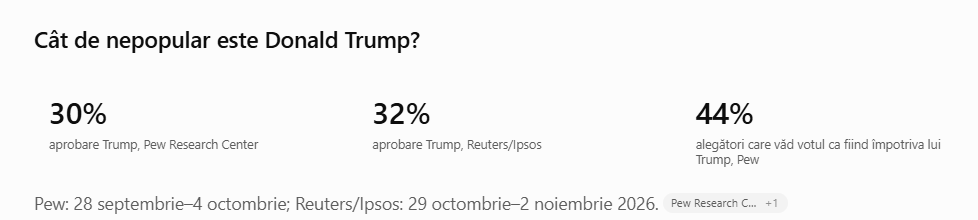
The data show the extent of the president’s difficulties. In a Pew Research Center survey published on October 8, only 30% of Americans approve of his performance, the lowest level of his second term. Moreover, 63% of registered voters say Trump influences their choice for Congress: 44% consider their vote to be against him, and only 19% in his favor.
The latest Reuters/Ipsos poll, completed on November 2, indicates an approval rating of 32%, close to his lowest level. Among registered voters, Democrats lead Republicans 46% to 38% in generic congressional vote intention, although their advantage has narrowed compared with the previous week.
The polls therefore describe a vulnerable president, but they do not guarantee a Democratic victory.
What NewsVibe shows: editorial neutrality, but a predominantly negative climate
The NewsVibe report analysis, which monitors the period from October 28 to November 3 in online media and on Facebook, YouTube, and TikTok, identifies 848 materials and posts relevant to the topic “midterms 2026 Donald Trump,” from the United States, Romania, the United Kingdom, and the European Union.
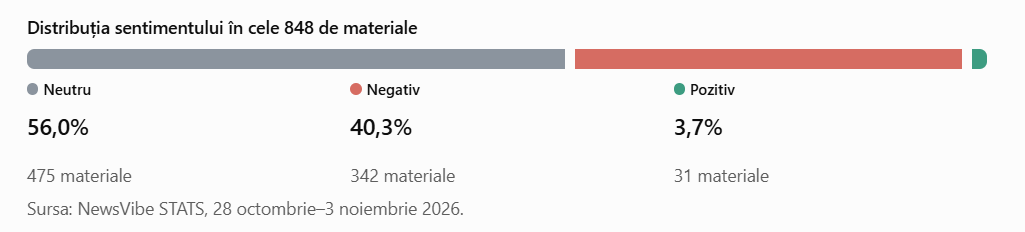
Overall, NewsVibe monitoring shows a rather negative tone in articles about Trump and the midterm elections. Put simply, the press spoke mostly about his political problems, not his strengths. This score does not directly describe voters’ opinions, but rather how the topic was reflected in the media.
Most materials are classified as neutral, even when reporting on the president’s political problems. An informative, analytical, and cautious tone coexists with strong negative sentiment in the topics covered. By contrast, some publications resort to alarmist headlines, confrontational wording, and more emotionally charged language.
The most critical materials appeared in the left-wing press, which is close to the Democrats. However, right-wing publications, generally favorable to Republicans, also presented the elections in a rather unfavorable light for the president. A similar trend can be observed in the centrist press, where coverage of Trump’s declining popularity and the risk of Republicans losing control of Congress prevailed. The difference is therefore one of intensity: the left-wing press was considerably more negative, but the president’s political difficulties dominated coverage in all three categories.
What fuels the negative sentiment: the economy, war, and fear of losing power
Three major themes stand out in the analysis of the factors driving sentiment—sentiment drivers.
The first is the economy. Perceived inflation, the cost of living, energy prices, and the effects of tariff policies have become central arguments against the administration. According to the Pew Research Center, 84% of registered voters consider the economy very important to their vote.
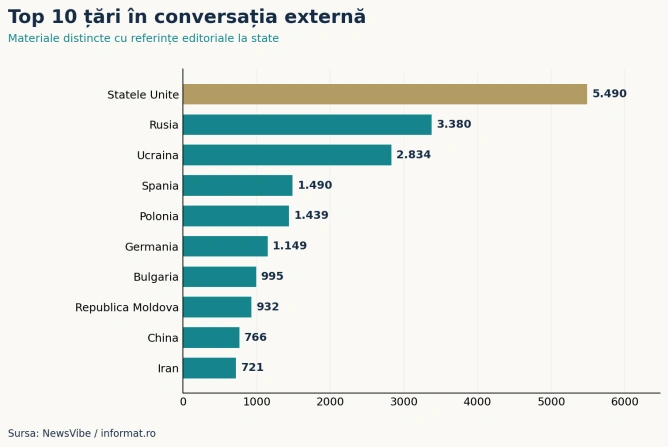
The second is foreign policy, particularly the war with Iran. In NewsVibe, the term “Iran” appears 132 times in the keyword analysis, and 126 of these associations are negative. The conflict has thus acquired an internal electoral dimension amid rising fuel prices.
The third factor is the personalization of the elections themselves. Trump appears in 625 mentions in the NewsVibe entity rankings, while in the entity-associated sentiment analysis, his name accumulates 335 negative and only 32 positive appearances. This indicates that the electoral debate is focused more on the president than on individual candidates.
Sentiment dynamics: tension rises before the vote
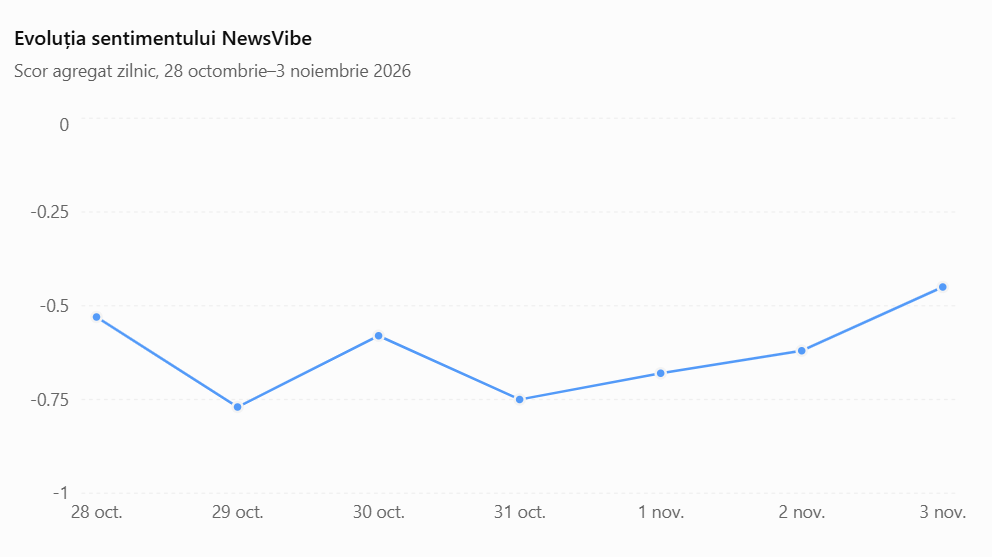
The monitoring trend shows persistent negativity, with lows on October 29 and 31. At the same time, the volume of coverage increased sharply ahead of the election, from 95 items on November 1 to 184 on November 2, a jump of 93.7%.
This acceleration suggests an intensification of the narrative competition between the two camps: Democrats are emphasizing dissatisfaction with the administration, while Republicans are trying to mobilize their electorate and turn the election into an ideological confrontation.
The score on November 3 is less negative, at −0.45, but the 59 materials recorded by the time the report was extracted represent only a partial picture of election day. It cannot be concluded that public sentiment has improved.
Decisive states and the risk of a surprising result
The most important Senate races are taking place in states such as Michigan, Texas, Alaska, Kansas, and Maine, along with Iowa, Nebraska, Ohio, and South Carolina. In Michigan, the rivalry between Democrat Abdul El-Sayed and Republican Mike Rogers was complicated by the unexpected support given to the Republican by Democrat Haley Stevens. In Texas, James Talarico is attempting to pull off an upset against Ken Paxton in a traditionally Republican state.
However, an analysis published by Informat.ro warns of an essential problem: polls have underestimated Trump in the past, and actual voter turnout can change the calculations. A voter dissatisfied with the president will not automatically vote for Democrats.
The Democrats’ polling advantage must therefore be converted into votes, in a system where electoral geography matters just as much as national preferences.
What happens if Republicans lose Congress?
A Democratic majority in the House of Representatives could block important legislative initiatives and launch congressional investigations into the Trump administration. Losing the Senate would have additional consequences: Democrats could block presidential appointments, including possible nominations to the Supreme Court.
Conversely, retaining the Republican majorities would confirm the conservative electorate’s mobilization capacity and give the president more political room to continue his agenda.
The stakes on November 3 are not only who wins Congress, but how much power Donald Trump will still have until 2028.
NewsVibe captures a predominantly critical and tense media atmosphere, while the polls indicate Republican vulnerability. But the only decisive indicator remains the vote.
In this election, America is deciding how freely the president will be able to govern over the next two years.
*****Summary prepared with the help of a data monitoring stream provided by the media monitoring platform NewsVibe Romania. The analysis, data, and images presented were enhanced with the help of Machine Learning and Artificial Intelligence tools.
Latest News
23:02
22:54
22:53
22:42
22:23
See more news
NEWS ON THE SAME TOPICS