US Elections 2026: Trump Loses Congress. What the Democrats’ Victory Means for Romania and Nicușor Dan’s Diplomatic Strategy



Always see our news on Google
Democrats take control of the U.S. Congress amid economic discontent and the war with Iran. The result changes the balance of power in Washington and brings a new challenge for Bucharest, following the editorials through which Nicușor Dan tried to strengthen relations with the Trump administration in the American conservative press.
Democrats win Congress. Trump loses legislative support
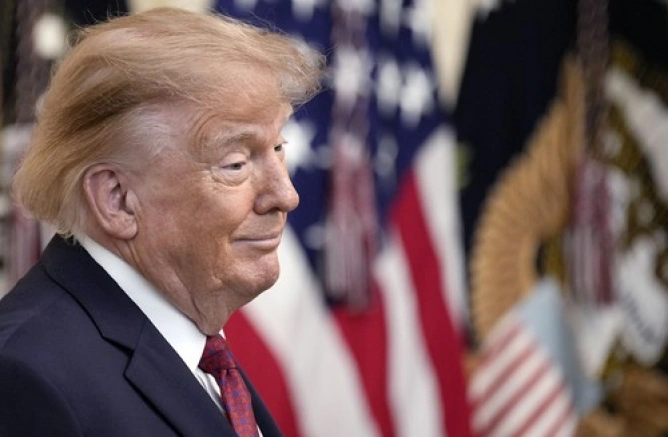
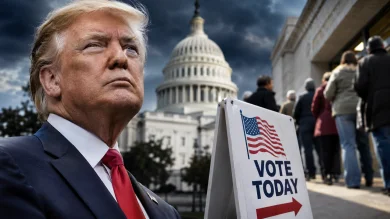
The midterm elections of November 3, 2026, changed the balance of power in Washington. The Democratic Party won control of the House of Representatives and the Senate, dealing an important defeat to the Republicans and the Donald Trump administration.
The Democrats’ victory extended beyond the states where, traditionally, success has been divided between the two major parties. Democratic candidates won seats in Republican strongholds such as Texas, Kansas and South Carolina. In Texas, Democrat James Talarico won a Senate seat after nearly four decades of Republican dominance.
According to Reuters and the Associated Press, the result reflects voters’ dissatisfaction with the cost of living, the war with Iran, and the way the Trump administration handled domestic and foreign issues.
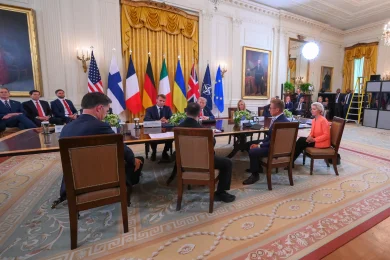
For the White House, the consequences are direct. Over the next two years, the president will have to negotiate with an opposition-controlled Congress that can block legislative initiatives, organize investigations, and influence federal appointments.
NewsVibe: nearly 3,700 items and an explosion of visibility on Election Day
The U.S. elections generated strong media mobilization, including in the international and Romanian press.
NewsVibe monitoring identified 3,683 items between October 29 and November 4, 2026, published in online media and on social platforms in the United States, Romania, the United Kingdom, and the European Union.
Visibility increased rapidly as the election approached. While 597 items were recorded on November 2, the volume rose to 1,111 on November 3, an increase of approximately 86%.
The intensification was driven by final campaign messages, voter mobilization, the publication of results, and the Democrats’ surprising victories. After the polls closed, media attention shifted toward the loss of Republican majorities and the political consequences for Trump.
Online media generated 64.7% of the monitored items, followed by Facebook (21.7%), YouTube (11.9%), and TikTok (1.6%).Among the most active sources were Agerpres (148 items), HuffPost (88), Politico US (85), and Fox News (82). The subject also had a significant presence in Romanian publications, including Știripesurse.ro, News.ro, HotNews.ro, and Adevărul.
The data indicate the scale of reporting in the sources monitored by NewsVibe, without representing a measurement of the entire audience.
Trump dominates the agenda. The economy and Iran explain electoral discontent
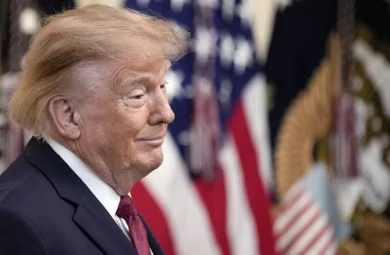
Although he was not on the ballot, Donald Trump was the central figure of the elections.
His name appears in approximately 1,196 headlines, while references to the president are present in more than 70% of the analyzed items, taking into account headlines, content, categories, and associated entities.
This visibility shows that the election was largely presented as a referendum on the Trump administration.
Two issues carried significant weight in the media debate.
The first is the economy. Approximately 1,196 items contain references to economic problems, inflation, prices, or the cost of living. Dissatisfaction with purchasing power fueled criticism of the Republican administration.
The second is the war with Iran, mentioned in approximately 797 items. The conflict was associated with the White House’s foreign policy, military spending, and the economic effects felt by the population.
After the election, the tone of media discourse changed. Across the entire monitored period, 65.8% of items were neutral, 27.5% negative, and 6.7% positive. On November 4, the share of positive items rose to 16.1%, amid reports about the Democrats’ victories.
This change does not automatically indicate an improvement in perceptions of American politics, but also reflects the shift from electoral uncertainty to the presentation of the winners.
Romania between the Trump administration and the new Democratic majority
The election result comes at a time when Bucharest has tried to strengthen its relationship with the Republican administration through an unusually visible communication strategy.
Between July and October 2026, President Nicușor Dan signed four editorials in American conservative publications: Newsmax, Fox News, The Washington Times, and The Daily Signal.
The messages sought to present Romania as a reliable ally, capable of assuming greater military responsibilities and offering the United States strategic advantages in the Black Sea region.
In the Fox News editorial published on August 27, Nicușor Dan emphasized the threat posed by Russia and Romania’s contribution to defending NATO’s eastern flank.
In The Washington Times, the message was built around historical Romanian-American solidarity, while in The Daily Signal, in an article published on October 20, the president argued that Romania was prepared to bear additional costs to strengthen the American military presence.
The choice of publications suggests an attempt to reach conservative audiences directly and political circles close to the Trump administration. The arguments used — sharing defense costs, regional security, and benefits for the U.S. — are compatible with the priorities promoted by the American president.
The Democrats’ victory, however, changes the context in which this strategy must continue.
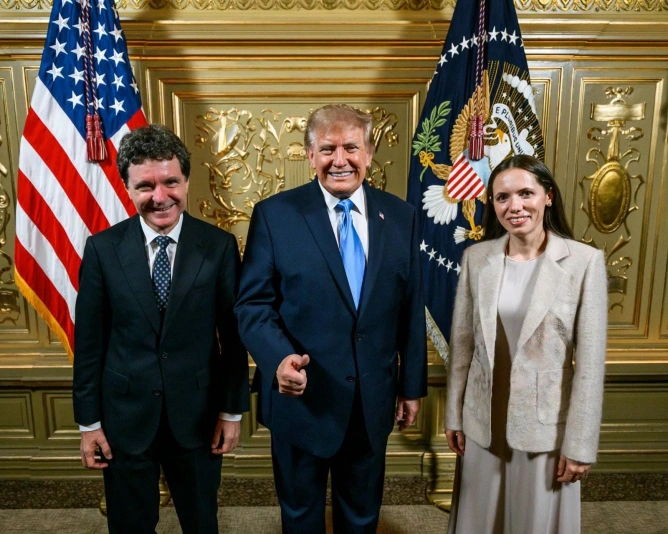
Donald Trump remains Bucharest’s main interlocutor at the executive level, but the future Democratic majority will play a decisive role in debates concerning budgets, defense, and oversight of foreign policy.
For Romania, the stakes are maintaining American support for Black Sea security, the military presence on the eastern flank, and support for Ukraine.
Bucharest will therefore have to expand its dialogue to Democratic leaders in Congress without weakening its relationship with the Republican administration. Nicușor Dan’s editorials can be viewed as a component of Romanian public diplomacy, but their political effectiveness cannot be determined solely by media visibility.
A new stage for Washington and Bucharest
The 2026 elections do not change the president of the United States, but they substantially alter the conditions under which he can govern.
NewsVibe data show that Trump dominated the electoral debate, while the economy and the war with Iran were two of the central themes of the reporting. The vote now brings the confrontation between the White House and Congress to the forefront.
For Romania, the challenge is primarily diplomatic: transforming its relationship with Washington into a partnership supported by both American parties, at a time when domestic political competition in the U.S. may influence even security decisions relevant to Eastern Europe.
*****Summary prepared with the help of a data-monitoring workflow provided by the NewsVibe Romania media monitoring platform. The analysis, data, and images presented were enhanced with the help of Machine Learning and Artificial Intelligence tools.
Latest News
13:30
13:27
13:21
13:20
13:19
See more news
NEWS ON THE SAME TOPICS



.webp)