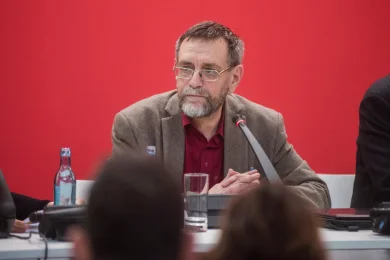
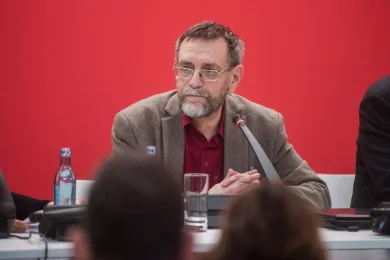
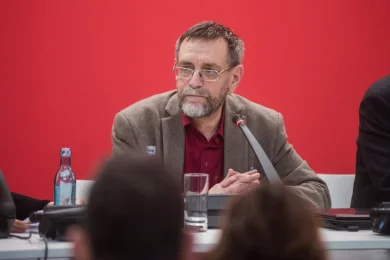
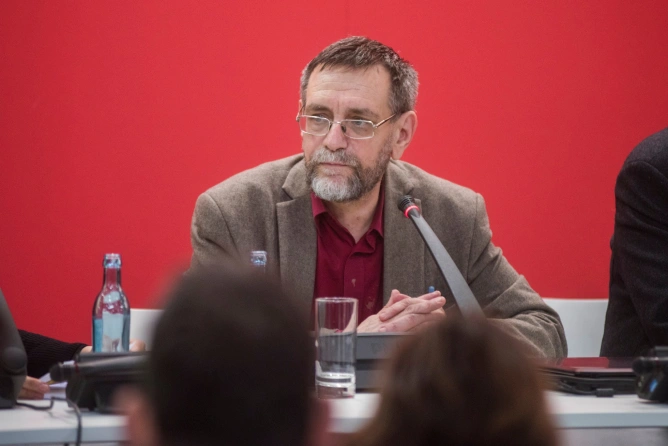
Andrei Cornea: Forget Machiavelli!



Always see our news on Google
The contours of the world are becoming increasingly uncertain. Changes are occurring rapidly everywhere today, thwarting almost every calculation. Rationality seems to have been lost or hidden in forms we no longer understand. The future—always difficult to anticipate, in any case—has perhaps never been more unpredictable. Even the “oracles” of AI-generated scenarios are getting it wrong. What not long ago still seemed impossible, indeed almost inconceivable—for example, for an American president to repeatedly threaten to annex Greenland or to court Russia’s dictator—has become “breaking news” and has already almost become commonplace. How can one still make reasonable plans?
Navigating such unknown and dangerous waters, what attitude should the “navigator”—that is, the leader of a small state with a rather unhappy history, like Romania—adopt at such moments? Our current leaders seem to have decided to flatter the temporary buffoon in Washington D.C. What will they do now, when, after the November 3 elections, MAGA seems to be experiencing the beginning of its end? Will they change tracks as quickly as they can? Will they court the Democrats? Will they leave Trump’s “Peace Council”? Will they start talking again about “pro-Europeanism,” and not only about “pro-Westernism”? Or will they follow a strategy of denial, continuing to dream of defeating domestic sovereignism by “taming” Trump and his acolytes and relying on advice from people in the “services,” supposedly “realists” and experts? I do not know, but I believe that already, regardless of events in the international and Romanian worlds, the direction our people are taking, if it continues as before, will become increasingly less credible both at home and abroad. When you are willing to twist morality in all sorts of ways to please those who are powerful today, you end up disappointing everyone tomorrow. Positioning yourself in political in-betweenness, wanting “to be on good terms with both sides,” becomes not only indecent but, after a certain point, counterproductive. “Political realism,” so highly praised here, has lately been nothing more than the practice of bowing and scraping before an increasingly disgusting and excessive regime, in fact hostile even to America’s interests and, of course, to its allies and to the democratic and free world in general. Now, although still active, this regime seems to have entered a period of decline. What will we do, then? I am inclined to believe that true “realism” is ultimately to pursue a policy guided by firm principles and, not least, by morality. In a world with geometry as variable as ours, it seems that the only beacon left is to follow the right path. Opportunism risks skidding at the first sharp turn of the vehicle we are in and which we do not drive—and which, frankly, it seems that not even the “most powerful man on the planet” is capable of controlling, despite his limitless self-adulation. Yes, it is said that morality and politics are opposed; but when the reality of contemporary life has become so unpredictable that all “learned” calculations are thwarted one after another, wanting to emulate Machiavelli becomes the wrong policy.
Follow, then, the path of justice, if only because all the others today seem to lead nowhere—follow it, therefore, without ethical excesses, but firmly—and let destiny, history, or whatever it may be hand out the prizes and sanctions. Recent experience shows that, very often, a principled policy proves, after some time, to be even more “realistic” than the duplicitous opportunism that our so-called great analysts and experts keep preaching to us under the guise of “realism.” When calculations and predictions are constantly disproved, when reality mocks us to such an extent that not even a Pythia inspires confidence anymore, what else remains as “ultimate pragmatism” but the path of justice and truth?
Latest News
23:53
23:31
23:18
23:00
22:51
See more news
NEWS ON THE SAME TOPICS