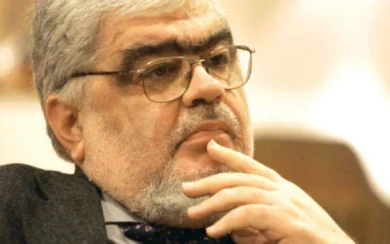
Andrei Pleșu: Notes (states, days). The “politics-technocracy” dichotomy



Always see our news on Google
The “politics-technocracy” dichotomy seems very topical on our public scene. Some want a political government, others—a technocratic government. From my point of view, it is a way of indefinitely postponing, without a clear horizon, a functional decision. Historically and philologically speaking, “technocracy” implies appropriate expertise in a specific field, solidly verified competence, applied knowledge. A technocrat is a rigorously trained professional in a rigorously defined field. In today’s discourse, politics seems to be defined, here, as an area of theatrical “talents,” capable of carrying you to governmental power, electoral excitement, popular celebrity. The sphere of politics has no clear contours. You need to have “the gift of the gab,” stage experience, team cunning, self-esteem.
This does not mean, however, that there are no professional politicians, or that the world could pragmatically exist without a class of experts in the field, skilled in the technical and rhetorical administration of institutions. The definition of the politician has nevertheless evolved, especially here, toward playful rhetoric, behavioral affectations, diffuse careerism, based not on knowledge practiced in some well-defined discipline, but on rhetorical gesticulation, toward screen popularity.
The technocrat relies on what he knows, the politician on his favorable self-image and on a motley appetite for power. It is true, it is preferable for the authentic technocrat also to have an instinct for professional communication, the talent to disseminate and impose his ideas, just as it is preferable for the politician to have a certain cognitive profile, a decent need for understanding, and an effective power of persuasion. In short: it is natural and effective for the technocrat to have a certain “political” endowment, but also for the politician to be able to invoke and rely on professional experience capable of ensuring him at least a minimal contributive strategy for the country’s development.
The technocrat without any community concern and the politician without any cognitive profile are, in principle, poorly placed. To promote a government without technocrats or one without politicians is to stage a game of chance, to replace the strategy of optimal governance with that of a profitable exclusivism...
We shall see! But, as far as I am concerned, a politician without any profession cannot adequately and productively practice politics, just as the technocrat dozing within the reflexes of “applied research” in scholarly fields cannot guarantee appropriate insights for the benefit of the masses. Dear Caragiale enters the scene once again: “Is anyone a firefighter? He must also be a citizen. Is anyone a citizen? He must also be a firefighter. [...] Let us therefore seek: to have firefighter-citizens, to have citizen-firefighters. Only on condition that someone who is also a citizen is a good firefighter, and vice versa.”
Also today
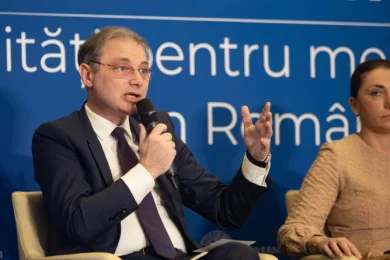
A few years ago, when he was ambassador in Paris, I met Luca Niculescu several times (often together with Emil Hurezeanu). I am not saying this in order to present myself, circumstantially, as a supporter of his nomination. But what makes me identify with the human type embodied by Luca Niculescu is a quality whose rarity gravely afflicts the Romanian political scene. It is the absence, in Luca’s portrait, of any hint of hostility. On the public scene, domestic politics is intoxicated by conflict. I do not mean to say that, in the sphere of politics, polemics and (electoral) adversities are not an inevitable part of the script. But if adversity is the sole content of public debate, if doing politics is nothing but tenacious grumbling against the “adversaries,” if being electable means, for many, being an insomniac gunslinger, then it is restful and encouraging to see someone enter the game who does not want to settle scores, but to engage in dialogue, to make ideological or strategic difference not an occasion for perpetually postponing the solution, but the raw material for finding a way out... Hostility is not the optimal environment for construction. And Luca Niculescu proposes, as treatment, a suspension of hostility, without marginalizing or minimizing doctrinal and electoral tensions. We may disagree, we may have discourses that are difficult to reconcile. But what matters is the ultimate effect we seek: our own victory or the community’s benefit. I await the new team’s response with confidence. I miss communication and the constructive discipline of the political self.
Latest News
16:02
16:00
15:55
15:54
15:54
See more news
NEWS ON THE SAME TOPICS