EXCLUSIVE Ranking of countries in relevant online sources in Romania: The American elections dominate external visibility. Russia and Ukraine remain at the center of the security agenda



Always see our news on Google
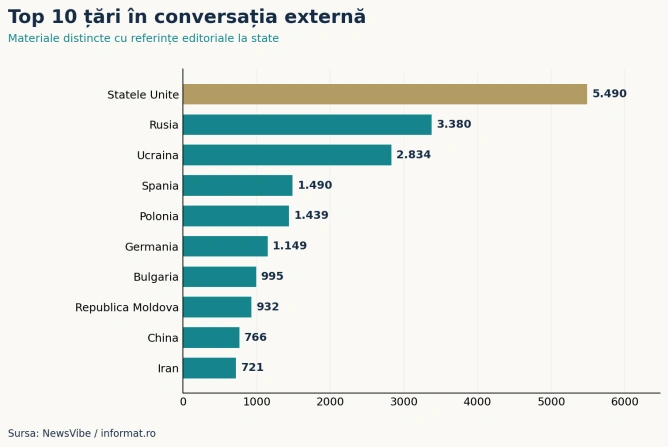
United States leads the ranking, against the backdrop of the midterm elections. Russia and Ukraine remain the main reference points for war and security issues, while political and economic crises expand the agenda to other states.
A week defined by elections and security
During the period October 29 – November 4, 2026, United States leads the ranking of external visibility, ahead of Russia and Ukraine. This position reflects an American agenda with multiple points of interest: the midterm elections, international reactions, political positions, and the consequences for relations with Russia, China and Iran. American visibility is thus more diversified than that of Ukraine, where the conflict and peace negotiations remain the guiding thread.
Russia appears both as a military actor in the war in Ukraine and as a diplomatic interlocutor and subject of debates on European security. Materials about negotiations, threats, reactions from the Russian press to the American vote, and relations with Washington generate exposure distributed between conflict and foreign policy. Ukraine is present through developments on the front, discussions about a ceasefire, Western support, and the political implications of the American election for the future of the war.
The second tier: national crises and regional echoes
Spain and Poland occupy the next positions. In the case of Spain, the flow is driven by accidents and political reactions, including the resignation of the Transport Minister following the railway tragedy. Poland stands out through domestic political tensions, protests, and connections with the security issue in Eastern Europe. These are two different visibility models: an episode with major public impact and a combination of domestic politics and regional security, respectively.
Germany appears through reactions to the elections in the USA, support for Ukraine and controversies concerning migration and social policies. Bulgaria enters the conversation through economic issues, incidents, and Black Sea security. Republic of Moldova stands out through European integration, the institutional agenda, and relations with its neighbors. China is associated with reactions to the American election, diplomatic contacts, and strategic competition, while Iran is associated with the war, tensions in the Middle East, and the security of oil routes.
The themes structuring the external conversation
At the thematic level, elections and international political crises occupy the top position, followed by the war in Ukraine and peace negotiations, then European security and defense. This configuration shows an agenda in which electoral politics and military conflict overlap: the results of the American election are discussed not only as a domestic event, but also through their possible effects on diplomacy and ongoing wars.
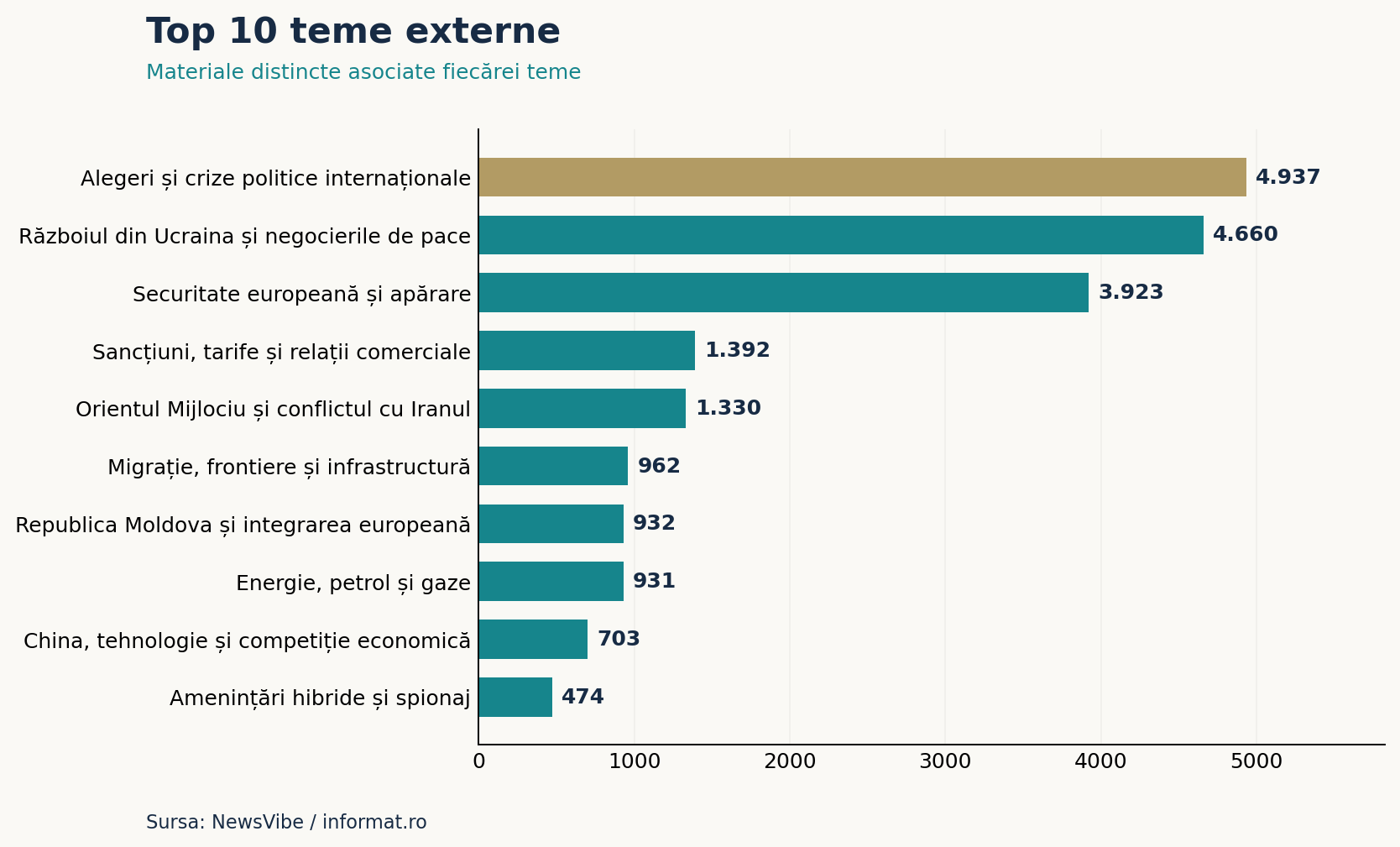
Fig. 1 — Themes may overlap within the same material.
Sanctions, tariffs, and trade relations form another thematic pole, followed by the Middle East and the conflict with Iran. Migration and borders, the Republic of Moldova issue, energy, China and technological competition, as well as hybrid threats and espionage complete the top ten themes. Beyond the ranking order, these indicate the connection between politics, security, trade, and critical infrastructure.
Countries and themes: concentration versus diversification
The association matrix shows two patterns. United States spans multiple issues, from elections and the economy to defense and Iran. Russia and Ukraine are more strongly connected to war and security. China shapes its profile through economic and technological competition, while Republic of Moldova does so through European integration and security issues. In the case of Spain, visibility is influenced by a more limited set of national events.
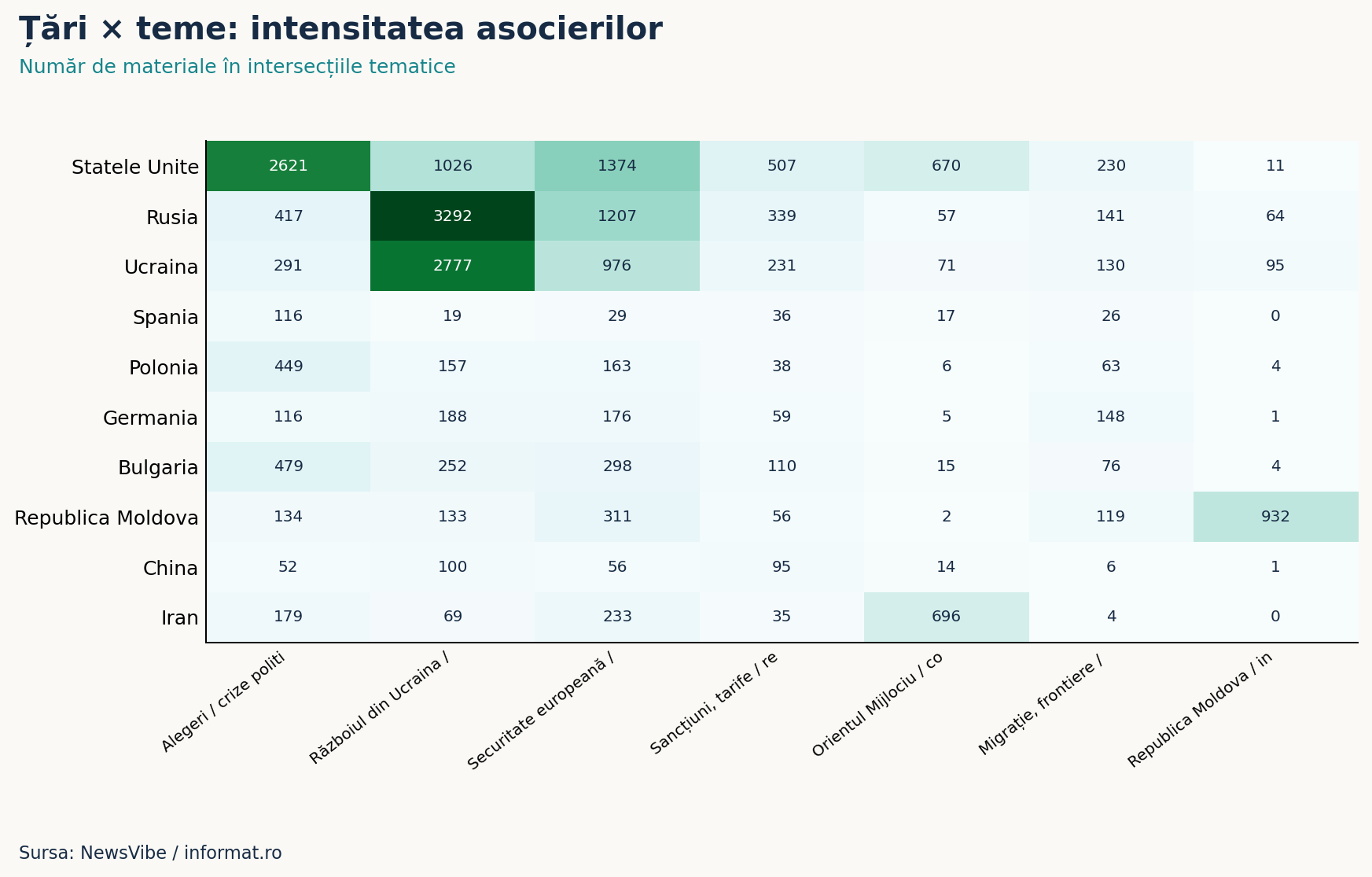
Fig. 2 — Thematic associations of the countries in the Top 10.
Conclusion
The weekly ranking does not express the geopolitical importance of the states, but rather the intensity of their presence in the Romanian information flow. The American elections temporarily reordered the hierarchy without removing the centrality of the war in Ukraine. The essential contrast is between countries present in many conversations simultaneously and those propelled by a conflict, a crisis, or an episode receiving intense coverage.
*****Summary prepared with the help of a data feed provided by the media monitoring platform NewsVibe Romania. The analysis, data, and images presented were enhanced with the help of Machine Learning and Artificial Intelligence tools.
Latest News
19:27
19:25
19:21
19:16
19:05
See more news
NEWS ON THE SAME TOPICS




.webp)