EXCLUSIVE Ranking of countries in relevant online sources in Romania: the US, Russia, and Ukraine lead the foreign agenda. Security dominates the conversation



Always see our news on Google
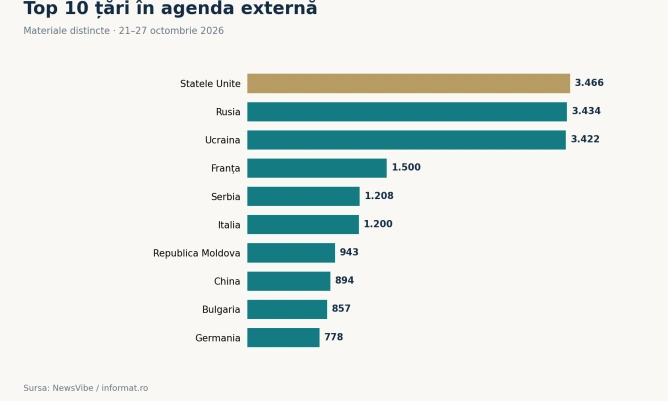
The United States leads the external visibility rankings, followed closely by Russia and Ukraine. Unlike the exposure of the two states linked to the war, the American presence spans several issues, while security and defense represent the broadest thematic conversation.
A Close Podium and a Multi-Centered Agenda
Between October 21–27, 2026, the United States, Russia and Ukraine form the core of external visibility in the Romanian online space. The small differences between them suggest an agenda in which the conflict in Ukraine continues to intersect with American diplomatic initiatives, Washington’s domestic politics, and European security debates. The ranking shows the intensity of media attention, not the influence or reputation of the states. After the first three positions, the gap widens, and the countries’ profiles become more heterogeneous.
War, Sabotage, and Security Diplomacy
Russia’s visibility is fueled by reports concerning attacks on Ukraine, as well as by accusations of sabotage and reactions from Romanian authorities to operations attributed to Moscow. News about the alleged sabotage network surrounding a weapons facility in Brașov directly linked the Russian case to Romania’s security. Ukraine appears through missile attacks, developments on the front, the evacuation of civilians, and discussions concerning peace negotiations. The two states often appear in the same report, but from radically different positions: Russia is associated with the military offensive, while Ukraine is associated with defense, resistance, and the costs of war.
The United States, the Actor with the Broadest Range
The US stands out through the diversity of topics: midterm elections and opinion polls, relations with European allies, military security, trade restrictions, and competition with Chinese industry. Among the notable episodes are the dispute over mail-in ballots ahead of the American election and the restrictions imposed on a Chinese automaker at a military base in Japan. This combination of domestic politics, technology, and alliances explains why American visibility does not depend on a single conflict theater.
Europe: Between Political Crises and Common Defense
France appears through political and economic tensions, but also through the project to expand European nuclear deterrence in the context of the Russian threat. Serbia accumulates remarkable visibility through the political change following Aleksandar Vučić’s defeat and the debate over the student movement’s ability to govern. Italy is present both in reports about investigations and incidents involving Romanian citizens and in economic and European discussions. The Republic of Moldova enters the conversation through its relationship with Romania, security, and its European path. Bulgaria gains visibility through Prime Minister Rumen Radev’s positions on drone attacks in the Black Sea.
The Themes Structuring the Week
In the editorial classification, security and defense rank first, followed by elections and political crises, then sanctions and trade relations. The war in Ukraine remains a distinct, highly intense issue, while energy, borders, and the situation in the Middle East extend the agenda beyond the military front. The categories overlap: a report about attacks on infrastructure may simultaneously concern security, energy, and conflict, without these themes being interchangeable.
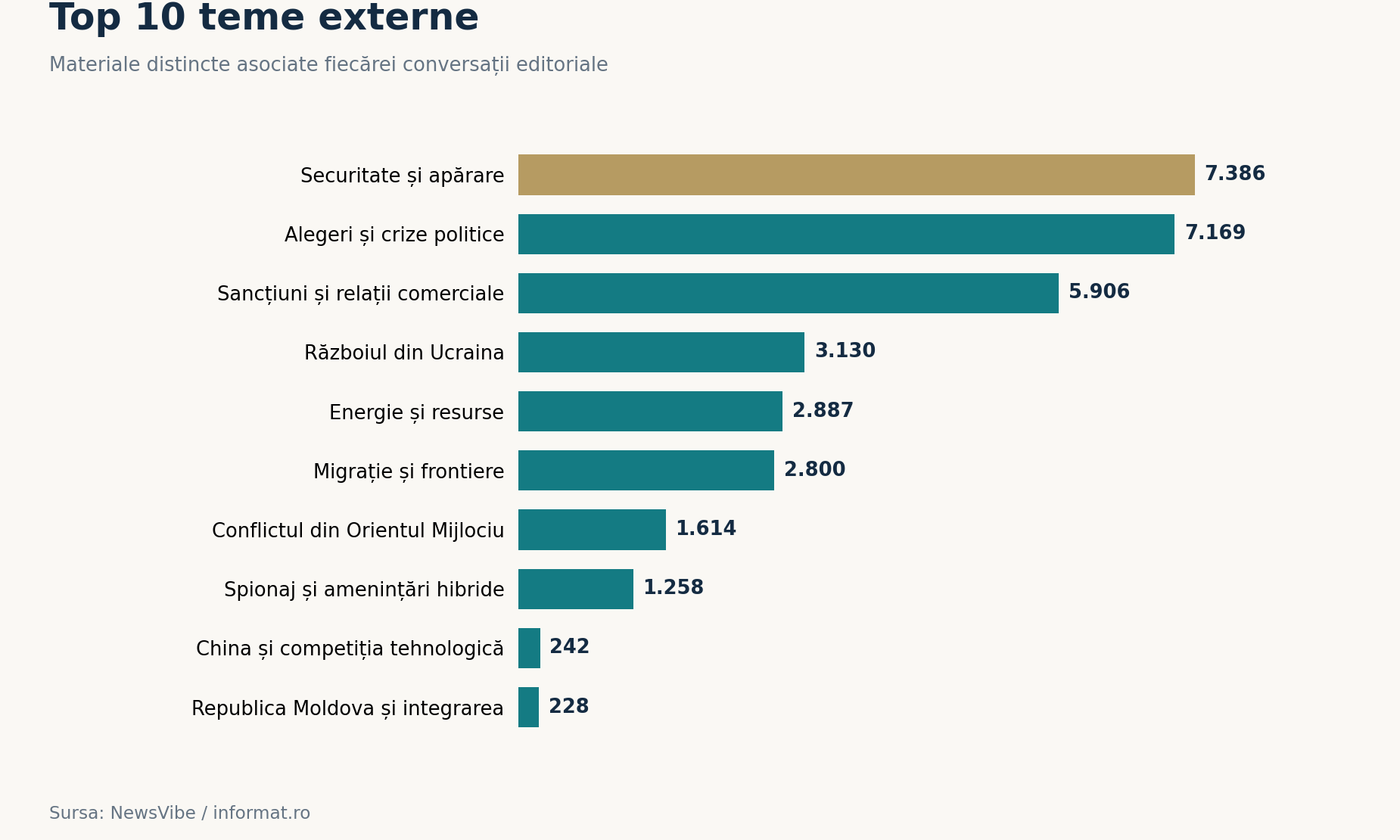
Fig. 1— Themes may coexist in the same material.
Countries and Themes: Concentration Matters as Much as Volume
The association matrix shows two patterns. Russia and Ukraine are strongly linked to war and defense, while the US is distributed across security, elections, and trade. Serbia is visible mainly through domestic political developments, while China is visible through economic and technological competition. For France and Bulgaria, defense debates gain additional relevance in the monitored reports. Concentration in a single episode can generate a high level of exposure for a few days; transversal presence, by contrast, can keep a state in the news flow even without a single dominant event.
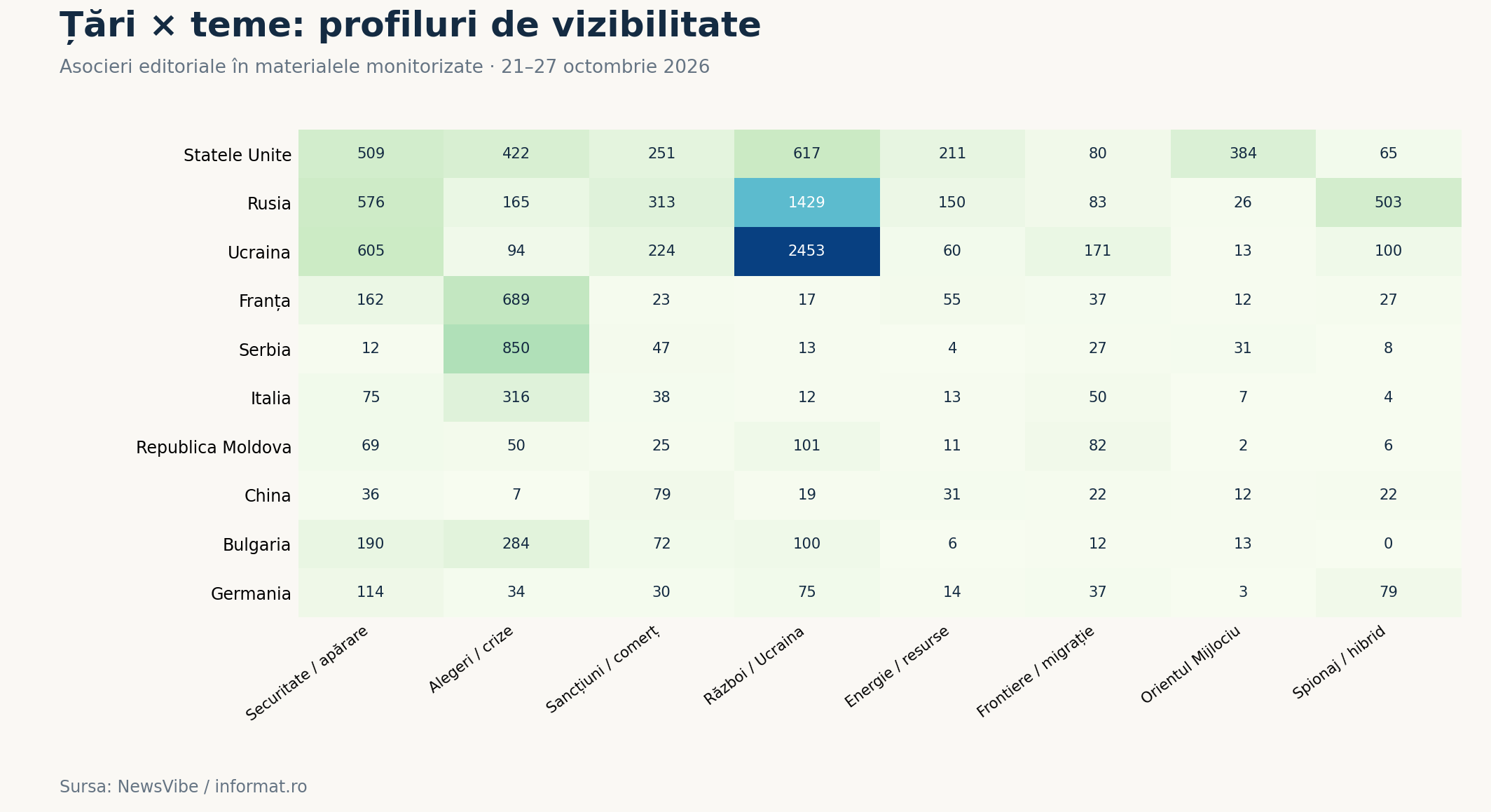
Fig. 2 — Number of country–theme editorial associations.
An External Agenda Viewed Through Security
The week points to an external agenda built at the intersection of security, economic competition, and political change. The leading trio concentrates attention through war, diplomacy, and strategic influence, but the rise of Serbia and the visibility of Bulgaria show that regional episodes can quickly redraw the hierarchy. The essential difference is not only how many pieces a country generates, but also the role it plays in them: initiator of events, arena of confrontation, or partner in managing the consequences. Visibility should therefore be read as an indicator of the week’s editorial priorities, not as a geopolitical verdict.
Another contrast concerns how the Romanian information space follows geographically close states. In the case of Bulgaria, the debate about drones in the Black Sea gains relevance through its direct implications for Romania’s security. In Serbia, interest stems more from the shift in the political balance and the open questions about governance. In the Republic of Moldova, proximity to European institutions and regional vulnerabilities are followed in parallel. These examples show that proximity does not automatically produce the same agenda: one neighboring country may become visible for security reasons, another through elections or economic cooperation. For readers, correct interpretation requires separating the volume of news from the significance of events, as well as observing the difference between sustained attention and interest triggered by a single statement.
*****Summary prepared with the help of a data feed provided by the media monitoring platform NewsVibe Romania. The analysis, data, and images presented were enhanced with the help of Machine Learning and Artificial Intelligence tools.
Latest News
17:32
17:11
17:00
16:52
16:50
See more news
NEWS ON THE SAME TOPICS