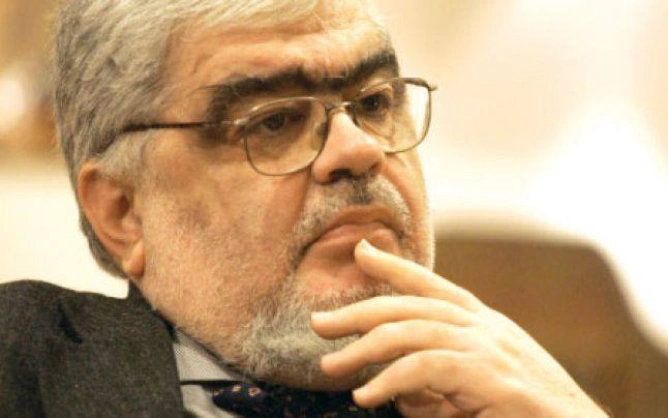
Andrei Pleșu: The Homeland and the World



Always see our news on Google
“Healthy nationalism” – a theme recently launched by President Dan without much explanation – makes me revisit, as I did last week, older reflections and accounts on this risky subject, while awaiting the moment when his rhetoric will find a reasonable tone...
Around the mid-1990s, the French Minister of Culture, then Mr. Jacques Toubon, paid a visit to Romania. The French ambassador hosted a dinner in honor of the distinguished guest, to which, as was fitting, a great many representatives of the local cultural scene were invited, beginning with Mr. Toubon’s counterpart and continuing with artists, academics, and university professors from various fields. After the inevitable protocol speeches, the Romanians warmed up and launched into a lively patriotic conversation. Their French was rarely good, but their sentiments were generous. One of the diners began, mischievously, with a question about literature (I prefer to reproduce everything in Romanian, so as to avoid the quaintness of the grammar and pronunciation, which characterized the entire evening): “Minister, if you permit me: who invented the theater of the absurd?”
Before Mr. Toubon could risk an answer, his interlocutor hurried to enlighten him, with charming pride: “A Romanian! Eugène Ionesco!” “Ah, yes, of course!” the guest rejoiced. Before he could bring a first bite to his mouth, however, he found himself confronted with a new attack: “Minister, I would ask you who, in your opinion, invented modern sculpture? You won’t believe it! A Romanian: Constantin Brâncuşi.” “Oh, indeed! Naturally! How interesting!” This was the moment when the “scientific section” of the table felt it was losing ground. A well-positioned voice, with a hint of paternal indulgence, voiced the next question, despite the French guests’ growing unease, as they gazed ever more sadly toward the food: “Could you tell me, Minister, how you came to Romania?” The minister first tried to take it as a joke. It didn’t work! The matter was serious. So it was immediately explained to him (so that he would not have the chance to make some blunder): “You came by plane. Now, you probably don’t know that aviation, through people such as Aurel Vlaicu, Traian Vuia, and Henri Coandă, is, so to speak, a Romanian affair.”
Mr. Toubon’s eyelids began to tremble. His prestige as Minister of Culture was being put to a severe test. He had entered sacred territory, the source of numerous technical and cultural benefits from which he and his fellow citizens profited blindly, without knowing to whom they owed them. His appetite diminished precipitously, making way for an unusual mixture of gratitude and melancholy. But things did not stop there. Someone, from another corner of the table, raised “the bar of exactingness” to new heights: “Minister, have you ever thought about how you walk?” The Wallachian euphoria was already pushing the boundaries – conventional ones, of course – of politeness. A discreet diplomatic conflict hung in the air. They had reached a certain degree of intimacy, giving rise to perplexity. What could the poor minister answer? That he did not know how he walked? That he wandered ignorantly through the world, without reflecting on the subtle mechanisms of moving through space? In the eyes of the French official, as well as those of the ambassador, a vague fear could be discerned. They anticipated the fatal Franco-Romanian question: “Savé vu chi a envanté… walking?” and could already hear the overwhelming answer: “A Romanian!” They were not far from the truth. The questioner quickly explained that we could not walk if there were no friction between our bodies and the surrounding air and, in a short leap, reached the problem of the transmission of energy through liquids, solids, and gases—in other words, the subject of sonicity. Now, “chi a envanté… sonicity? A Romanian: Gogu Constantinescu!” The atmosphere had become oppressive. The foreign guests felt like barbarians who had arrived at the center of the world or, if not, in a small and cheerful psychiatric clinic. French culture? Give me a break! Europe? A peninsula of Wallachia! The main course was served against the backdrop of a Romanian gathering animated by national pride and a humiliated French gathering. All so that they would know, you understand, whom they were dealing with!
P.S. I receive consoling phone calls and read angry comments about a statement of mine that appeared very recently on the “Știri pe surse” website. It concerns a circumstantial lament, written and published in 2004, and republished in 2011 (in Dilema veche) and in my book The Forgotten Beauty of Life. These details are absent from the current republication of the text, giving all sorts of readers an opportunity to comfort me or berate me, as if I were a psychopath in the midst of a crisis. I ask them to calm down: I have recovered somewhat since 2004...
Latest News
23:13
23:02
22:58
22:25
22:21
See more news
NEWS ON THE SAME TOPICS





.webp)