An ECFR analyst calls on Europeans to refuse the use of their bases for attacks on Iran unless there is evidence of an imminent threat



Always see our news on Google
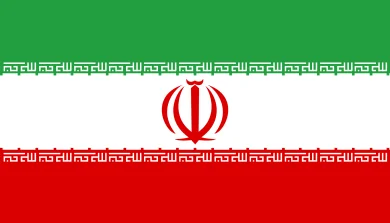
European governments should refuse the use of their bases for attacks against Iran if Washington does not demonstrate the existence of an imminent threat, recommends Beth Oppenheim, a researcher at the European Council on Foreign Relations. In an analysis published on October 29, after the Israeli elections, she calls on Europeans to act to limit escalation before a new government is formed in Israel, using the instruments over which they have direct control.
In brief
Beth Oppenheim recommends refusing the use of European bases for attacks on Iran if the United States does not demonstrate the existence of an imminent threat.
The analyst sees risks of escalation during the interim period of Netanyahu’s government. Her scenarios do not confirm that new military operations have been decided.
The proposals include coordination with Arab partners, respect for the ceasefire in Gaza, access for aid, and continued pressure regarding settlement expansion.
Team Gaza Initiative, cited in the analysis, was launched in July with 883.6 million euros for ongoing or planned projects and includes partners from outside the EU.
The October 29 commentary uses preliminary election results and expresses the author’s opinions. The EU did not adopt a new condition regarding military bases through it.
The recommendation starts from the risk that political deadlock could prolong the interim mandate of the government led by Benjamin Netanyahu. Oppenheim believes that domestic uncertainty does not eliminate the executive’s ability to use force and that Europeans should not postpone their regional policy until negotiations for a coalition are concluded.
The author discusses the possibility of new strikes against Iran and an intensification of operations in the West Bank. These are risk scenarios in her assessment, not information about a decided operation or a confirmed timetable. Likewise, the condition concerning an imminent threat is her proposal for access to bases, not a common measure adopted by the European Union.
The analysis describes a political scene without a clear majority after the October 27 vote. The preliminary figures it cites attribute 53 seats to Netanyahu’s bloc, 48 to the Zionist opposition led by Gadi Eisenkot, and 19 to the parties representing Israel’s Palestinian citizens, Ra’am and the Joint List. The threshold for a majority in the 120-seat parliament is 61 seats. These figures are presented in the October 29 analysis as preliminary results, not as certified final results.
In this context, Oppenheim proposes that Europeans coordinate with Arab partners to publicly oppose a new war with Iran. Governments with better access to the American administration should, in her view, explain to Washington how an escalation could affect progress in Gaza and Lebanon and the prospects for Israel’s regional integration.
Access to bases is the concrete instrument of this recommendation. The author is not calling for a ban on any military cooperation with the United States, but for refusing the use of European bases for strikes in the absence of proof of an imminent threat. The decision would rest with the governments that control those bases. The text does not announce that they have accepted the proposal.
A second direction is Gaza. Oppenheim recommends American pressure on the Israeli executive to respect its ceasefire obligations and lift restrictions on humanitarian aid. She also sees a European role in providing technical support for policing, governance, and the process of decommissioning Hamas’s weapons. These are policy options advanced in the commentary, with implications different from simply financing projects.
The financial context invoked has a precise date and composition. The European Commission launched the Team Gaza Initiative on July 9, 2026, with an initial volume of 883.6 million euros for ongoing or planned early-recovery projects. The initiative brings together the Commission and international partners, including non-EU states, the EIB, and the World Bank. The amount does not represent exclusively EU budget funds, nor a new payment made after the elections in Israel.
Regarding relations with Israel, the author recommends continuing measures against entities involved in settlement expansion and preparing broader responses in the event of escalation. This point concerns instruments that already exist. On May 28, the EU Council added four entities and three individuals to the sanctions list for serious abuses against Palestinians in the West Bank. The measures include asset freezes and, for the individuals concerned, travel bans.
The EU’s institutional position remains distinct from the analyst’s proposals. The European Council conclusions of October 15–16 support the two-state solution and call for reversing the expansion of illegal settlements. They do not adopt the condition proposed by Oppenheim for the use of military bases.
The analysis continues the argument made by the author before the elections, that a change of prime minister would not automatically transform Israeli policy toward the Palestinians. The new element in the post-election commentary is the call for European action during the interim period, with an emphasis on access to bases and limiting regional risks. ECFR states that its publications express the authors’ opinions, not collective positions of the organization. The test of the proposals remains whether European governments are willing to use these instruments, rather than merely wait for the political outcome in Jerusalem.
Latest News
20:29
20:15
20:09
19:59
19:48
See more news
NEWS ON THE SAME TOPICS