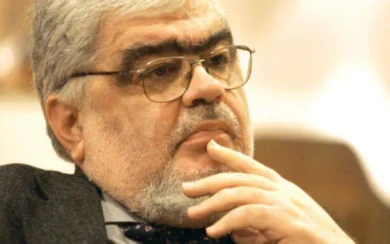
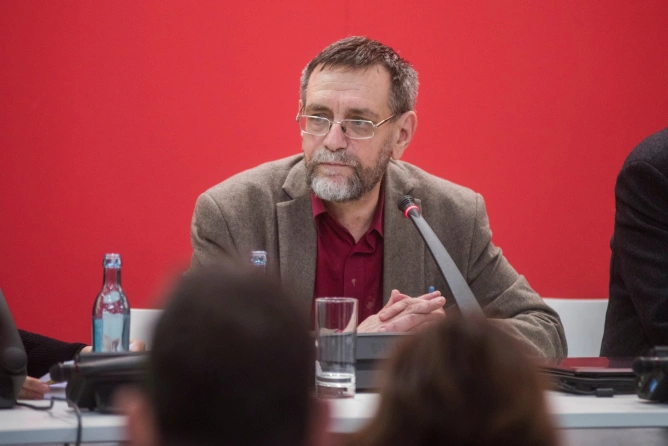
Andrei Pleșu: About public speaking



Always see our news on Google
One of the most insidious aggressions against our fellow beings is the poor management of public discourse. Everything in contemporary cultural life is easier to bear than the incontinent oratory, the torrential verbiage, the self-indulgent babble. I know very few people capable of properly measuring their rhetorical exercises. Most indulge shamelessly in their own verbal ribbons, before an increasingly impatient audience, exasperated, ready to flee or to take refuge in a hygienic nap.
Giving overly long speeches is a symptom of a complicated illness, difficult to outline in a few lines. Moreover, it is clear that the speaker is happy to hear themselves talk. Whether in daily life they are unspoken, or they have an excellent opinion of their talents, about the priceless words and ideas that pass through their head or mouth, the person in question is practically unstoppable. The audience watches in astonishment a prolonged solitary orgasm, a kind of incurable shamelessness. The subject of the speech becomes unessential, as does the well-being of the listeners. What is essential is the self-exaltation of the speaker, their feeling that they have decisive things to say, that no price is too high for anyone who wants to drink from their boundless competencies. The primary vice of the loquacious individual is impoliteness. They do not think for a moment whether those in the room still have patience, whether they are tired, whether they might have other matters to attend to. The audience is treated, in fact, as a mere maneuvering mass; anonymous cannon fodder, good livestock to be sacrificed. Worse still is that the egotistical speaker despises, without wanting to, the subject of their own peroration. It does not matter what or who they are talking about. Whether the theme is Shakespeare, Newton, corporate doctrine, or South African flora does not matter. What matters is the "expert" at the podium, their vast expertise, their unparalleled charm, the greatness of their presence, their tender feelings and emotions. Ultimately, however, the one struck by this passion also harms themselves: they become unsympathetic, unbearable, unapproachable.
There are some signs that warn, even from the beginning, about a long speech. The speaker starts, for example, with a graceful announcement: "I will be brief...". (Alternative: "It is very hard to add anything after the wonderful words of the previous speaker, so I will share with you just a few thoughts..."). How many times have I heard such an introduction in panic. I know that there is nothing more to be done, that, in the name of this charming captatio, the rhetor will consider that they can allow anything (and everything!). It is worth mentioning that there are also some tricks to go through (I admit that, at times, I have practiced them myself). When the speech is already prolonged and the audience is waiting with bated breath for the anticipatory breeze of some closing phrase, the orator takes note and says: "one last word", or "just two more sentences and I will finish", or "I just have one more issue to mention, if you can still bear it...". "No, we can’t bear it anymore!" – the audience silently cries out, but they continue, helpless, the martyrdom. Because, usually, after such cunning tricks, the speech continues unabated.
Logorrhea can also have other explanations. Sometimes, it is the collateral whim of those who are poorly situated in time: they simply do not realize how much they are talking, lose contact with the clock, cannot accommodate to the strict mechanics of duration. Others are so absorbed by the subject they are dealing with, they forget about themselves and the world, and abandon the listeners, no longer perceiving the concrete situation they are in. Practically, they monologue somnambulistically, in a trance, paying attention only to the complete and definitive unfolding of their own argumentation. They do not hold a conference, but write a chapter of a book, if not the whole book. They have a genius-like, slightly deranged air. In any case, for them, others exist only as a pretext: a collection of specters for a spectral speech...
A frequent cause of oratorical derailment is the confusion, more or less conscious, of genres. Many speakers make no distinction between an intervention at a round table, a book launch with four or five presenters, a communication at a congress or colloquium, and a proper conference. The general tendency is – in our case more than in other countries, where the discipline of public presentations is stricter – to make all these distinct genres into one: everything is constructed according to the pattern of a large conference. It is a way to disadvantage all those who speak after you and to offend them, fundamentally, through your pompous verbiage. I won’t even mention the audience. They are, in any case, the last wheel on the cart.
Therefore – and to not prolong it myself excessively – I recommend to all speakers to make the conciseness of their presentations an inflexible criterion of effectiveness. It is healthy for the listener to leave the room unsated, like a guest at an embellished table. The rest is indigestion...
Latest News
21:00
20:43
20:09
19:53
19:25
See more news
NEWS ON THE SAME TOPICS