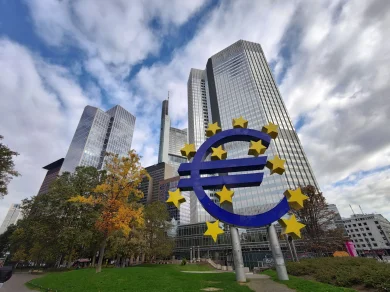
The European Central Bank raises interest rates following the increase in energy prices caused by the war in the Middle East.



Always see our news on Google
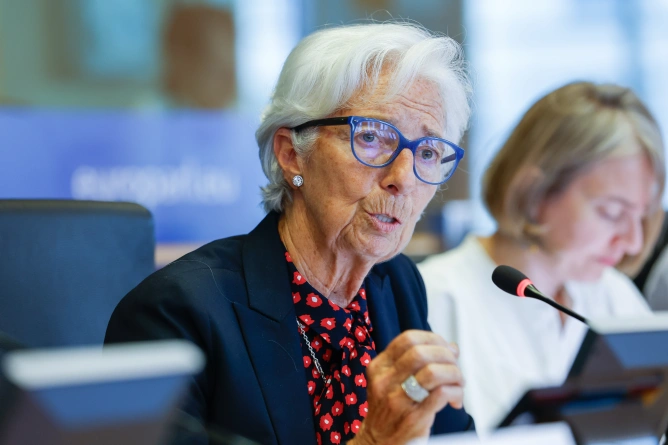
The President of the European Central Bank, Christine Lagarde, told the Members of the European Parliament in the Committee on Economic and Monetary Affairs that inflation in the euro area rose to 3.2% in May, amid rising energy prices following the outbreak of the war in the Middle East. The ECB decided in June to raise the three key interest rates by 25 basis points, but Lagarde said that the institution is not committed to a predetermined trajectory and will decide from one meeting to another, depending on the data.
The European Central Bank raised the three key interest rates by 25 basis points after the war in the Middle East pushed energy prices up and changed the economic outlook for the euro area. ECB President Christine Lagarde told the Members of the European Parliament in the Committee on Economic and Monetary Affairs that inflation rose to 3.2% in May, up from 3% in April, and that economic growth is now more fragile than it was at the beginning of the year.
In brief
The ECB raised the three key interest rates by 25 basis points in June.
Inflation in the euro area rose to 3.2% in May, and energy inflation was over 10% in April and May.
The ECB estimates economic growth of 0.8% in 2026, 1.2% in 2027, and 1.5% in 2028.
Lagarde says that inflation should return to 2% by 2028, but risks remain high.
Members of the European Parliament asked Lagarde about stagflation, food prices, the global role of the euro, stablecoins, artificial intelligence, and digital euro.
Members of the European Parliament focused many questions on inflation generated by tensions in the Middle East and on the ECB's ability to respond to geopolitical shocks that directly affect prices in Europe. Lagarde began by reminding that at the previous hearing in February, inflation had remained close to the ECB's target of 2% for more than a year, and the euro area's economy had solid momentum. A few days later, the outbreak of the war in the Middle East showed how quickly an external shock can change calculations for prices, incomes, consumption, and investments.
The euro area economy grew by 0.3% in the first quarter of 2026, after adjusting for exceptional volatility in Ireland. However, Lagarde said that the war is now weighing on economic activity, especially in services, while the manufacturing industry has so far held up partly due to stockpiling and increased defense spending.
The Eurosystem's new projections indicate real GDP growth of 0.8% in 2026, 1.2% in 2027, and 1.5% in 2028. Domestic demand is weaker than anticipated in March, as the war has affected confidence, and higher energy prices are reducing households' real incomes.
Consumption should, however, remain the main driver of growth, supported by still solid household balance sheets. Investments could be supported by firms' spending on digital technologies and government spending on defense and infrastructure.
Inflation is again the central issue. Lagarde pointed out that the main driver of inflation since February has been energy, with a rate of over 10% in April and May, while inflation excluding energy and food rose to 2.6% in May, partly due to the indirect effects of higher energy prices on other prices.
The ECB now estimates overall inflation of 3% in 2026, 2.3% in 2027, and 2% in 2028. Lagarde said that short-term expectations have risen above pre-war levels, but most long-term measures remain around the 2% target, which supports the outlook for inflation to return to the ECB's target.
The decision to raise interest rates was presented as robust across all scenarios analyzed by the ECB. Lagarde said that the institution will monitor developments and will continue to make decisions from one meeting to another, based on data about inflation, risks, core inflation dynamics, and the strength of monetary policy transmission.
The key message from the ECB is that the institution is not committed to a predetermined path for interest rates. For households and companies, this means that the level of borrowing costs will depend on how energy prices, wages, demand, core inflation, and confidence in the economy evolve.
Lagarde explained that monetary policy cannot directly reduce energy prices, but it must prevent the transmission of price increases throughout the rest of the economy. She emphasized the difference between a temporary shock, which can be tolerated, and a shock that is large enough or persistent enough to fuel increases in prices and wages in a chain.
The ECB believes that the current shock is still in the middle zone: it is too large to be ignored, but there is still no evidence that inflationary expectations have decoupled from the target or that second-round effects require a tougher response. Lagarde said that this type of gradual response allows the ECB to remain agile and adjust policy if the shock intensifies or persists.
Members of the European Parliament asked Lagarde whether the ECB has the necessary tools to fight stagflation, a situation where inflation remains high while the economy slows down. They also raised questions about how the EU's trade policy, strategic autonomy, inflation differentials between European states, and the evolution of food prices can influence the ECB's decisions.
The discussion also went beyond interest rates. Parliamentarians sought opinions on the global role of the euro, the balance between useful simplification and risky deregulation, stablecoins, the balance between monetary policy and fiscal policy, and the possibility for the ECB to assess the risks of a bubble related to artificial intelligence.
Members of the European Parliament also asked about the digital euro, ahead of a vote in the European Parliament committee on the related legislation. Lagarde said that banknotes will remain and that digital euro and cash do not exclude each other, a relevant message in a debate where one of the public concerns is that digital currency could replace physical money.
Lagarde concluded by emphasizing that supply shocks are becoming more frequent, and monetary policy cannot fully compensate for their effects. She said that structural resilience, especially in the energy sector, will be essential for reducing the euro area's vulnerability to external supply shocks.
Latest News
15:26
15:19
15:16
15:07
15:03
See more news
NEWS ON THE SAME TOPICS












.webp)