ANALYSIS “Too young to vote, old enough to be tear-gassed.” How the press in Romania, Europe, and the USA covered the protests by students in France


Always see our news on Google
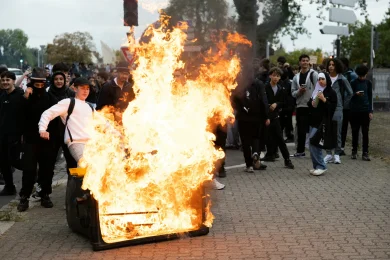
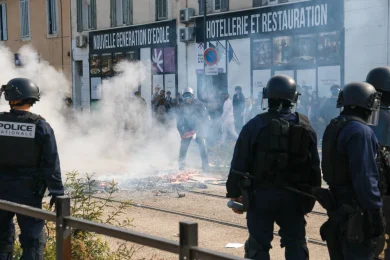
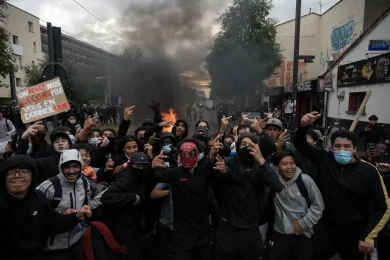
Thousands of high schools were blockaded in France and hundreds of thousands of demonstrators marched through the streets, where they were dispersed by police officers. What are French students demanding, who supported them, and how did the Romanian and European press describe the revolt?
“Too young to vote, old enough to be gassed,” read a placard carried through Paris on Tuesday in a convoy with tens of thousands of high school students. Their demands are almost mundane: substitute teachers, smaller classes, buildings without rats.
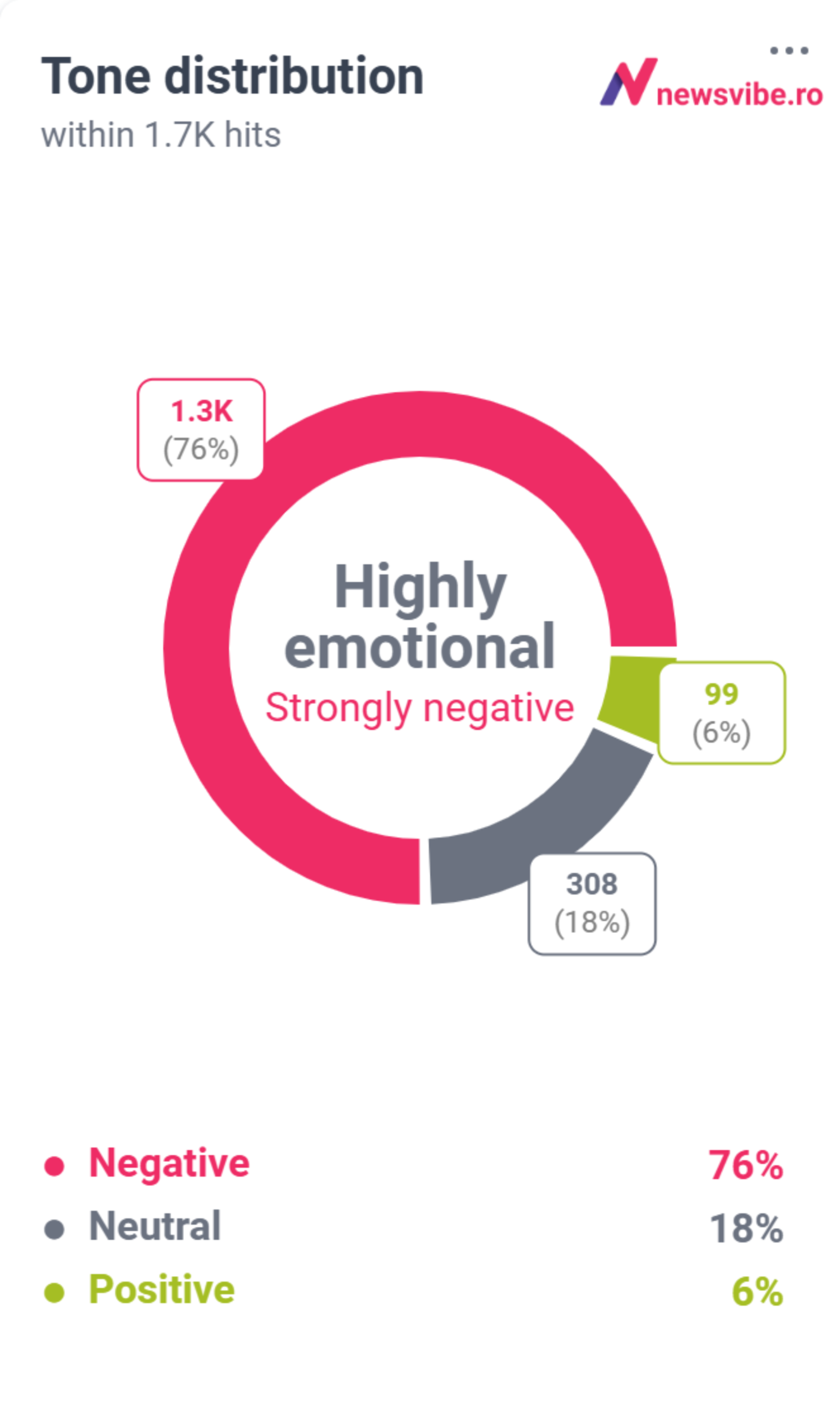
An assessment conducted through the NewsVibe platform, which integrates artificial intelligence technologies to analyze content from the media and social networks, indicated that 1,700 articles were published between September 8 and October 8 in 7 countries. The tone is strongly negative: 76% negative, 18% neutral, and only 6% positive.
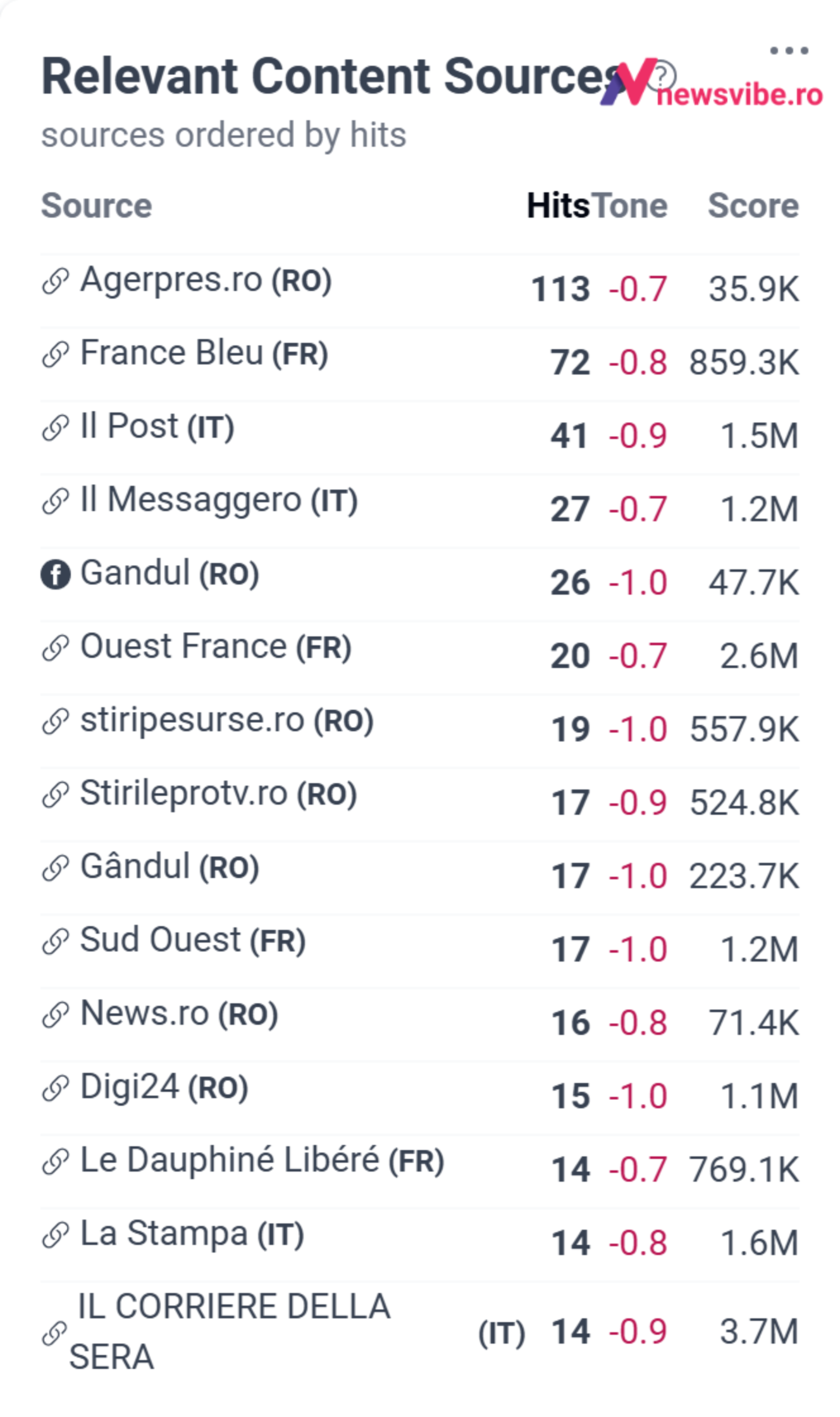
All the sources in the top rankings have a negative tone score, between -0.7 and -1.0:
Romania: Agerpres has the most articles (113, tone -0.7). Gândul, Știripesurse, and Digi24 have the most negative tone (-1.0). Știrile ProTV (-0.9) and News.ro (-0.8) follow.
France: Sud Ouest has -1.0, France Bleu -0.8, while Ouest-France and Le Dauphiné have -0.7.
Italy: Il Post and Corriere della Sera have -0.9, La Stampa -0.8, and Il Messaggero -0.7.
A negative tone does not automatically mean that the students were condemned. The score measures mainly the vocabulary used (“chaos,” “violence,” “arrests”).
What the students are demanding
Teachers and staff: more teachers and replacements for those who are absent. Students say they wait weeks for a substitute.
Smaller classes: classes have 32–35 students.
Shorter hours: the school day can last from 8:00 to 18:00.
Repaired buildings: leaks, rats, and a lack of desks and chairs.
Parcoursup and university: abolishing selection through Parcoursup and 250,000 additional university places.
Local demands: meals costing 1 euro, an autonomy allowance, and the hiring of educational staff.
Equality: equal education in poor neighborhoods.
The movement began on September 17 at the Saint-Exupéry high school in Créteil, in support of teachers who were on strike.
Mayors and teachers
Bally Bagayoko, the LFI mayor of Saint-Denis: he was present at the blockades. He limited the damage caused by burning garbage bins and placed himself between the police and the students. The city hall provided barriers and sound equipment. He said “Ils ont raison de se battre” (“they are right to fight”) and criticized the police’s brutal response.
Emmanuel Grégoire, the mayor of Paris: he opened district town halls for student meetings and called for “de-escalation.”
Teachers:
Snes-FSU, CGT, FO, and Sud declared a strike in support of the students.
In Alsace, parents and teachers said, “they have clear demands, which we share.”
Gândul reported that parents and teachers formed a human chain to protect the students.
Who criticized the students and the left
Le Figaro (right-wing):
It exclusively published an intelligence-services note claiming that the movement was an “instrumentalization” carried out by the far left.
One headline said that the students were “chauffés à blanc par LFI” (“whipped into a frenzy by LFI”).
It quoted François-Xavier Bellamy, who called the movement a “laboratory of chaos.”
CNews and Le JDD (the Bolloré group):
They repeated the government’s claim that it was a “maneuver by LFI and the ultra-left,” as well as Nuñez’s statement that the protests “resemble urban violence.”
They commissioned a CSA poll: 55% of French people believe that the students are being manipulated by LFI. Bagayoko and LFI MP Louis Boyard were named directly.
The government: Prime Minister Lecornu and Education Minister Geffray accused LFI of “the political instrumentalization of youth.”
In Romania, the press did not take sides in the political dispute. The negative tone comes from the emphasis placed on violence and chaos. Gândul chose headlines such as “high school principal sprayed with gasoline” or “baby injured.” Digi24 ran the headline “Chaos at student protests.” However, both publications also explained the students’ demands.
Who was even-handed or empatheticEven-handed:
Reuters, AFP, BBC, and Agerpres (which largely republishes AFP) reported factually. Reuters specified that the demands “do not concern religion or immigration.”
Le Monde concluded that the movement in working-class neighborhoods is “accompanied, but not manipulated” by politicians.
Closer to the students:
France 3 Régions and Al Jazeera gave students a voice and reported on tear gas.
AFP quoted Amnesty International, which spoke of “disproportionate police repression.”
USA: NYT, NPR, CBS, and Time treated the subject as a crisis of underfunding, generally in a sympathetic tone.
CNBC was the exception. It emphasized violence and public debt, with the headline “A violent classroom revolt is becoming France's next big crisis” (“A violent revolt in classrooms is becoming France’s next major crisis”).
ConclusionStudents were rarely directly “demonized.” The press mainly criticized the violence, which came from a minority, and the radical left (LFI), which it accused of manipulating them. The students’ demands were widely acknowledged, even by the Lecornu government, which asked ministers for proposals by the end of October. The 76% negative tone in NewsVibe mainly reflects the emphasis on confrontations, arrests, and injuries.
Latest News
19:55
19:45
19:43
19:43
19:37
See more news
NEWS ON THE SAME TOPICS