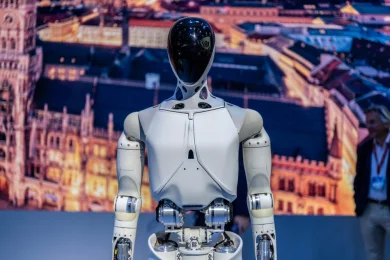
Japan relies on the integration of AI in robotics to streamline industrial automation.



Always see our news on Google
Japan is accelerating the transition towards automation, responding to a major structural challenge: the lack of workforce. With government support and solid industrial expertise, the country is expanding its ambitions beyond being a hardware leader in robotics, aiming to become a key player in the emerging physical AI ecosystem. Companies like Mujin focus on developing software platforms that enable existing robots to perform complex tasks autonomously, thus maximizing the value of existing infrastructure. As the competitive landscape changes, Japan and China remain leaders in hardware, but the United States is advancing in software and systems integration. This complex and costly integration represents a significant barrier. Companies like WHILL adopt a hybrid approach, combining the precision of Japanese hardware with the strengths of American software. Japan's automation strategy is transforming from experiments into large-scale deployments, with a government commitment of approximately $6.3 billion. Automation projects are now funded by clients, and companies are focusing on clear performance indicators. Large corporations, such as SoftBank, are implementing physical AI across various sectors, and investments are increasingly directed towards orchestration software and systems integration platforms. The hybrid ecosystem developing in Japan combines startup innovation with the infrastructure of large corporations, creating a competitive advantage. As automation becomes an operational standard, the companies that will win will not necessarily be those with the best robots, but those that control systems integration and continuous optimization.

Latest News
08:46
08:29
08:14
08:07
07:55
See more news
NEWS ON THE SAME TOPICS
.webp)