Ursula von der Leyen says that peace is only possible if Ukraine is in a position of strength



Always see our news on Google
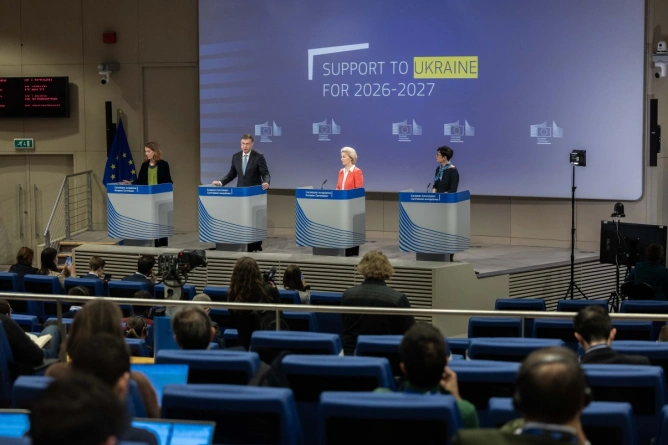
The European Commission links financial support for Ukraine to its ability to defend itself, to internal reforms, and to the long-term security of Europe, according to statements made during the presentation of the package for 2026–2027.
The European Commission states that the financial support intended for Ukraine for the period 2026–2027 aims to keep the country in a position of strength against Russian aggression, both from a military and institutional perspective, according to statements made during the presentation of the package adopted by the College of Commissioners.
In short
1. The Commission links financial support to Ukraine's ability to withstand Russian aggression.
2. The package is presented as a political test for the European Union.
3. Budgetary support is conditioned on reforms and the EU accession process.
4. The repayment of the loan is linked to the payment of war reparations by Russia.
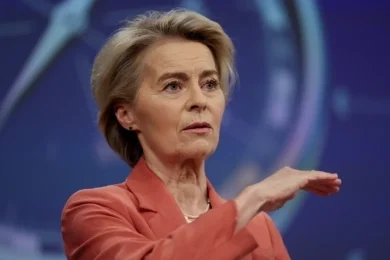
"We all want peace for Ukraine. And for this, Ukraine must be in a position of strength," said Ursula von der Leyen, emphasizing that European financial support is designed as a tool for medium-term stability and predictability.
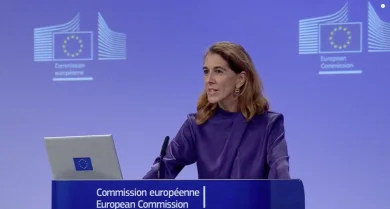
The European executive presented the financial package for 2026–2027 as a strategic commitment, not just a budgetary one. In today's briefing, Valdis Dombrovskis, Executive Vice-President of the European Commission, characterized the support given to Ukraine as a test for the Union. "Supporting Ukraine is a decisive test for Europe. The outcome of Russia's brutal aggression against Ukraine will determine the future of Europe," he stated.
The Commission emphasized that the package includes both military support and budgetary support, aimed at maintaining the functioning of the Ukrainian state and basic public services. The budgetary component is linked to reforms in areas such as the rule of law, combating corruption, and public administration, in line with the EU accession process.
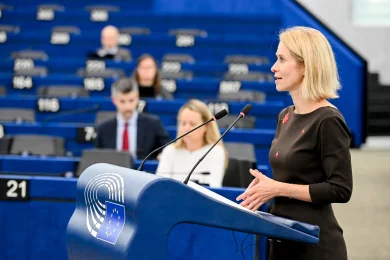
In this context, Marta Kos, European Commissioner for Enlargement, specified that the political dimension of the package goes beyond the financial support itself. "This budget support package means much more than just financial assistance. It reconfirms that we, Europeans, continue to support the vast majority of the assistance provided to Ukraine," Kos stated.
The Commission reiterated that Ukraine will begin repaying the loan only under the conditions in which Russia will pay reparations for the destruction caused by the war. Meanwhile, Russian assets frozen in the European Union will remain immobilized until the conflict is resolved and the issue of compensation is settled.
The financial package for 2026–2027 was politically agreed upon by the European Council in December and was subsequently translated into legislative proposals by the European Commission. These are set to be examined by the European Parliament and the Council. According to assessments by the International Monetary Fund, European support would cover approximately two-thirds of Ukraine's total financing needs for the respective period.
Latest News
17:07
16:57
16:57
16:50
16:48
See more news
NEWS ON THE SAME TOPICS