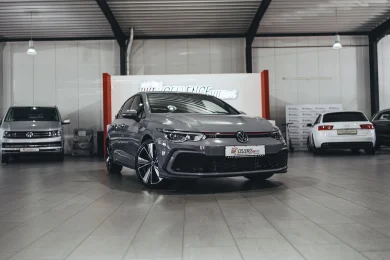
Romania may maintain until the end of 2029 the 50% limit on VAT deductions for company cars used for both business and personal purposes




Always see our news on Google
The EU Council has extended by three years Romania’s authorization to limit VAT deduction for certain vehicles used both for business activities and personal purposes. The 50% percentage and the exceptions remain unchanged. The regime covers purchase, rental, leasing, and related expenses, without changing the VAT rate.
Romania may maintain, until 31 December 2029, the 50% limitation on the right to deduct VAT for certain vehicles used both for business activities and personal purposes. The Council of the European Union has extended by three years the authorization that was due to expire at the end of 2026, without changing the percentage or the categories of vehicles concerned. The regime concerns purchase, rental, leasing, and related expenses, with exceptions for exclusively professional use and certain activities.
In brief
1.The EU Council allows Romania to maintain, until 31 December 2029, the 50% limitation on VAT deduction for certain vehicles used for mixed purposes. This is an extension of an existing regime, not a change to the VAT rate.
2.The limitation concerns purchase, intra-Community acquisition, import, rental, leasing, and expenses directly related to vehicles. It does not apply to vehicles exceeding 3,500 kg or nine seats, including the driver.
3.Exclusively business use and seven categories of activities are exempt, under the conditions set by law. A company using a leased car is not automatically exempt; the exception concerns the provision of the leasing service.
4.The limited 50% deduction eliminates the need to prove the allocation between business and personal use through the logbook. The regime also allows private use not to be taxed separately for vehicles subject to this restriction.
5.For continuation after 2029, Romania must submit an application and a review report to the Commission by 31 March 2029. Authorization is granted by the Council, on a proposal from the Commission.
The decision was adopted on 29 October 2026 and published in the Official Journal of the EU on 5 November. The act changes the expiry date of the derogation granted to Romania and specifies that it takes effect from the date of its notification. It is an already adopted European authorization for the continuation of an existing regime, not the introduction of a new restriction on all cars. The national implementing rules are set out in the Tax Code.
For the companies and other taxable persons concerned, the limitation covers VAT relating to the purchase, intra-Community acquisition, import, rental, or leasing of vehicles owned or used by them. It also applies to expenses directly related to vehicles, such as fuel, repairs, maintenance, lubricants, and spare parts. Under Romanian tax rules, the 50% percentage applies to the tax that would be deductible under the general conditions of the law; it does not guarantee recovery of half of any car-related invoice.
The special restriction does not apply to vehicles with a maximum authorized total mass of more than 3,500 kilograms or with more than nine seats, including the driver’s seat. Vehicles exceeding either of these thresholds remain subject to the general VAT rules. For other vehicles, the limitation is linked to mixed use, not merely to the fact that they are owned or used by a company.
The decision establishing the regime excludes seven categories of vehicles: those used exclusively for emergency services; those used exclusively for security, protection, and courier services; those used by sales and purchasing agents; those intended for the paid transport of persons, including taxis; those used to provide paid services, including rental or training offered by driving schools; those used for rental or leasing; and those purchased for resale. Classification under an exception must be supported by the actual circumstances and the documents required by the tax rules.
For the exception concerning paid services, the Romanian rules require the vehicle to contribute essentially to the direct provision of the service and for the service not to be capable of being performed without the vehicle. The mere fact that the company carries out a service activity is not sufficient.
In the case of leasing, the vehicle’s role in the business activity matters. A company that leases a car for its own travel is not automatically exempt: if it also uses it for personal purposes, the limitation may apply to the VAT relating to the installments and other expenses. The leasing exception concerns vehicles whose use is transferred to customers through financial or operating lease agreements. This is the difference between using a leased car and providing the leasing service.
Vehicles used exclusively for business activities are not subject to the special 50% cap. For these vehicles and the exempt categories, the general deduction rules apply, including the conditions concerning transactions giving rise to a right of deduction and supporting documents. Therefore, falling outside the special restriction does not mean that full deduction is guaranteed in every circumstance.
The methodological rules require exclusively business use to be supported by legal documents and a logbook, which includes the purpose and location of the journey, the kilometers traveled, and the vehicle’s own fuel consumption rate per kilometer. Conversely, a person applying the limited 50% deduction does not have to prove the allocation between business and personal use through that logbook. The other conditions and documents necessary for deduction remain applicable.
The regime also has a second component, concerning personal use. Under the general VAT system, the private use of certain business assets for which the tax was deducted may be treated as a supply of services for consideration. For vehicles subject to the special 50% restriction, Romania is authorized not to apply this separate treatment. The deduction limitation and the exception for private use operate together to simplify matters and avoid double taxation of the personal component; the rule is also reflected in Article 271 of the Tax Code.
The Council justifies the extension by reducing record-keeping burdens for taxpayers and the administration and by preventing evasion resulting from inaccurate records. In the application registered with the Commission on 19 May 2026, Romania also submitted a review report on the percentage and argued that the 50% limit remains appropriate. The decision estimates a negligible effect on Romania’s total tax revenues collected at the final-consumption stage and no negative impact on the EU’s own resources derived from VAT.
The derogation is based on the European VAT Directive. This allows the Council to authorize, unanimously and on a proposal from the Commission, special measures to simplify collection or prevent certain forms of tax evasion and avoidance. Romania has used such a regime since 2012, with successive extensions; the decision adopted in 2024 allowed continuation until the end of 2026. The new decision extends the authorization until the end of 2029, maintaining the rules on deduction and private use.
If Romania wishes to maintain the regime after 2029, it must submit a new application to the Commission by 31 March 2029, accompanied by a report reviewing the percentage limit. Continuation will require a new authorization from the Council, on a proposal from the Commission. The current decision does not change the VAT rate and does not introduce a new tax on car ownership; it extends the possibility of applying the special limitation under the conditions set by law.
Latest News
23:05
22:54
22:36
22:25
21:59
See more news
NEWS ON THE SAME TOPICS


.webp)