Almost 80% of Romanians believe that the law is not equal for everyone, warns political scientist Remus Ștefureac




Always see our news on Google
Director of INSCOP Research, Remus Ștefureac, argues that the perception of inequality before the law reflects a profound crisis of trust in institutions, aggravated by the annulment of the 2024 presidential election. He believes that President Nicușor Dan must speak for society as a whole, not just for his electoral base, and that the failure of reforms could fuel radical forces in the 2028 election.
Nearly 80% of Romanians believe that the law is not equal for everyone, a level that, according to Remus Ștefureac, indicates a profound crisis of trust in the authorities, public institutions, and the political class. In an interview with SpotMedia.ro, Ștefureac argues that the perception concerns not only the justice system, but also how citizens assess access to public services, the distribution of resources, and the benefits of economic development.
“Nearly 80% of citizens say that the law is not the same for everyone in Romania,” Ștefureac stated, explaining that this indicator shows how Romanians perceive public authority and the distribution of the “nation’s wealth.” According to him, trust in politicians, parties, and institutions must also be measured through such perceptions, not only through direct rankings concerning trust.
The annulment of the election, a breaking point
The sociologist considers the annulment of the 2024 presidential election to have constituted “one of the most serious forms of undermining trust in democracy.” He explains that, in the past, electoral cycles managed to temporarily raise trust in Parliament, even when it was very low, but this mechanism no longer functioned normally after the 2024 crisis.
According to Ștefureac, the rupture continued to affect the beginning of President Nicușor Dan’s term. He took office with an estimated trust level of 47–50%, compared with 70–75% for his predecessors, Klaus Iohannis and Traian Băsescu, at the beginning of their first terms. Support for the current head of state subsequently fell, according to the sociologist, to between 15 and 20%.
Nicușor Dan, between his base and the majority
Remus Ștefureac believes that Nicușor Dan is the first president of Romania elected under circumstances in which the number of his initial supporters was smaller than the number of votes he gained between the two rounds of voting. His electoral base would represent approximately 20% of the first-round votes, while for the final victory the president depended on a much broader electorate with different expectations.
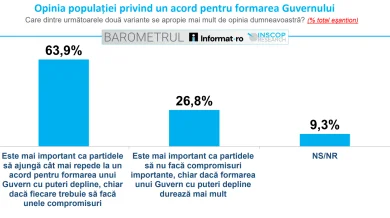
Some of his initial supporters, particularly those with strongly anti-PSD views, reproach Dan for allegedly failing to use the presidential office to influence the formation of another majority or another government. The sociologist believes, however, that the president must find a balance between retaining his voting base and reaching out to the rest of society. “He is not the president of the 20%,” Ștefureac emphasized.
In his view, the strategy of mobilizing voters against an adversary considered dangerous, such as the one used in 2025, cannot be repeated indefinitely. To remain politically relevant, Nicușor Dan should build a broader connection with the electorate, not only with his most radical supporters.
Reforms, a test for 2028Ștefureac sees administrative-territorial reform as an opportunity to address dissatisfaction regarding the waste of public funds and the quality of services. He notes that some voices within the PSD have adopted a discourse on the efficiency of public spending, historically associated more with the PNL. However, he warns, a mere promise is not enough.
“If they are merely a political tactic, then the collapse will be even stronger,” the sociologist said. In his view, the failure of reforms could accelerate the rise of radical, often anti-European forces ahead of the 2028 election.
Corruption and jobs
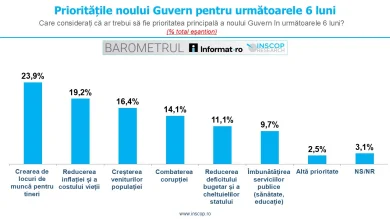
Corruption remains, according to Ștefureac, one of Romanians’ main concerns, consistently ranking among the top public agenda issues. He believes that the rise of AUR, George Simion, and Călin Georgescu cannot be explained solely by traditionalism or conservatism, but also by an anti-system and anti-corruption discourse that resonated with broad segments of the electorate.
For traditional parties, the response should mean changing the people they promote, not merely their campaign messages. “The issue of integrity will be an important one,” Ștefureac believes, emphasizing that mainstream parties must develop leaders capable of passing the integrity test.
Well-paid jobs for young people appear, in the research cited by the sociologist, among the most important priorities, sometimes ahead of combating corruption or increasing incomes. Approximately 40% of the young people surveyed stated that they do not have a job, while 30% of those aged between 18 and 29 say they would emigrate if they won one million euros.
Attachment to Romania and the EU
Despite the dissatisfaction, attachment to Romania remains high. Around 75% of survey participants said that, if they won one million euros, they would remain in the same locality, while another approximately 10% would remain in the country but move to another locality. Only around 15% said they would leave.
Ștefureac argues that Romanian patriotism can be compatible with membership in the European Union, but politicians must better explain the benefits of integration beyond European funds. He points to the 112 emergency service as an example of an institution that can rebuild trust: more than 50% of citizens have called 112 at least once, and trust in the service is approximately 85%.
“Integrity, I find it essential. Two, the functionality of institutions,” Remus Ștefureac concluded, according to whom restoring trust depends on the state’s ability to provide public services that actually function.
Latest News
12:31
12:16
11:54
11:30
11:15
See more news
NEWS ON THE SAME TOPICS


 (1).webp)