Andrei Cornea: The Young, the Old and the “Still Young”




Always see our news on Google
In traditional societies, more or less illiterate, the more advanced age of some of the tribe’s members was a precious collective resource: a storehouse of memories, rich experience concerning various more or less disturbing events (eclipses, earthquakes, severe drought, etc.); added to this was the ability to care for children when adults were unavailable. The elderly (already around fifty years old and not very numerous), simply by virtue of having lived longer, knew more than the others. On the other hand, the elderly also represented a socio-political “brake”: being conservative by nature, they tended to regard with caution, if not outright hostility, the innovations and fashions that the younger people were happy to adopt. A certain social stability was therefore sustained by the dominant social and political role of the elderly, hence the deferential, indeed submissive attitude demanded of the young. It is no coincidence that the Latin word “senatus” translates approximately as “council of elders.” The general cultural norm was set by the elderly person. Being young was a disadvantage and a temporary handicap, which could be overcome through rapid maturation, but also through the voluntary or involuntary imitation of old age.
As late as the nineteenth century, young people aged 20–30 wanted to appear older. Men wore beards and sideburns, dressed in dark clothes, and carried canes and wore glasses—signs of advanced age. All young people wanted to be “already old,” because old age set the norm. Women wore austere and largely desexualized “Victorian” outfits, which made them appear older than they actually were. At thirty, a woman was already considered “past her prime”; see Balzac’s novel (The Woman of Thirty). Already by the ’20s (if not somewhat earlier) of the twentieth century, things changed radically: now youth became the norm. Increasingly, men and women over 40–50, even over 60, wanted to pass as young and dressed and behaved accordingly, adopting “youthful” fashions in clothing and lifestyle and “hedonistic” styles. The practice of sports, clothing, excursions, the disappearance of deferential forms from language, attitudes toward sex, explorations in the cultural avant-garde and in political radicalism—all of it aimed at creating the impression of youth sought even by those past the biological age of youth. Now, in everything—culture, science, politics, economics, public life, sexuality—the twentieth century and then the decades that follow it in our own century treat youth, even adolescence, as the norm. (Some would even speak of the infantilization of society.) This is most clearly seen in the way we, people of today, value innovation in every field: it seems a necessity to us, we emphasize it even when it is minimal, and we tend to regard anything connected with tradition as “outdated” and “old-fashioned.”
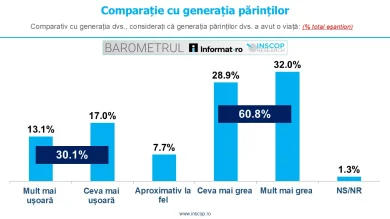
The paradox is that, as society loves youth more and more, it is actually growing older and older: on the one hand, people live on average much longer than their great-grandparents did, thanks to advances in hygiene, medicine, and nutrition. On the other, declining birth rates in developed countries also cause the average age of people to rise ever further. In other words, while “real” young people are becoming fewer and fewer, the others—who according to classifications of the past were old—consider themselves, and demand to be treated as, “still young.”
This is why intergenerational dialogue (always oscillating between conflict and cooperation) no longer takes place, as it did in the past, between “already old” young people and authentic old people, but between authentic young people and older “still young” people. This has numerous consequences, but I would like to suggest one that seems important to me: youth has always been associated, biologically and culturally, with emotionality, heightened impulsiveness, and impulsive enthusiasms, whereas old age has been more reconciled to reason, restraint, and excessive caution. Dialogue, even generational dispute, was therefore—simplifying things—to a large extent also a dispute between emotion and reason or, if you prefer, “between heart and mind,” which could thus provide society with a certain balance and cooperation between the two forces that determine human nature, while ensuring the normative dominance of the “mind.”
Yet in recent times, if everyone wants to be young, whether biologically so or no longer so, both the young and the “still young” will demand emotionality and affectivity to the utmost. Some because they still possess them by nature, others because they will reinvent them for themselves: conversely, showing oneself to be measured, prudent, and overly rational will be seen as a sign of decrepitude and will be disparaged. I believe this is why, as psychologists and sociologists argue, our world has come to treat reason, at best, as a means of justifying and confirming certain emotions, rather than as an end in itself. Just as more advanced ages tend no longer to be stages of life “in themselves,” respectable as such, but merely a “second,” a “third,” even a “fourth” youth, so reason is no longer seen as the purpose of human life, as was the case for the ancients, but as a heuristic instrument for supporting and justifying emotional “experiences” and passions of all kinds.
Old societies asked the “heart” to accept—the “mind’s” primacy, certainly not unconditionally—also because they knew themselves to be divided between the “already old” young and the old. But in today’s world, where so many of us are (and are required to be) “still young,” can there still be a firm rival to emotions and passions?
Latest News
16:50
16:45
16:42
16:41
16:35
See more news
NEWS ON THE SAME TOPICS