Transport accounts for nearly one-third of EU emissions despite accelerating electrification and expanding charging infrastructure



Always see our news on Google
The European Environment Agency (EEA) has published its annual report on the sustainability of European mobility systems, finding that technological progress and pollution-reduction measures remain insufficient to offset growing transport activity and dependence on fossil fuels. Transport, including aviation and international shipping, accounted for 32.4% of the European Union’s total greenhouse gas emissions in 2024.
Key findings: Road transport generated approximately 72% of transport-sector emissions in 2024 when aviation and international shipping emissions are also included. In October 2026, the European Union had 1,176,554 public charging points for electric vehicles. Infrastructure for heavy-duty transport remains considerably less developed. The share of rail and inland waterway transport in total EU inland freight transport activity fell from approximately 27% in 2012 to 22% in 2024. Emissions of particulate matter from tyre, brake and road wear increased between 1990 and 2024, despite a reduction in total transport pollutant emissions. In 2024, Romania had the highest share of inland waterway transport in total freight transport among EU states, but the share of rail transport fell by 5.4 percentage points compared with 2014.
The report analyses developments in European transport in terms of transport activity, energy consumption, greenhouse gas emissions, air pollution, energy infrastructure and noise. The Agency finds that road transport continues to dominate European mobility, while growing demand limits the beneficial effects of improved energy efficiency and the introduction of less polluting vehicles.
A complementary Agency indicator estimates that domestic transport emissions reached approximately 807 million tonnes of CO₂ equivalent in 2025, up 0.3% from 2024. The figure is preliminary and uses a different statistical scope from the 32.4% indicator, which also includes international transport.
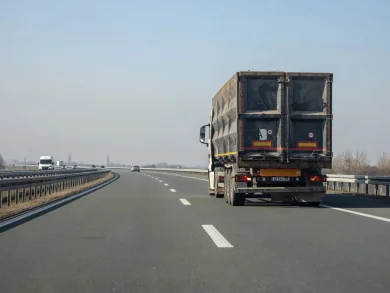
Electrification is progressing at different rates depending on the vehicle category. In 2025, electric urban buses accounted for nearly 60% of European sales in that category, while electric heavy-duty trucks represented only 1.9% of new registrations. According to the Agency’s complementary study on the electrification of heavy-duty vehicles, Europe’s electric truck fleet had reached approximately 37,000 vehicles by mid-2026, equivalent to only 0.5% of the total truck fleet. The development of this market depends, among other factors, on energy costs, the possibility of charging vehicles at logistics depots and access to high-power public infrastructure.
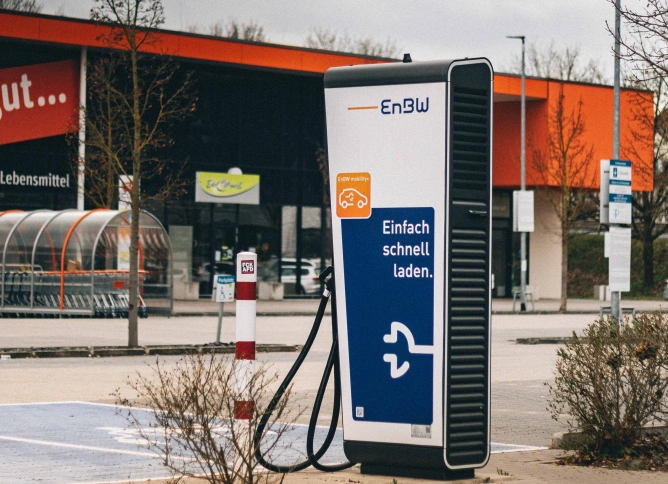
Data from July 2026 indicate that approximately 73% of the analysed trans-European road network met the distance and power criteria used to assess infrastructure for light-duty vehicles. For heavy-duty vehicles, the coverage indicator stood at approximately 3% in June. These percentages do not constitute a comprehensive assessment of compliance with all legal obligations laid down by the Alternative Fuels Infrastructure Regulation (AFIR). Requirements differ according to vehicle category, network type and implementation deadline.
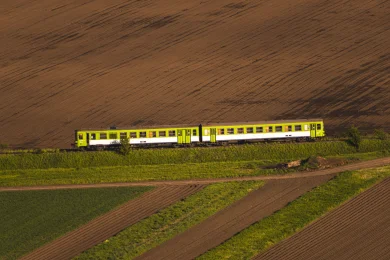
To reduce energy consumption and emissions, the Agency also recommends more efficient use of rail, inland waterway and multimodal transport. European freight transport activity was approximately 40% higher in 2024 than in 1995. At the same time, rail and inland waterway transport lost share in inland transport.
Romania illustrates this trend. According to Eurostat data for 2024, road transport accounted for 45.7% of the country’s total freight transport activity, inland waterway transport for 19.2%, rail for 17.5%, maritime transport for 15.7% and air transport for 1.9%. Romania therefore recorded the highest share of inland waterway transport among Member States. Eurostat explains this position partly through Danube traffic and the territorial allocation methodology for road transport.
However, the share of Romanian rail freight fell by 5.4 percentage points between 2014 and 2024, and by 2.9 percentage points between 2023 and 2024 alone. These figures measure the share of different transport modes in total activity expressed in tonne-kilometres. They do not directly indicate changes in the absolute quantity of goods transported by rail.
The EEA indicator covering only road, rail and inland waterway transport was updated through 2024. It includes Romania among the 11 EU states where the combined share of rail and inland navigation fell by more than five percentage points between 2010 and 2024. This scope differs from the Eurostat comparison of five transport modes, which includes aviation and maritime transport.
The report also highlights that electrification does not eliminate all forms of pollution associated with road transport. Between 1990 and 2024, total PM10 and PM2.5 particulate emissions from transport fell by approximately 40% and 53%, respectively. By contrast, emissions of these particles associated with tyre, brake and road wear increased by 64.3% and 72%, respectively.
Noise remains another important problem. The Agency estimates that more than 20% of the EU population lives in areas where transport noise exceeds the thresholds used to assess health risks. Historical comparisons of noise exposure are, however, affected by changes in calculation methodologies.
Aviation and maritime transport face additional decarbonisation challenges because direct electrification is more difficult in these sectors. According to the projections presented in the report, the combined share of aviation and international shipping in European transport emissions could rise from 27% in 2024 to 59% in 2050, partly as a result of the anticipated reduction in road transport emissions. This is a projection of the future structure of emissions, not an increase already recorded or a direct estimate of changes in the absolute emissions of the two sectors.
The Agency considers that the transition requires combining vehicle standards, energy infrastructure development and carbon pricing with investment in public transport, rail connections and efficient logistics. For Romania, modernising railways and making use of transport on the Danube could complement the electrification of road transport as part of investment in the trans-European transport network.
The report should be interpreted in the context of the objective of climate neutrality by 2050, established by the European Climate Law, and European objectives on reducing air and noise pollution. The European Environment Agency’s assessment does not introduce new legal obligations. It provides data and analysis to evaluate the effectiveness of existing policies and prepare possible additional measures.
«slug»:»transport-emissions-eu-rail-road-air-transport»
Latest News
16:41
16:35
16:23
16:16
See more news
NEWS ON THE SAME TOPICS