Parliament approves reductions of up to 75% in road tolls for low-emission trucks and buses



Always see our news on Google
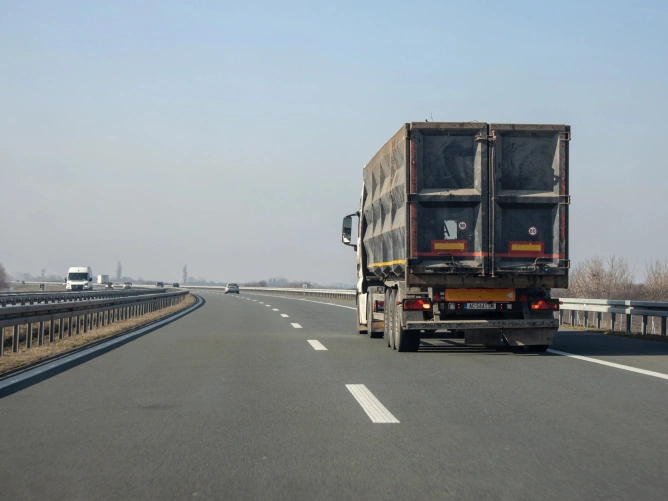
EU countries will be able to grant reductions of up to 75% on infrastructure and user charges for certain low-emission trucks and buses until 30 June 2031, according to the agreement approved by the European Parliament. Applying the incentive remains at the discretion of the countries, and the text still needs to be formally adopted by the Council before it becomes law.
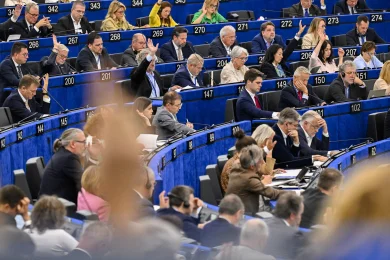
Member States will be able to reduce certain road charges for low-emission trucks and buses by up to 75% until 30 June 2031, after the European Parliament approved on Wednesday the agreement negotiated with the Council on amending EU rules for charging heavy-duty vehicles. The text was supported by 475 votes in favour, 96 against and 70 abstentions, but still requires formal adoption by the Council before the legislative procedure is completed.
In brief
1.States will be able to grant reductions of up to 75% for low-emission heavy-duty vehicles until 30 June 2031.
2.From 1 July 2031, the reduction for this category may reach 50%.
3.Zero-emission heavy-duty vehicles may benefit from exemptions from infrastructure or user charges until 30 June 2031 and from 75% reductions thereafter.
4.Applying these incentives remains optional for Member States, meaning that the vote does not automatically result in reduced charges in all EU countries.
5.Introducing the impact of trailers into the calculation of charges has been postponed until after a Commission assessment that must be carried out by 30 June 2029.
The measure expands the incentives available for heavy-duty vehicles that emit significantly less CO2 than reference models in the same category. Under European legislation, a low-emission heavy-duty vehicle is, in principle, a vehicle that is not classified as a zero-emission vehicle and whose specific CO2 emissions are lower than half the reference level of the sub-group to which it belongs.
The 75% reduction will not be mandatory throughout the Union. The agreement allows countries that use the facilities provided for by the European charging system to offer greater incentives for low-emission vehicles, meaning that the actual level of charges will continue to depend on national decisions and the charging systems applied on the roads concerned. The Parliament’s vote does not, by itself, introduce an automatic reduction in charges for hauliers in a particular Member State.
For low-emission heavy-duty vehicles, the agreement allows reductions of up to 75% until 30 June 2031. From July 2031, states will be able to maintain a reduction of up to 50%. This regime must be distinguished from that applicable to zero-emission vehicles, for which the legislation allows exemption from infrastructure or user charges until the end of June 2031 and a reduction of up to 75% after that date.
The change aims to bring the road-charging system closer to the new European objectives concerning CO2 emissions from trucks and buses. Current rules classify heavy-duty vehicles according to their emissions performance and provide for different levels of charge reductions. The agreement negotiated by Parliament and the Council provides an additional incentive for the low-emission category during a period in which the transition of heavy transport to zero-emission vehicles is progressing more slowly than the co-legislators had anticipated.
States will have one year to adapt their road-charging systems to the new vehicle classification based on CO2 emissions. This is relevant to infrastructure and user charges where states choose to charge vehicles for using roads, since EU legislation does not require all countries to introduce the same charges or the same tariff levels.
Another part of the negotiations concerned more efficient trailers and semi-trailers. These can reduce the consumption and emissions of the truck-and-trailer combination through aerodynamics, weight and other technical features, and the legislative proposal sought to allow this performance to be reflected in the classification used for road charges.
However, the co-legislators decided not to introduce this effect into the system for the time being. Parliament and the Council cited implementation difficulties and the lack of a sufficiently mature methodology and asked the Commission to assess the options by 30 June 2029. Any subsequent change to charging in order to reward more efficient trailers will depend on the outcome of this assessment and on the legislative steps that follow.
The file amends the Eurovignette Directive and is being handled under the ordinary legislative procedure. The provisional agreement between Parliament and Council negotiators had been reached on 30 June, and the Committee on Transport and Tourism subsequently approved it before the plenary vote.
Following Parliament’s vote on 7 October, the Council must formally adopt the text. Only after this stage has been completed, the act has been signed and it has been published in the Official Journal will the new provisions be able to enter into force according to the timetable set out in the directive.
Latest News
14:41
14:27
14:20
14:13
14:04
See more news
NEWS ON THE SAME TOPICS

















.webp)