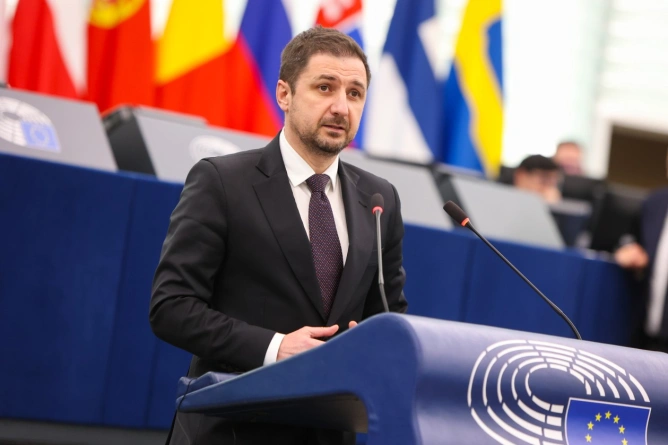
AUR MEP Adrian Axinia promises to block the cutting of air passenger rights in EU negotiations



Always see our news on Google
The Romanian deputy joins the Parliament's conciliation team to defend "the most favorable version" of the directive, clashing with the Council's attempts to dilute compensation rules.
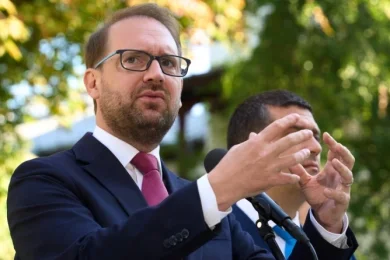
Brussels, January 22, 2026 – Romanian MEP Adrian Axinia (AUR/ECR) has been appointed to the high-level mediation team of the European Parliament, tasked with negotiating the final text of the directive on air passenger rights. Representing the European Conservatives and Reformists Group (ECR), Axinia enters the "trilogue" negotiations — the final legislative phase between Parliament, Council, and Commission — with a mandate to block member states' attempts to weaken consumer protection in favor of airline profitability.
In short
Adrian Axinia (AUR) has been appointed key negotiator for the EP, aiming to protect "the friendliest legislation for passengers" in EU history.
The Parliament is fighting against a proposal from the Council that would raise the compensation threshold for delays to four hours and extend the legal loopholes of "force majeure".
Axinia advocates for new specific rights, including banning fees for hand luggage, free seating for families, and free correction of errors on tickets.
The negotiations are taking place at a critical moment for European aviation, characterized by rising ticket prices and frequent operational disruptions. Axinia stated that the Parliament is bringing to the table "the most favorable version of this directive ever voted for passengers". He contrasted this with the position of the Council of the European Union, which represents national governments. According to the MEP, the Council's proposal strongly favors the airline industry by attempting to raise the threshold for compensation for delays from the current three hours to four hours. Furthermore, the Council is pushing for a reduction in the established compensation scales, which currently range between 300 and 600 euros depending on the flight distance, a move that Axinia argues would discourage airlines from adhering to flight schedules.
A major point of contention in the upcoming discussions will be the definition of "force majeure" (extraordinary circumstances). Currently, airlines frequently invoke technical issues or minor weather disruptions to avoid paying compensation. Axinia warned that the text agreed upon by member states contains an ambiguous list of these exceptions. "In the version agreed upon by member states, the list of force majeure situations... was ambiguous and left room for interpretation, so operators often escaped compensation to passengers," Axinia explained. His mission, along with the EP team, is to close these legal loopholes to ensure that financial accountability remains a real deterrent against poor-quality services.
Beyond delays and cancellations, the Parliament targets the business model based on "hidden fees", often used by low-cost operators. Axinia emphasized that the EP project mandates the right of passengers to board with two pieces of luggage — one larger hand luggage and one smaller personal item — without incurring additional costs. Additionally, the team fights for the "natural right" of families to sit together. The Parliament insists that parents and young children must be seated together without being forced to pay seat reservation fees, a practice that Axinia described as "obscure" and intended to artificially inflate ticket prices.
In the following negotiations, the focus will be on the administrative obstacles affecting travelers. The Parliament remains firm on the position regarding passengers' right to correct spelling errors on tickets (such as a misspelled name) for free, eliminating the exorbitant administrative fees currently charged by many operators. Axinia concluded by reiterating that, in cases of cancellation, the choice must remain with the consumer: immediate rerouting to the final destination or a full and prompt refund, ensuring fair treatment when travel plans are disrupted.
Latest News
20:59
20:42
20:22
20:02
19:40
See more news
NEWS ON THE SAME TOPICS