The European Union reaches an agreement on air passenger rights after 13 years of deadlock.



Always see our news on Google
The European Parliament and the Council of the European Union have reached a provisional agreement on the revision of air passenger rights, the first major reform of the rules in over 20 years. The agreement maintains the three-hour threshold for compensation, keeps the amounts of 250, 400, and 600 euros, obliges airlines to explain to passengers how they can claim compensation, prohibits charging children under 14 years old to sit next to an adult, and introduces more transparency regarding hand luggage.
The European Parliament and the Council of the European Union have reached a provisional agreement on air passenger rights, after 13 years of stalled negotiations and over two decades since the adoption of the current European framework. The agreement maintains the three-hour threshold for compensation, keeps the current levels of compensation, and obliges airlines to clearly and quickly inform passengers how they can claim their rights when flights are delayed, canceled, or when they are denied boarding.
In short
Passengers will retain the right to compensation for delays of over three hours, cancellations with less than 14 days' notice before the flight, or denied boarding.
Compensations remain at 250 euros for flights of up to 1,500 km, 400 euros for flights between 1,500 and 3,500 km, and 600 euros for longer flights.
Airlines will have to inform passengers, within 96 hours of the end of the journey, about their rights and the procedure for claiming compensation.
Children under 14 years old will have to be seated next to the person accompanying them, without any additional charge.
Displayed prices will have to clearly show the option with hand luggage, and the "no-show" policy for return flights will be prohibited.
The provisional agreement was unanimously supported by the European Parliament delegation in the Conciliation Committee and is set to be confirmed by the Parliament and the Council within six weeks, with the possibility of extending the deadline by another two weeks. The European Parliament intends to vote on the text in the plenary session in July.
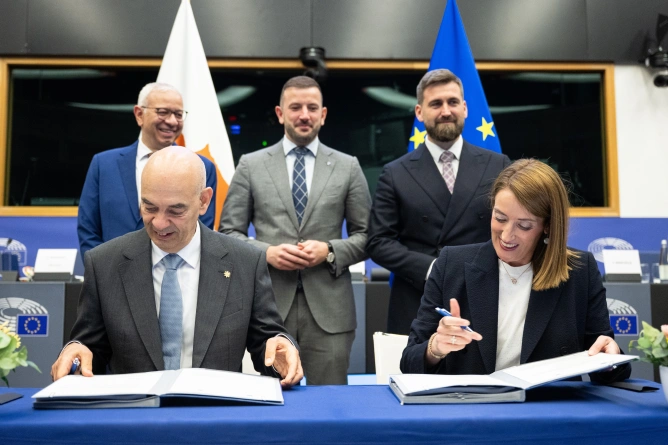
Roberta Metsola, President of the European Parliament, stated that the institution entered negotiations with the aim of finding "a balanced solution" that helps consumers without creating unnecessary burdens for the industry. She affirmed that the Parliament managed to maintain the three-hour threshold for compensation and the same amounts, to strengthen the rights of families and persons with disabilities, and to achieve more transparency regarding prices.
The European Commissioner for sustainable transport and tourism, Apostolos Tzitzikostas, described the agreement as "the first comprehensive reform of air passenger rights in over two decades." He said that passengers will continue to benefit from solid protection when flights are canceled or delayed, and airlines will have more predictability and legal security.
The central rule remains unchanged: passengers can claim compensation after a delay of over three hours, after a flight cancellation with less than 14 days' notice, or in the case of denied boarding. For flights of up to 1,500 km, the compensation will be 250 euros. For flights between 1,500 and 3,500 km, the amount will be 400 euros, and for longer flights, it will be 600 euros.
Airlines will be able to reduce the compensation by 50% for the longest journeys if passengers are offered rerouting to their final destination after the flight disruption or if the delay upon arrival does not exceed four hours. Operators will be able to refuse to pay compensation in cases of extraordinary circumstances, included in an open list, such as natural disasters, war, weather conditions, unruly passengers, or strikes by airports, air navigation services, or ground handling providers.
One of the practically impactful changes concerns informing passengers. In the event of a delay or cancellation, airlines will have to electronically transmit clear instructions on how to claim compensation within four days of the end of the journey. Passengers will not be required to have a user account or to use a special app to receive the information.
Passengers will have nine months to submit their compensation claims. Airlines will have 30 days to pay the compensation or to invoke extraordinary circumstances, explaining why they do not grant the compensation and indicating the steps for filing a complaint.
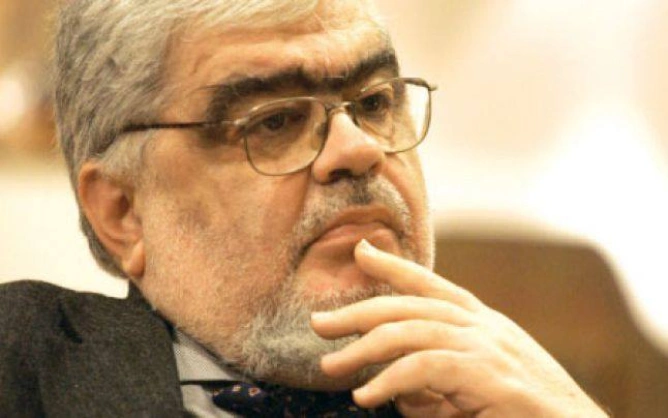
Andrey Novakov, the European Parliament rapporteur, stated at a press conference that the outcome will "go down in history and in the law school textbooks of Europe." He emphasized that one of the important changes is the transfer of responsibility to airlines to explain to passengers how they can obtain compensation. "No passenger will have to search through countless web pages, send emails, seek help, or pay an agency to receive what is rightfully theirs," said Novakov.
The agreement also strengthens the rights of families. Airlines will have to seat children under 14 years old next to the person accompanying them, without any additional charge. Novakov stated that he is "especially proud" that parents will no longer be charged to sit next to their child and specified that he insisted that the rule apply up to the age of 14.
Passengers with disabilities and those with reduced mobility will benefit from additional protections. If they miss a flight because the airport did not help them reach the gate on time, they will be entitled to compensation, rerouting, and assistance. The agreement also strengthens the protection of essential mobility equipment.
The rules regarding care for stranded passengers at the airport will be clarified. Airlines will have to provide refreshments every two hours of waiting, a meal after three hours, and, if necessary in the case of long delays, accommodation for up to three nights.
The agreement also introduces clearer rules regarding hand luggage. Passengers will have the right to take on board, without any additional charge, a personal item, such as a small bag or a backpack. Airlines, intermediaries, and search platforms will have to display from the beginning of the booking process the fare that includes hand luggage, so that passengers can more easily compare offers. Companies will be able to offer cheaper tickets to those who voluntarily choose to travel without hand luggage.
The "no-show" policy for return flights will be prohibited. Passengers who do not use the outbound flight will no longer be prevented from boarding the return flight, and airlines will not be able to charge additional fees for this.
The agreement also eliminates some costs considered abusive or unnecessary for passengers. Airlines will no longer be able to charge additional fees for correcting spelling errors in names or for printing a boarding pass if the passenger has already checked in. Passengers will have the right to obtain a digital boarding pass at check-in, without a user account or special app, and they cannot be denied boarding for using their printed version of a boarding pass issued digitally.
Virginijus Sinkevičius, Vice President of the Transport and Tourism Committee, stated that the Parliament has protected existing rights, added new guarantees, and brought more clarity when problems arise. At the press conference, he responded to criticisms from the airline industry by saying that passengers do not buy tickets to receive compensation, but to leave and arrive on time. "For airlines, the message is simple: deliver what you sell," said Sinkevičius.
The agreement is presented by European institutions as a compromise between consumer protection and the competitiveness of the airline industry. Tzitzikostas stated that he will present a strategy for aviation in the fall and will organize a structured dialogue with the aviation sector beforehand to discuss challenges and solutions.
The updated rules will need to be formally approved by the European Parliament and the Council. The European Commission specifies that, after adoption and publication in the Official Journal of the European Union, the new rules will apply after 12 months.
Latest News
13:59
13:56
13:51
13:44
13:43
See more news
NEWS ON THE SAME TOPICS