EESC calls for automatic compensation and end-to-end protection for single rail tickets



Always see our news on Google
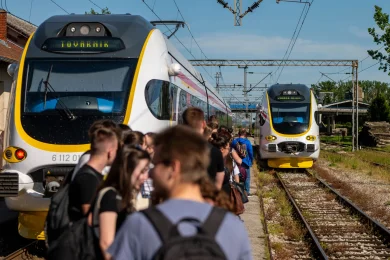
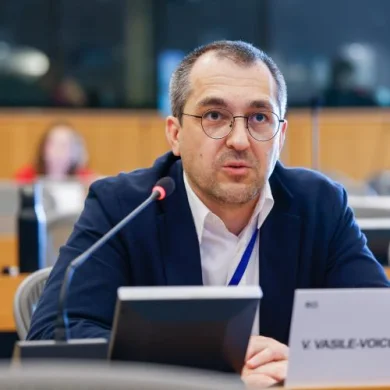
A passenger who buys, in a single transaction, a rail journey involving multiple trains and operators should have rights covering the entire journey—not discover after missing a connection that protection ends at the boundary between two contracts. This is the main demand of the European Economic and Social Committee (EESC), which adopted its opinion on the Commission’s proposal for single rail tickets at its September plenary and called for simpler rules on rerouting, compensation and responsibility towards passengers.
In short, the EESC supports introducing a system under which a journey involving multiple operators and purchased in a single transaction would be protected through to the final destination. If a connection is missed, the Committee proposes that passengers should be able to use, without restrictions, the trains necessary to continue their journey within the next three hours, or the first comparable connection available. The EESC calls for automatic compensation and refunds when operators, sellers or platforms already have the necessary data, and says passengers should not be asked unnecessarily for additional documents. Passengers should have a single point of contact and know from the outset the final price and who is responsible if delays, cancellations or missed connections occur. The EESC opinion is advisory. The Commission’s proposal must still be negotiated and adopted by the European Parliament and the Council.
The problem the new legislation seeks to solve arises mainly on long-distance or cross-border journeys, where a single itinerary may include trains operated by different companies. At present, full passenger protection often depends on whether the services are covered by a “through-ticket”—a ticket legally recognised as a single contract of carriage. If the segments are purchased separately or the contractual structure is different, missing a connection can leave passengers with weaker rights, even if the entire journey was booked from a single location.
The Commission’s proposal seeks to close this gap through the new concept of a “single ticket”. This would cover both a through-ticket and two or more contracts of carriage for a single journey when they are purchased in a single commercial transaction from a railway undertaking, ticket vendor or tour operator. If a delay or cancellation on one segment causes a missed connection, passengers would have rights to assistance, reimbursement, rerouting and compensation for the journey purchased as a whole.
The EESC considers this the right direction but calls for the mechanism to be more practical when passengers are stranded. One of its proposals is that, after missing a connection, travellers should be able to use, without restrictions, the rail services needed for the next part of their journey for three hours or take the first similar connection available. Operators should secure them a seat, even if this requires moving them to a higher class. The Committee also calls for a universal insurance mechanism allowing responsibility to be shared among the operators involved.
This goes beyond what the Commission’s text proposes. The legislative draft grants broader rights for single tickets but does not automatically create a general right to board any train for three hours after missing a connection. The EESC is therefore seeking to reduce one of the most frustrating consequences of market fragmentation: a situation in which passengers know where they need to go and a train is available, but they cannot use it without buying a new ticket or obtaining approval from several operators.
The second important difference concerns compensation. The EESC argues that when the railway company, ticket seller or booking platform already holds the journey and delay data, the refund or compensation should be triggered automatically. Passengers should not be required to prove again a delay already known to the operators’ systems or reconstruct the journey using documents and screenshots.
The Commission’s proposal maintains the current levels of compensation for delays, adapted to the new single ticket: at least 25% of the price for delays of between 60 and 119 minutes and 50% for delays of at least 120 minutes. For certain journeys of more than 12 hours made up of multiple contracts, compensation could be calculated only for the segment on which the delay occurred, with exceptions for night trains and cases where the single ticket is actually a through-ticket.
However, the EESC places less emphasis on the percentage of compensation and more on passengers’ concrete experience. In its opinion, travellers must know before purchase the total price, how the itinerary is structured and who is responsible if things go wrong. If a delay affects the journey time, the ability to catch a connection or the quality of the service, passengers should have a single point of reference rather than being sent between the operator, the platform and the company operating the next segment.
This demand addresses a structural problem in the European rail market. Liberalisation has made it possible for multiple operators to exist in the same market and created new connections, but the purchasing experience has not been integrated at the same pace. An international itinerary may be technically possible and yet difficult to find in a single search, difficult to purchase in a single transaction and difficult to protect legally when services are provided by different companies.
That is why the dossier on rights for single tickets is just one of the three parts of the Passenger Package presented by the Commission in May. The second proposal creates a European framework for rail ticketing and seeks to improve access to information on fares and availability. The third concerns multimodal reservations—that is, platforms through which passengers can combine rail with bus, air travel or other forms of transport in a single planning process and, potentially, a single purchase.
The EESC supports all three directions but calls for digitalisation not to create a new form of exclusion. The opinion stresses that human assistance must be maintained for older people, travellers with disabilities or reduced mobility, those with limited digital skills and people facing unforeseen disruptions. Information on cancellations, delays, alternative routes and compensation should be available in real time through both digital channels and accessible alternatives for those who do not use apps.
The Committee also calls for the new European rules not to reduce more favourable protections already in place in some Member States. This is relevant when the EU seeks to harmonise rights: a common rule can raise protection levels in fragmented markets, but it can also create the risk that a European standard will be treated as a ceiling in countries where operators or national legislation already offer more.
The package is not yet law. The proposal on single tickets, COM(2026)233, was presented by the Commission on 13 May and is under the ordinary legislative procedure. The European Parliament and the Council may amend both the definition of a single ticket and the allocation of responsibilities and compensation mechanisms before the final text is adopted.
The stakes in the negotiations are ultimately simple for travellers and complex for the industry: if a platform sells them a single journey, passengers expect to be buying a single product. European rules are now seeking to make legal liability more closely match this expectation. The EESC calls for this step to go further, so that changing operators in the middle of a journey does not also mean changing the level of protection.
2026Sources

Latest News
22:52
22:48
22:43
22:38
22:20
See more news
NEWS ON THE SAME TOPICS