search icon
search icon
Flag Arrow Down
Română
Română
Magyar
Magyar
English
English
Français
Français
Deutsch
Deutsch
Italiano
Italiano
Español
Español
Русский
Русский
日本語
日本語
中国人
中国人

Change Language

arrow down
  • Română
    Română
  • Magyar
    Magyar
  • English
    English
  • Français
    Français
  • Deutsch
    Deutsch
  • Italiano
    Italiano
  • Español
    Español
  • Русский
    Русский
  • 日本語
    日本語
  • 中国人
    中国人
Sections
  • News
  • Exclusive
  • INSCOP Surveys
  • Podcast
  • EU
  • Diaspora
  • Republic of Moldova
  • Politics
  • Economy
  • Current Affairs
  • International
  • Sport
  • Health
  • Education
  • IT&C knowledge
  • Arts & Lifestyle
  • Opinions
  • Elections 2025
  • Environment
About Us
Contact
Privacy policy
Terms and conditions
Quickly scroll through news digests and see how they are covered in different publications!
  • News
  • Exclusive
    • INSCOP Surveys
    • Podcast
    • EU
    • Diaspora
    • Republic of Moldova
    • Politics
    • Economy
    • Current Affairs
    • International
    • Sport
    • Health
    • Education
    • IT&C knowledge
    • Arts & Lifestyle
    • Opinions
    • Elections 2025
    • Environment
130 new news items in the last 24 hours
  1. Home
  2. International

A Politico survey shows that the majority of citizens in NATO countries believe that cyberattacks on hospitals should be considered acts of war.

Cristina Petrache
whatsapp
facebook
linkedin
x
copy-link copy-link
22 February 2026, 09:51
main event image
International
Foto: pixabay.com
google-preference

Always see our news on Google

A recent survey conducted in the United States, Canada, France, Germany, and the United Kingdom revealed that the majority of the public opinion in these countries considers cyberattacks on critical infrastructure, such as hospitals, as acts of war. Canadians were the most vocal, with 73% supporting this opinion. Respondents also agreed that sabotage of submarine cables should be classified similarly. Despite these perceptions, NATO and national governments have not clearly established the criteria for considering a cyberattack as an act of war. In the past, NATO has mentioned that a foreign cyberattack could trigger the mutual defense clause, but there is no consensus on the severity required for a response. The survey also showed a divergence in the perception of the Russian threat, with the majority of Europeans considering Russia a major threat, while in North America this percentage is significantly lower. In the context of increasing cyberattacks, security officials emphasize the need to integrate cyber capabilities into defense strategies.

Sources

sursa imagine
G4Media
Sondaj Politico: Țările aliate NATO consideră că atacurile cibernetice asupra spitalelor sunt un act de război / Hackerii legați de state vizează din ce în ce mai mult sectoare critice
sursa imagine
Antena3
Politico: Aliații de vârf ai NATO spun că atacurile cibernetice asupra spitalelor sunt un act de război

Latest News

07:16

TikTok and ByteDance have agreed to pay 400 million dollars to settle allegations of violating children's privacy protection laws.

23:04

Dinamo Bucharest defeated SCM Poli Timișoara 35-25 in the first semifinal of the Romanian Supercup, marking the debut of the new season.

23:01

Rapid Bucharest defeated Petrolul Ploiești 2-0 in the first match of the sixth round of the Super League

22:53

Dominic Fritz comments on the CCR's reasoning: "We can rest easy. The sanction does not apply to me, but to my mandate."

22:45

The U.S. Supreme Court temporarily authorized the continuation of work on the White House ballroom, suspending a court order that would have halted the project.

See more news

NEWS ON THE SAME TOPICS
event image
International
Alarming survey: Only 43% of Americans still believe in NATO's assistance after Trump's criticisms
event image
Current Affairs
President Nicușor Dan condemned the hostile cyber activities of Russia, highlighting their impact on the stability of democracies.
event image
Current Affairs
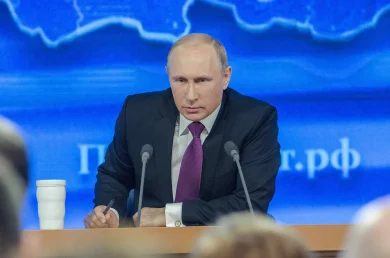
American and European intelligence services warn that Russia may be planning an attack on a NATO member state between this autumn and 2029.
event image
International
A survey, however, shows that only 17% of Germans trust the Bundeswehr's ability to defend the country, while 72% do not believe it could do so.
event image
EU
An ECFR survey shows that Europeans no longer trust the protection of the United States, but support European defense and energy produced in Europe.
event image
International
Study: Europe is not prepared for Russia's drone attacks
app preview
Personalized news feed, AI-powered search, and notifications in a more interactive experience.

app preview app preview
NATO cyber attack hospital war

Editor’s Recommendations

main event image
Opinions
Yesterday 13:35

Sever Voinescu: What is there to say about the nation

main event image
Exclusive
Yesterday 11:41

ANALYSIS The romantic rumor is not the problem. Rather, it is Natalie Harp's access to Trump.

app preview
Personalized news feed, AI-powered search, and notifications in a more interactive experience.

app preview
app store badge google play badge
  • News
  • Exclusive
  • INSCOP Surveys
  • Podcast
  • EU
  • Diaspora
  • Republic of Moldova
  • Politics
  • Economy
  • Current Affairs
  • International
  • Sport
  • Health
  • Education
  • IT&C knowledge
  • Arts & Lifestyle
  • Opinions
  • Elections 2025
  • Environment
  • About Us
  • Contact
Privacy policy
Cookies Policy
Terms and conditions
Open source licenses
All rights reserved Strategic Media Team SRL

Technology in partnership with

anpc-sal anpc-sol