



ANALYSIS Why are farmers protesting and how does "herd health" come into conflict with the ideology of free trade




Always see our news on Google
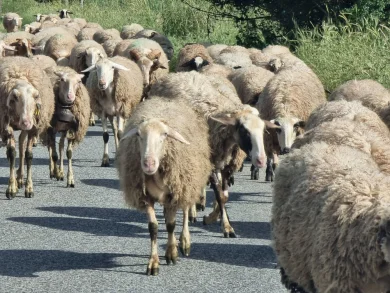
In June, the European Commission extended until December 31, 2026, the export ban on sheep and goats from Romania to third countries. The measure is a veterinary and public health precaution, not a commercial one: it limits the departure of live animals in order to control the epidemiological risk and protect the animal health status of Romania and the European market.
Why the ban was extended
The extension of such a ban generally has a health-related rationale: if there are outbreaks, suspicions of spread, or persistent risks from diseases affecting sheep and goats, European authorities prefer to block exports to non-EU countries until the situation has stabilized.
The stakes are twofold: preventing the disease from spreading through the transport of live animals and avoiding damage to commercial confidence in Romania’s livestock chain.
In other words, the measure does not say that the Romanian sector is “incapable,” but that Brussels considered the epidemiological risk still sufficiently high to justify the restriction.
What it means for farmers
For breeders, the ban primarily affects exports of live animals to markets outside the European Union, where prices can sometimes be better than on the domestic market.
In practice, this can reduce incomes, push producers toward local sales or domestic processing, and intensify pressure on farm costs.
Nevertheless, in the medium term, such a restriction can also serve as a signal for investment in biosecurity, traceability, and better transport infrastructure.
Representatives of ANSVSA and farmers’ associations in Romania described the decision to impose a total suspension as “disproportionate,” requesting alternative regionalization measures (strictly isolating only the areas where the disease is developing) so as not to block farms in unaffected counties. However, due to the severity of the PMR virus, the European executive opted to maintain the extended ban.
Mercosur and the apparent contradiction
There is no strict contradiction between this measure and the opposition of certain parties or associations to the Mercosur Agreement, because we are talking about two different dimensions: one veterinary and public health-related, and the other commercial and political.
Critics of Mercosur usually cite competition from cheaper agricultural products from South America and concerns related to standards, prices, and pressure on European farmers.
In the case of the ban on sheep and goats, the state or the EU is not protecting the market from competition, but is attempting to limit a concrete epidemiological risk.
Where the dissonance appears
The tension appears rather in public discourse: some political actors defend Romanian agriculture in the name of food sovereignty and protecting farmers, but that same agriculture also needs strict health rules in order to export.
This means that you cannot simultaneously demand broad access to markets and the relaxation of the controls that justify that access.
In fact, the pro-Mercosur argument and the argument against health restrictions meet at a common point: both use the idea of competitiveness, but on different grounds.
Romanian farmers have officially requested the total exclusion of the agricultural sector from any form of provisional application of the Mercosur trade agreement.
Conclusions
In short, the extension until December 31, 2026, shows that Brussels has placed animal health and the credibility of the health regime first, rather than the free movement of exports.
The measure does not automatically come into logical conflict with opposition to Mercosur, but it exposes an older contradiction in agricultural policy: farmers want open markets, yet those same markets require rules, controls, and limits when risks increase.
In concrete terms, however, Romania has lost not only an export route, but also an opportunity to show that it understands that in agriculture, market freedom ends where biosecurity begins.
Analysis prepared with the support of Perplexity
Latest News
11:39
11:35
11:28
11:19
11:02
See more news
NEWS ON THE SAME TOPICS





.webp)



.webp)


