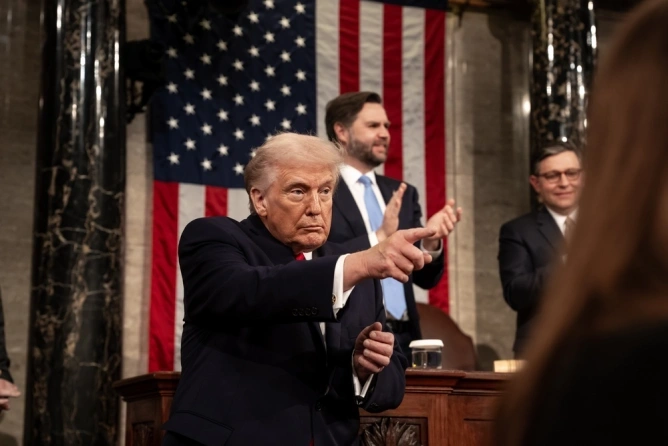
EXCLUSIVE Romania, Trump and the new Atlantic equation: how much is the bet on a single man worth



Always see our news on Google
The bet on Donald Trump can bring Romania tactical benefits, but it cannot replace a mature foreign policy built on institutions, alliances, and continuity. After the midterm elections in the US, scheduled for October, the real question is not whether Washington changes, but how much real space the White House has to decide on its own and how Bucharest can maintain influence without breaking ties with the European Union.
Trump as an opportunity, but not as a foundation
For Bucharest, Donald Trump remains a convenient interlocutor at a time when the theme of security, military spending, and pressure on European allies is coming back strongly to the forefront. His administration speaks in a familiar tone to a part of the Romanian political class: tough on defense, skeptical of European bureaucracy, and oriented towards quick deals. This can create specific opportunities for Romania, especially in defense, energy, and relations with NATO.
However, such an advantage is fragile. When a country ties its foreign policy too visibly to a single leader, it risks losing influence just when that leader weakens their domestic position. For Romania, the smart bet is not on Trump himself, but on the ability to remain useful to Washington regardless of who occupies the White House.
What changes after the midterms
The midterm elections in the US may not remove the president, but they can substantially alter the power of action. If the Republicans lose control of one of the chambers of Congress, the administration becomes more exposed to blockages, and the margin for legislative projects, foreign budgets, and tough negotiations decreases. In such a scenario, Trump would remain a strong symbolic president but more administratively constrained and more dependent on compromises.
If the Republicans maintain or strengthen their majority, the White House gains additional air. Not in the sense of unlimited power, but in the sense of a greater capacity to push the presidential agenda without being permanently forced to defend itself against Parliament. In both cases, however, the American system remains one of checks and balances, not of unilateral command.
The stakes for Romania
For Romania, the major change is not who wins a partisan confrontation, but how much real attention it can gain from Washington at a time when America is rewriting its priorities. Bucharest has an interest in remaining in the area of strategic relevance: the eastern flank, the Black Sea, air defense, military infrastructure, and the ability to support Ukraine without public hesitation. These issues are more important than ideological proximity to one leader or another.
At the same time, Romania must avoid the reflex of confusing visibility with influence. A good appearance in the Washington photo does not guarantee anything if there is no diplomatic consistency, budgetary credibility, and internal predictability behind it. In the relationship with the US, rhetoric matters less than the reputation of a partner that delivers.
What effective positioning would look like
The best strategy for Romania is one of firm alignment, but not servility. Bucharest should bet on three things: security cooperation with the US, institutional loyalty to the EU, and a clear voice in NATO. This means not placing itself in the camp of those who want a symbolic break from Europe, nor in the camp of those who treat Washington as a political adversary.
Practically, Romania can achieve more if it presents itself as a predictable ally, not as an actor that changes direction based on who currently leads America. Washington appreciates countries that contribute to stability and share burdens, not those that seek to profit from every internal fluctuation in the US. In diplomatic language, this translates to good working relationships with both American parties and the main power centers in Congress and the administration.
How far from the EU
Realistically speaking, Romania cannot decouple too much from the European Union without serious costs. The economy, infrastructure financing, the regulatory framework, and a significant part of external credibility come from EU membership. Any attempt to build a Romanian foreign policy almost exclusively on the relationship with the US would create economic and diplomatic vulnerabilities.
More importantly, many objectives that Bucharest pursues with the help of Washington are more effective when formulated in the European key. Defending Eastern Europe, supporting Ukraine, energy security, and democratic resilience are transatlantic issues, not bilateral ones. Therefore, Romania has no choice between America and Europe; it has to choose between a coherent foreign policy and a fragmented one.
The strategic lesson
In the post-midterm context, Romania should understand that the Trump administration can be useful, but not eternal, and that Congress can limit the White House much more seriously than presidential discourse suggests. As the balance of power in Washington becomes more balanced, the importance of proximity diplomacy, institutional contacts, and deep alliances increases.
This means that the bet on Trump must be replaced with a bet on resilience: a good relationship with the US, but without abandoning the European Union; openness to Republicans, but without breaking with Democrats; strategic firmness, but without theatrical gestures. For a country the size of Romania, influence does not come from exuberance, but from continuity.
Analysis conducted with the support of Perplexity
Latest News
23:13
23:02
22:58
22:25
22:21
See more news
NEWS ON THE SAME TOPICS









.webp)