ANALYSIS The attack on the school in Minab: what evidence exists that the USA was responsible?



Always see our news on Google
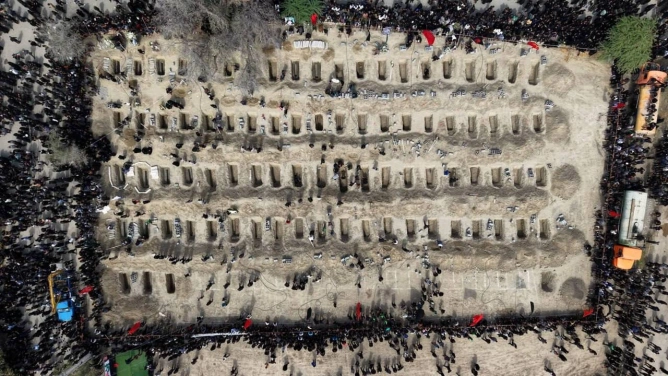
On the morning of February 28, on the first day of the air offensive led by the United States and Israel against Iran, a rocket hit a primary school for girls located near a base of the Revolutionary Guards in Minab, in the south of the country, killing approximately 165 people, mostly students and staff members, and the question is whether the available evidence allows for a clear attribution of responsibility to the USA.
What happened in Minab: the target, the location, the toll
The attack took place as part of a coordinated wave of strikes on Iranian military infrastructure, carried out on February 28. In Minab, a naval base under IRGC command was targeted, located practically next to the Shajareh/Shajareh Tayebeh Primary School, where children aged between 7 and 12 attend. The rocket strike devastated the military complex and likely hit the school at the same time, with the reported toll being at least 160–180 dead, mostly students and employees of the institution.
Synthetic reports describe the episode as one of the most serious episodes of the war, precisely because it strikes a girls' school on the very first day of the campaign. From this moment, Minab has been transformed into the file through which both the military strategy and the compliance with obligations towards civilians are judged.
The factual chain and visual evidence
The factual reconstruction starts from a video taken from a construction site near the base. The video captures a rocket hitting the interior of a military facility in Minab, on the morning of February 28. In the following frames, a column of smoke rises from the area where the school is located, just a few dozen meters from the military complex.
Geolocation of the images and comparison with satellite photographs confirm that the impact occurs within the perimeter of a naval/IRGC base, and the Shajareh/Shajareh Tayebeh school is immediately next to it. Images after the attack show the heavily damaged school building, indicating a direct effect of the explosion on it. From this chain, it is clear that the strike on the base and the destruction of the school are part of the same operational episode.
The type of weapon and why it points to the USA
Analysis of the projectile image and the impact method shows that it is a ground-attack cruise missile from the family used by the American military. The silhouette, trajectory, and explosion profile correspond to a system designed for long-range strikes against fixed targets. On the same day, the US Central Command confirms the launch of such missiles from American ships against Iran, as part of the wave of attacks that includes Minab.
In the context of this war, only the United States operates such missiles. There is no evidence that Iran or Israel possesses and uses a similar system in this campaign. The Americans acknowledge that they have already used dozens of cruise missiles against Iran up to that point. Therefore, from a technical standpoint, the weapon identified in Minab belongs exclusively to the US arsenal, and its use on that day is confirmed even by the American military.
Official statements and alternative explanations
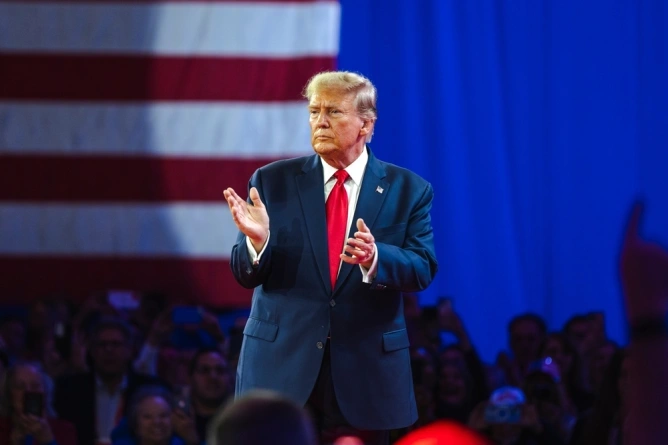
In the face of this evidence, American officials adopt a defensive discourse. Marco Rubio insists that the USA "would not deliberately attack a school" and promises an investigation from Washington, implicitly acknowledging the possibility of an American strike with unintended effects on the school. Donald Trump, on the other hand, claims that, "from what he has seen," the attack would have been carried out by Iran, without presenting any technical or factual elements to support this version.
This hypothesis contradicts the available data: the identified munition corresponds to a system operated only by the USA in this conflict, and none of the independent verifications indicate an Iranian strike on its own school. In the absence of a detailed public report from the Pentagon explaining the target selection, the risk assessment for civilians, and any execution errors, the official position of Washington fails to dismantle the chain of evidence leading to the American military.
The Iranian narrative and the political use of the case
The Iranian authorities quickly transformed Minab into a central symbol of the war. The front page with portraits of dozens of girls under the message "Trump, look them in the eyes" personalizes the human cost and directly associates it with the American president's decision to launch the offensive. In domestic editorials, the attack is presented as an "atrocity" and as evidence of the USA's refusal to seek diplomatic solutions.
Minab is also invoked in the dispute regarding Iranian athletes seeking asylum, with phrases like "over 165 innocent Iranian schoolgirls killed in a double attack on Minab" used to accuse the "hypocrisy" of the West. Beyond the layer of propaganda, these messages rely on the same factual core: a strike on the first day of the offensive, a destroyed girls' school, over a hundred children killed.
The limits of independent verification
The Iranian regime drastically limits international press access to conflict areas. Agencies with offices in Tehran state that they could not visit Minab and the scene of the attack, although local authorities speak of over 150 dead, many of them children. Without a presence on the ground, it is impossible to directly document the exact number of victims, the sequence of strikes, or the possible use of the "double tap" tactic.
These information gaps affect the precision of the reconstruction but do not change the basic elements: the location, date, type of weapon, and the destruction of the school following the strike on the military base. Therefore, most independent analyses remain cautious regarding intent but firm regarding military responsibility.
The assessment of the evidence regarding US responsibility
From the perspective of journalistic and analytical standards, the chain of evidence indicating the responsibility of the United States for the attack in Minab is strong:
verified footage of the impact of a missile on an IRGC/naval base in Minab, on the morning of February 28
identification of the munition as a cruise missile type used exclusively by the USA in this conflict
official confirmation that such missiles were launched from American ships against Iran on the same day
satellite images and other verified data showing the severe destruction of the school adjacent to the base, within the same time frame
the absence of any evidence that another actor used a similar system at that place and time
On this basis, the reasonable conclusion is that the USA bears a high probability of military responsibility for the strike that generated the tragedy in Minab. What remains open concerns the degree of intent, adherence to the principles of proportionality and precaution, and possible execution errors, aspects that can only be clarified through a transparent investigation, to which, for now, there is no access.
Precedents: other American strikes on schools and civilians
Minab fits into a familiar pattern from Afghanistan, Iraq, Syria, or Yemen, where American air or missile strikes have been accused or confirmed to have caused massive civilian casualties and affected schools, hospitals, or other civilian targets. The recurring model is similar: military targets located near civilian infrastructure, the use of "precision" weapons from a distance, and discrepancies between official tolls and those resulting from independent investigations.
References to such precedents outline a context in which Minab does not appear as a totally atypical exception, but as a new episode in a series of controversies related to the human costs of US interventions. The major difference is the clarity of visual evidence and the concentration of a very large number of victims in a single girls' school, in a single day.
Lessons from Minab
Minab resembles precedents through the combination of military targets adjacent to civilian infrastructure, the use of sophisticated long-range weapons, and heated disputes regarding civilian casualties. However, it stands out because there are clear images of the strike, a type of weapon exclusively associated with the USA, and a concentrated impact on a girls' school, which amplifies its symbolic value and political charge.
The lessons are consistent with those from other theaters of war: technical precision cannot negate risk when military targets are embedded in civilian fabric; the lack of post-attack transparency erodes credibility; and the absence of a clear assumption of responsibility transforms such episodes into lasting negative symbols. In this sense, Minab is both a concrete case, with a chain of evidence indicating US responsibility, and a warning about the real limits of "precision" wars in densely populated areas.
Analysis conducted with the support of Perplexity
Latest News
18:40
18:35
18:30
See more news
NEWS ON THE SAME TOPICS