Eurojust announces preventive measures for four more people in the Romania–Germany investigation into the trafficking of women




Always see our news on Google
Eurojust announces preventive measures for four more people following the 22 October operation against a network suspected of the sexual exploitation of women in Germany. In the initial stage, five people were placed in pre-trial detention, while two were placed under judicial supervision.
Four more people were placed under preventive measures in Romania in the joint investigation with Germany into a network suspected of trafficking women for sexual exploitation, Eurojust announced on 6 November 2026. The measures were taken after the 22 October operation, in which seven suspects were detained and 20 searches were carried out in the two countries. The agency does not specify the type of measure ordered for each of the four people subsequently targeted.
In brief
In the initial stage of the investigation, five people were placed in pre-trial detention for 30 days, while two were placed under judicial supervision. The measures subsequently announced for another four people do not permit a total of 11 people in pre-trial detention to be established.
The group allegedly recruited women from disadvantaged backgrounds in Romania, including by feigning romantic relationships, in order to sexually exploit them in Germany. Suspected money-laundering operations are also being investigated.
On 22 October, 16 searches were carried out in Argeș and Constanța and four in Augsburg. The investigation is being conducted through a joint Romanian-German team, supported by Eurojust.
Preventive measures do not constitute convictions. All persons under investigation benefit from the presumption of innocence.
The initial operation was followed by different measures for the seven people detained in Romania. According to the Romanian Police, on 23 October the Argeș Tribunal ordered five of them to be placed in pre-trial detention for 30 days, while prosecutors placed another two under judicial supervision. The Eurojust update concerns four other people, without indicating the exact date, duration or nature of each measure.
The distinction is important because the preventive measures provided for by the Code of Criminal Procedure include both detention and judicial supervision. The latter entails obligations to appear before the authorities and to report a change of residence, and may be accompanied by other restrictions, but it is not equivalent to detention.
Investigators allege that the group was formed in 2024 and organized along family ties. Its members allegedly recruited women from disadvantaged backgrounds, transported them to Germany and forced them into prostitution, keeping the proceeds. Two suspects allegedly used the method known as “loverboy”: feigning romantic relationships to persuade victims to go abroad.
According to the Romanian Police, members of the group allegedly rented accommodation in Germany, arranged transportation for the women and posted online advertisements to attract clients. The victims were allegedly moved periodically between locations to make the network harder to detect.
The investigation also concerns three people suspected of laundering proceeds from exploitation. They allegedly received sums through money-transfer services and concealed their origin, forwarding them to other people or using them for personal benefit. The police mention links to other suspects who allegedly forced eight victims into prostitution; that figure refers to that part of the investigation and is not presented as the total number of victims in the entire case.
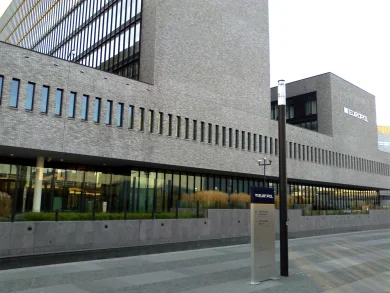
German police officers and a Europol representative took part in the searches in Romania, while Romanian police officers joined the teams in Augsburg. The investigation involves DIICOT Pitești prosecutors and Romanian organized-crime-fighting structures, together with the Augsburg Public Prosecutor’s Office and the Schwaben-Nord police in Germany.
The authorities of the two countries established, with the support of Eurojust, a joint investigation team. This instrument enables them to exchange information and evidence directly, coordinate operations and participate in activities on the territory of the other state. Eurojust provides legal and practical support, while the investigations and procedural measures remain the responsibility of the national authorities.
Under EU law, trafficking in human beings may involve deception or abuse of vulnerability, without necessarily involving physical violence. The victim’s consent to exploitation does not eliminate the offence if such means are used. The European directive also provides assistance for persons presumed to be victims, including safe accommodation, medical and psychological care, and counselling. Establishing the facts and liability in this case is the responsibility of the judicial authorities; the persons under investigation are presumed innocent.
Latest News
17:34
17:27
17:17
17:05
16:55
See more news
NEWS ON THE SAME TOPICS


.webp)