Romania and Belgium are investigating a group suspected of stealing goods from around 70 shipments



Always see our news on Google
The damage is estimated by the Romanian Police at 9 million euros. The joint investigation, supported by Eurojust, targets a group that allegedly obtained transport contracts through seemingly legitimate companies and then staged the disappearance of the shipments. The operation on November 3 included 65 searches in Romania.
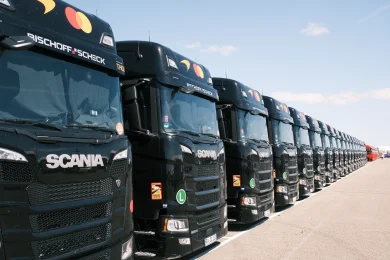
Authorities in Romania and Belgium are investigating a group suspected of stealing goods from approximately 70 shipments, causing damage estimated by the Romanian Police at 9 million euros. The group allegedly obtained the contracts through seemingly legitimate companies, after which it staged the theft of the shipments or the disappearance of the trailers. In the European overview of the operation, presented on November 6, 2026, Eurojust announced that 65 searches had been carried out in Romania on November 3 and that suspects had been apprehended in both countries.
In brief
The group allegedly used seemingly legitimate companies to take over the shipments, after which it simulated thefts along the route or the disappearance of trailers. Falsified identity and transport documents are also being investigated.
Fourteen of the searches in Romania were carried out on the basis of European Investigation Orders issued by the Belgian authorities to obtain evidence.
Five suspects are in pretrial detention in Belgium, according to Eurojust. In Romania, the Argeș Tribunal ordered the pretrial detention of two people, while six were placed under judicial supervision for 60 days.
During the searches, sums in euros, lei and pounds sterling were seized, as well as auto parts, cosmetics and detergents. The total value of the seized goods was not announced.
The authorities of the two countries have been cooperating since February 2026 through a joint investigation team to identify participants, exchange evidence and coordinate operations.
The mechanism described by Eurojust started with an apparently ordinary commercial relationship: the carrier took possession of the goods it was supposed to deliver, and the shipment was then allegedly appropriated. Investigators describe three ways of concealing the thefts. In one of them, the goods were moved into another vehicle, after which the driver reported that they had been stolen along the route. In other situations, the trailers and registration plates were allegedly changed, using a similar trailer, or the disappearance of a trailer left behind under the pretext of a breakdown was staged. The group is suspected of also using falsified identity documents, transport documents, registration certificates and plates.
According to the investigation presented by Eurojust, the group allegedly formed in March 2024, initially consisting of five people, who were later joined by approximately 30 others. The roles were divided among those who obtained the contracts, identified valuable and easily resold shipments, moved goods between vehicles, escorted the shipments and sold the goods.
The targeted shipments contained electronics, household appliances, raw materials, grain, cosmetics, and alcoholic and non-alcoholic beverages. Eurojust indicates that shipments were affected primarily in Romania and Belgium, but also in other European countries. The estimate of 9 million euros in damage was presented by the Romanian Police, which announced investigations for forming an organized criminal group, fraud with particularly serious consequences, computer forgery and money laundering.
The searches took place in the counties of Argeș, Dâmbovița, Ilfov, Dolj, Prahova and Bihor and in Bucharest. Fourteen were carried out on the basis of European Investigation Orders issued by Belgium. This instrument allows a judicial authority to request the obtaining of evidence in another member state, unlike a European arrest warrant, which is used to arrest and surrender a person.
Eurojust reported 11 suspects apprehended in Romania on the day of the action and five arrested in Belgium, where they are in pretrial detention. In an update on the investigation's results, the Romanian Police announced that eight people were detained on November 3 and 4 and that European arrest warrants issued by Belgium had been executed against four others. The Argeș Tribunal ordered the pretrial detention of two of the eight detained people, while DIICOT Pitești placed six under judicial supervision for 60 days. The figures come from reports covering different periods and procedural categories, whose overlap is not explained, so they cannot be added to produce a single total.
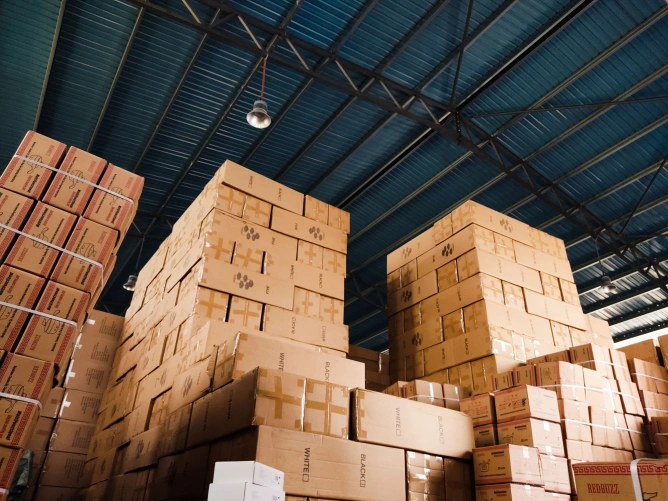
During the searches, approximately 77,000 euros, 61,000 lei and 3,000 pounds sterling were seized, as well as sets of falsified registration plates, according to the police. Investigators also found 22 pallets of auto parts, 32 pallets of cosmetic products, large quantities of detergents, soft drinks and four laptops. The statement does not establish the total value of the seized goods or the proportion of the damage that may have been recovered.
The authorities of the two countries have been cooperating since February 2026 through a joint investigation team established with the support of Eurojust. This enables them to exchange information and evidence directly and to coordinate operations. Investigations and coercive measures remain the responsibility of the national authorities.
In Romania, the case involves DIICOT prosecutors, the Pitești Territorial Service, and organized crime-fighting structures. In Belgium, participants include the investigating judge from the Court of First Instance in Antwerp, the public prosecutor's office and the federal judicial police in Antwerp.
The evidence collected during the searches and the questioning of suspects and witnesses will be used to continue the investigations, according to Eurojust. The allegations are not definitive findings, and the persons under investigation benefit from the presumption of innocence. Pretrial detention and judicial supervision are procedural measures, not convictions.
Latest News
14:30
14:20
13:55
13:42
13:31
See more news
NEWS ON THE SAME TOPICS
.webp)