Romania among the 19 countries targeted in EPPO investigation into more than one million used phones sold as new




Always see our news on Google
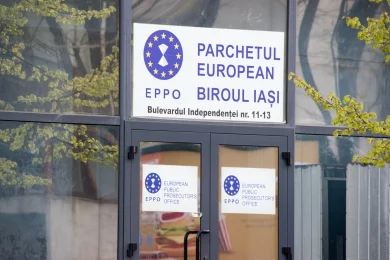
Romania is among the 19 countries where searches and seizures took place in the Troja investigation, coordinated by the European Public Prosecutor’s Office, concerning an organization suspected of having marketed more than one million mobile phones assembled from components used as new products. The operation involved approximately 1,770 police officers, tax inspectors and customs officials, while seven suspects were arrested in Austria, Germany and Spain.
In brief
More than 160 searches and seizures were carried out in 19 countries, including Romania, as part of the investigation coordinated by the European Public Prosecutor’s Office.
The organization under investigation is suspected of having sold more than one million phones assembled from used components, cleaned and packaged to be presented as new products.
EPPO estimates the harm caused to consumers at least EUR 300 million and VAT losses for several member states at more than EUR 30 million.
Seven people were arrested in Austria, Germany and Spain, including the organization’s two alleged leaders. EPPO does not attribute any of these arrests to Romania.
The scheme under investigation allegedly misused the special VAT scheme applicable to second-hand goods for phones sold to customers as new products.
The European Public Prosecutor’s Office in Cologne is leading the investigation into an alleged network that organized a commercial circuit between Asia, several European states and the online platforms used by consumers in the EU. According to investigators, the phones were assembled from used components in Hong Kong and the United Arab Emirates, then cleaned, packaged and shipped to the Netherlands as new products. From there, they reached warehouses in Germany and were sold through online platforms to buyers across the European Union.
EPPO estimates that more than one million phones were sold through this mechanism. The harm to consumers is estimated at least EUR 300 million, in addition to VAT losses of more than EUR 30 million for several member states. The investigation is ongoing, and these figures represent the prosecutors’ estimates at the current stage of the investigation.
The operation led to more than 160 searches and seizures in Austria, Belgium, Bulgaria, Croatia, Cyprus, Estonia, Finland, Germany, Italy, Latvia, Lithuania, Luxembourg, Poland, Portugal, Romania, Slovakia, Spain, Switzerland and the Netherlands. A witness was also interviewed in the United Kingdom. The seven arrests announced by EPPO took place in Austria, Germany and Spain, and those detained include the organization’s two alleged leaders.
The EPPO statement confirms that searches and seizures were also carried out in Romania, but does not specify how many of the more than 160 measures took place on Romanian territory, where they were conducted or which national authority carried them out. Nor is the loss of more than EUR 30 million in VAT broken down by country, meaning that the published data do not permit the attribution of a specific amount to Romania.
A central part of the investigation concerns the application of VAT. According to the evidence described by the European prosecutors, intermediary companies from Austria, Bulgaria, Germany, the Netherlands and Switzerland allegedly used the margin taxation scheme for phone sales starting in 2018. Under certain conditions, the scheme allows a second-hand goods dealer to pay VAT only on the margin between the purchase price and the resale price.
In the case under investigation, however, the phones were allegedly presented to consumers as new products. According to EPPO, under these circumstances VAT should have been calculated on the full value of the sale, and using the scheme intended for second-hand goods allegedly unjustifiably reduced the tax liabilities of the companies involved. The same mechanism was allegedly used both for sales to consumers and for transactions between companies in the network.
The special margin scheme exists in European legislation for the resale of certain second-hand goods, works of art, collectors’ items and antiques. For eligible second-hand goods, the taxable base may be the margin obtained by the dealer, rather than the full sale price. The Troja investigation specifically concerns the suspicion that this facility was used in a circuit in which the phones were offered to buyers as new.
The investigation began following a report submitted by the European Anti-Fraud Office. Europol and Eurojust are among the European partners involved in the operation, alongside the national authorities of the participating states.
The European Public Prosecutor’s Office has jurisdiction to investigate and prosecute offenses affecting the Union’s financial interests, including serious cases of cross-border VAT fraud involving at least two participating states and causing total damage of at least EUR 10 million.
All persons targeted by the Troja investigation are presumed innocent until their guilt is established by the competent courts.
Latest News
18:17
18:02
17:42
17:41
17:36
See more news
NEWS ON THE SAME TOPICS



.webp)