SPECIAL Informat.ro / Top international political topics of the past week. The US and its allies, amid tensions and renegotiations


Always see our news on Google
Iran Announces It Has Captured an American Drone in the Strait of Hormuz
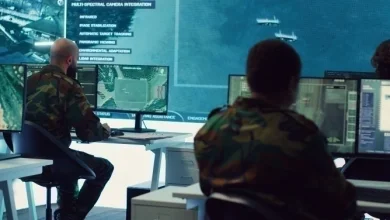
Tensions between the United States and Iran were the most prominent subject in the international press. The Navy of the Islamic Revolutionary Guard Corps (IRGC) announced that it had captured a second American underwater drone in the Strait of Hormuz. Initially, Tehran said it was a REMUS 600 model, then backtracked and identified it as an Mk 18 Mod 2 Kingfish, an autonomous drone equipped with sonar and valued at several million dollars. According to the IRGC, the operation was “coordinated and complex” and used military intelligence and electronic warfare capabilities. The IRGC spokesperson wrote that the Strait of Hormuz “is not only open, but also a hunting ground” for American submarines.
The United States Central Command (CENTCOM) rejected the claims. Its spokesperson, Captain Tim Hawkins, told Al Jazeera that the U.S. military retains “full control over all operational drones” and described Iran’s claims as “clearly desperate.”
Iranian Foreign Minister Abbas Araghchi announced that Tehran had transmitted through intermediaries a seven-day plan to end hostilities. The plan provides for a cessation of fighting, the reopening of the Strait of Hormuz, and the immediate resumption of negotiations on Iran’s nuclear program. In return, Iran is demanding the unfreezing of assets, the lifting of oil sanctions, and the end of the naval blockade. Araghchi said that Iran was prepared to implement the plan if Washington accepted it. Trump rejected the proposal, however, and the decision had an immediate effect on the oil market.
Security tensions were directly reflected in the energy market. The price of Brent crude rose by more than 1% and surpassed $106 per barrel after Trump rejected Iran’s proposal regarding Hormuz. The dollar also appreciated amid tensions between the United States and Iran and expectations of a tougher Federal Reserve policy.
Houthi Rebels Attack Saudi Arabia
The conflict spread into the Gulf, where Iran-backed Houthi rebels from Yemen intensified attacks on Saudi Arabia. They occupied important areas of Yemen’s Red Sea coast, including around the Bab el-Mandeb Strait. French President Emmanuel Macron announced the deployment of troops, radars, and defense systems to the Saudi port of Yanbu on the Red Sea. French Foreign Minister Jean-Noël Barrot specified that the mission was “strictly defensive” and that France was not becoming a party to Saudi Arabia’s war against the Houthi rebels.
The United Kingdom also announced defensive military support for Riyadh. Prime Minister Andy Burnham said that London would send an RAF Voyager aircraft to refuel Saudi fighter jets in flight for several weeks. The aircraft will operate from RAF Akrotiri base in Cyprus, and the mission aims to protect Saudi energy infrastructure and keep oil routes open.
Also on the sidelines of the UN session, the foreign ministers of Turkey, Egypt, Saudi Arabia, and Pakistan affirmed Riyadh’s right to self-defense. Pakistani Prime Minister Shehbaz Sharif condemned the Houthi attacks from the UN podium and declared that the attempted drone attack on the city of Mecca was “a red line.” The Houthi rebels denied the accusation. Russian President Vladimir Putin and Saudi Crown Prince Mohammed bin Salman also discussed the need to ensure navigation through Hormuz and Bab el-Mandeb.
Taiwan, China’s Support for Iran, and the Pomp of the Donald Trump–Xi Jinping Summit Reception
According to sources cited by Reuters, Beijing called for an end to U.S. arms sales to Taiwan, invoking the 1982 U.S.–China communiqué. A $14 billion arms package for Taiwan was also on the negotiating table. U.S. Ambassador to China David Perdue said that Trump had told Xi Jinping that any Chinese assistance to Iran, direct or indirect, in the form of information, parts, or military equipment, was “totally unacceptable.”
Xi Jinping’s reception was lavish: a ceremony at a military air base, an honor guard at the White House, a red carpet, and a flyover by bombers. Xi Jinping announced that he was giving the United States giant pandas and launched a new exchange program for students. In front of the White House, protesters critical of Beijing chanted for Hong Kong’s freedom, while some dressed as Winnie the Pooh, a character long used to satirize the Chinese leader. The BBC concluded that the visit brought “a lot of pomp and little visible progress” on the important issues.
Ambassador Perdue told Fox News that, during discussions about weapons for Taiwan, Trump asked Xi Jinping whether China might also want to buy American weapons. Perdue did not say how the Chinese leader reacted. The Wall Street Journal later reported, citing U.S. officials, that the United States had no plan and had made no offer to sell weapons to China. One official specified that such sales are prohibited by U.S. law.
Trump at the UN: “Annihilation” or a Peace Agreement with Iran
In his speech to the UN General Assembly, Donald Trump said he had a “major decision” to make: a new attack on Iran or a peace agreement. The U.S. president said he could “annihilate” the Islamic Republic if the conflict was not resolved, and the Iranian delegation left the hall during the speech. Trump also criticized the idea of “global governance,” promised to bring peace between Russia and Ukraine, and said that the United States would win the race for artificial intelligence. His tone contrasted with that of UN Secretary-General António Guterres, who warned that global divisions were deepening and emphasized the interdependence of peoples.
Iranian President Masoud Pezeshkian responded directly to Trump from the UN podium. He said that Iran would not be intimidated and would defend itself “to its last breath.” “We will not ask anyone’s permission to defend our country,” Pezeshkian declared. The Iranian leader said that Tehran would not give up its civilian nuclear program, but left open the possibility of negotiations with the United States.
The United States Will Build Two Military Bases in Greenland
On the sidelines of the General Assembly, the United States, Denmark, and Greenland signed a defense agreement allowing the construction of two new American military bases in Greenland. The agreement reaffirms Copenhagen’s sovereignty over the Arctic territory. Trump said that the United States would “immediately” begin developing a significant military presence in the area. Danish Prime Minister Mette Frederiksen said that the agreement was good for the United States, Denmark, Greenland, Europe, and NATO. Greenland’s Prime Minister Jens-Frederik Nielsen described it as a win for all sides. The agreement appears to end more than a year of tensions after Trump had threatened to “take” the territory.
The United Kingdom Reconsiders the Agreement Regarding the Chagos Islands
The British government is reconsidering the agreement under which it would cede sovereignty over the Chagos Islands to Mauritius, after Trump called it “terrible” at the UN. Under the agreement negotiated by Keir Starmer, the United Kingdom would pay an average of £101 million per year to continue leasing the joint British-American military base on the islands. The base is important because of its strategic position in the Indian Ocean. The agreement had been suspended indefinitely in April after Trump withdrew his support. British Defense Secretary Wes Streeting said that the review was necessary because the United States did not support the agreement.
Proposed Maritime Ceasefire for the Black Sea
President Volodymyr Zelensky said at the Crimea Platform summit, held on the sidelines of the General Assembly, that Ukraine was ready for a maritime ceasefire in the Black Sea. This would be based on proposals from Turkey, Egypt, and India. “We are awaiting Russia’s response. Ukraine is ready to ensure safe navigation and food security in the Black Sea if Russia is ready to take real steps toward de-escalation. We have to start somewhere,” Zelensky said. According to a source in the Turkish government, Ankara will intensify its diplomatic efforts to ensure navigation safety in the Black Sea.
Standing alongside Zelensky in New York, Trump said that both sides wanted the war to end and that Vladimir Putin would accept another meeting with the Ukrainian leader. The U.S. president acknowledged, however, that it was unclear whether Putin would attend the G20 meeting in Miami.
Implications for Romania
Latest News
13:43
13:42
13:34
13:26
See more news
NEWS ON THE SAME TOPICS