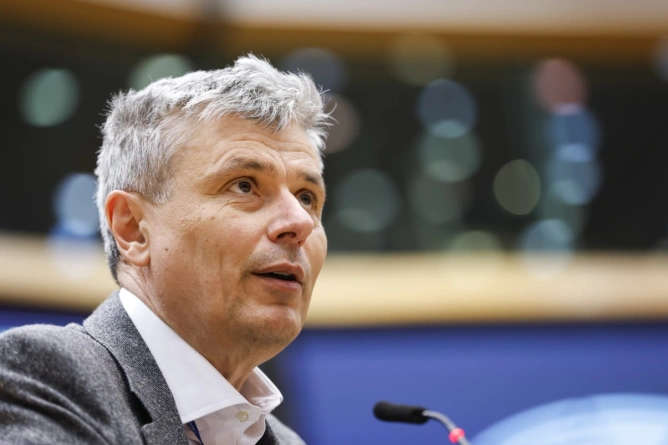
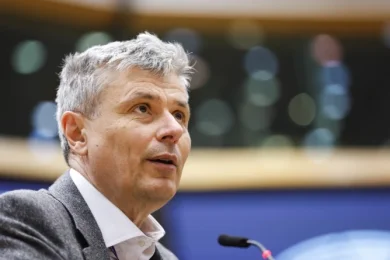
Virgil Popescu warns the European Parliament about the EU's dependence on imported energy technology.
2eu.brussels


EU
Foto: 2eu.brussels

Always see our news on Google
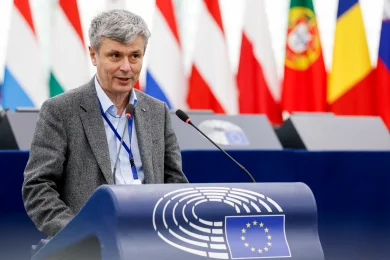
MEP Virgil Popescu warned in the plenary session of the European Parliament that the European Union risks replacing its dependence on fossil fuels with a new dependence on the technology required for energy production. His intervention took place in the context of a debate on the lessons from recent crises and the direction of European energy policies.
In short
Virgil Popescu stated that the EU risks replacing its dependence on fuels with dependence on technology. He warned about imports from countries that are not allies of the European Union. The MEP cited the microprocessor crisis as an example of vulnerability. The speech introduces the idea of a "cost of security" in energy policy. Popescu called for the development of technological production for energy within the EU.
Virgil Popescu stated in his intervention that recent experiences show that dependence on imports represents a structural risk for the European Union. "Yes, we need to learn from the lessons of the past. All the crises we have gone through have shown us that dependence on fuels, on imports from other countries is not good," he said, emphasizing the need for a reassessment of the current direction.
He argued that, in the process of energy transition, the European Union risks creating a new form of dependence. "We are moving forward, we are going with renewable energy and we continue our dependence. We continue our dependence on technology imports this time," Popescu said, referring to the equipment and components necessary for energy production.
In his intervention, the MEP drew attention to the geopolitical risks associated with global supply chains. "Where do we import technology from? From countries that are not our allies," he stated, adding that such dependencies can generate vulnerabilities in crisis situations.
Popescu illustrated these risks with concrete examples, including the microprocessor crisis in the automotive industry, which affected production at the European level. "We have a very clear example, that microprocessor for the automotive industry that has disappeared for the moment and which we found ourselves in the midst of a very large production crisis," he said.
The speech also included a critique of how energy policies are evaluated, suggesting that price should not be the only criterion. "We only look at price, we only look at the fact that if we produce in Europe it is more expensive. We forget that maybe Europeans should learn that there is also a cost of security," Popescu stated.
In this context, the MEP advocated for the development of energy technology production within the European Union, regardless of the type of energy source. "Maybe we can still wake up at the 13th hour and do as much technological production for our energy within the EU," he said.
His intervention is part of a broader debate at the European level regarding strategic autonomy and the Union's ability to reduce its external dependencies, both in the energy sector and in critical technologies.
In recent years, European policies have aimed at reducing dependence on fossil fuels, especially following energy crises and geopolitical tensions. At the same time, the European Union has begun to develop tools to strengthen industrial and technological autonomy, including in energy-related sectors and supply chains.
Virgil Popescu's intervention reflects this shift in focus in the European debate, where the energy transition is analyzed not only from the perspective of the environment and costs but also from that of economic and technological security.
In short
Virgil Popescu stated that the EU risks replacing its dependence on fuels with dependence on technology. He warned about imports from countries that are not allies of the European Union. The MEP cited the microprocessor crisis as an example of vulnerability. The speech introduces the idea of a "cost of security" in energy policy. Popescu called for the development of technological production for energy within the EU.
Virgil Popescu stated in his intervention that recent experiences show that dependence on imports represents a structural risk for the European Union. "Yes, we need to learn from the lessons of the past. All the crises we have gone through have shown us that dependence on fuels, on imports from other countries is not good," he said, emphasizing the need for a reassessment of the current direction.
He argued that, in the process of energy transition, the European Union risks creating a new form of dependence. "We are moving forward, we are going with renewable energy and we continue our dependence. We continue our dependence on technology imports this time," Popescu said, referring to the equipment and components necessary for energy production.
In his intervention, the MEP drew attention to the geopolitical risks associated with global supply chains. "Where do we import technology from? From countries that are not our allies," he stated, adding that such dependencies can generate vulnerabilities in crisis situations.
Popescu illustrated these risks with concrete examples, including the microprocessor crisis in the automotive industry, which affected production at the European level. "We have a very clear example, that microprocessor for the automotive industry that has disappeared for the moment and which we found ourselves in the midst of a very large production crisis," he said.
The speech also included a critique of how energy policies are evaluated, suggesting that price should not be the only criterion. "We only look at price, we only look at the fact that if we produce in Europe it is more expensive. We forget that maybe Europeans should learn that there is also a cost of security," Popescu stated.
In this context, the MEP advocated for the development of energy technology production within the European Union, regardless of the type of energy source. "Maybe we can still wake up at the 13th hour and do as much technological production for our energy within the EU," he said.
His intervention is part of a broader debate at the European level regarding strategic autonomy and the Union's ability to reduce its external dependencies, both in the energy sector and in critical technologies.
In recent years, European policies have aimed at reducing dependence on fossil fuels, especially following energy crises and geopolitical tensions. At the same time, the European Union has begun to develop tools to strengthen industrial and technological autonomy, including in energy-related sectors and supply chains.
Virgil Popescu's intervention reflects this shift in focus in the European debate, where the energy transition is analyzed not only from the perspective of the environment and costs but also from that of economic and technological security.

Latest News
07:45
Toxic smog in Southeast Asia: Schools closed in Malaysia, record pollution in Singapore, and special measures for the Formula 1 race
07:41
Donald Trump honored Elon Musk at the White House and called him a “national treasure”
07:36
Superliga | Victory for Universitatea Cluj in Gruia, 3-1 against CFR Cluj
07:23
Sorin Grindeanu returns Ilie Bolojan’s offer / PSD votes for a minority PNL-UDMR government. Come on!
07:16
Kelemen Hunor estimates that Luca Niculescu has an 80% chance of securing the government’s investiture in Parliament
See more news
NEWS ON THE SAME TOPICS
Opinions
Europe’s new energy doctrine


Personalized news feed, AI-powered search, and notifications in a more interactive experience.