search icon
search icon
Flag Arrow Down
Română
Română
Magyar
Magyar
English
English
Français
Français
Deutsch
Deutsch
Italiano
Italiano
Español
Español
Русский
Русский
日本語
日本語
中国人
中国人

Change Language

arrow down
  • Română
    Română
  • Magyar
    Magyar
  • English
    English
  • Français
    Français
  • Deutsch
    Deutsch
  • Italiano
    Italiano
  • Español
    Español
  • Русский
    Русский
  • 日本語
    日本語
  • 中国人
    中国人
Sections
  • News
  • Exclusive
  • INSCOP Surveys
  • Podcast
  • EU
  • Diaspora
  • Republic of Moldova
  • Politics
  • Economy
  • Current Affairs
  • International
  • Sport
  • Health
  • Education
  • IT&C knowledge
  • Arts & Lifestyle
  • Opinions
  • Elections 2025
  • Environment
About Us
Contact
Privacy policy
Terms and conditions
Quickly scroll through news digests and see how they are covered in different publications!
  • News
  • Exclusive
    • INSCOP Surveys
    • Podcast
    • EU
    • Diaspora
    • Republic of Moldova
    • Politics
    • Economy
    • Current Affairs
    • International
    • Sport
    • Health
    • Education
    • IT&C knowledge
    • Arts & Lifestyle
    • Opinions
    • Elections 2025
    • Environment
59 new news items in the last 24 hours
  1. Home
  2. Opinions
Editorials and opinions

The true energy security

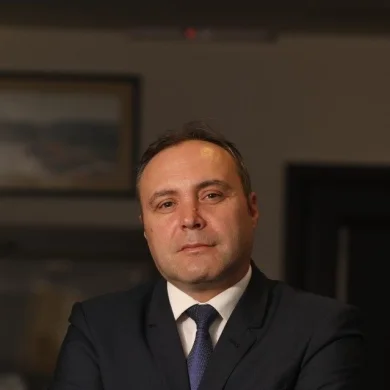
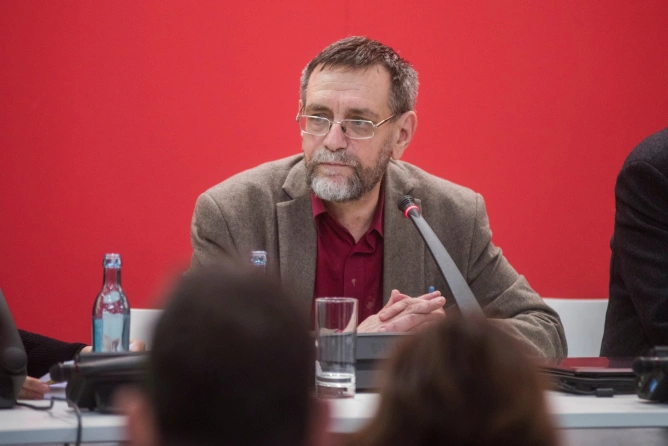
Daniel Apostol, editorialist, analist economic și expert în politici publice, fondator România Durabilă
whatsapp
facebook
linkedin
x
copy-link copy-link
30 June 2026, 16:43
main event image
Opinions
Foto: Facebook.com/dan.apostol
google-preference

Always see our news on Google

In any modern economy, there are visible bills and invisible bills. The first category dominates the noise of public debate: it concerns the monthly cost of energy, the price of gas, and their immediate impact on inflation. The second category, much more insidious, is ignored, although its cost is substantially higher: it is the bill for delayed projects, for investments that are no longer being made, and for capital that chooses other destinations.

Investments in energy have a fundamental peculiarity: they are capital-intensive and amortize over two or three decades. In this sector, investors do not hunt for short-term profits, but seek predictability. Prolonged administrative capping distorts the price signals transmitted by the market. Without a real correlation between supply and demand, capital becomes cautious. The paradox is glaring: a measure designed to protect the consumer in the short term blocks exactly the investments that would ensure lower prices and long-term stability. This is the true invisible bill.

The domestic debate is captivated around production and prices, silently passing over the state of transport and distribution networks. To integrate thousands of megawatts from renewable sources and to support the electrification of the economy, Romania needs billions of euros in infrastructure investments. Every leu directed towards populist general compensation schemes is a leu withdrawn from modernizing the networks. The most effective consumer protection is not perpetual subsidy, but an infrastructure capable of delivering safe and abundant energy.

Although the green sector seems to be going through a boom, beneath the surface of photovoltaic and wind projects, a deep distrust persists. Capital has memory, and long-term institutional investors have not forgotten the abrupt legislative changes or exceptional taxes of the last decade. Trust is built over years and collapses through a single emergency ordinance. The same risk threatens the natural gas sector. Projects in the Black Sea can create the illusion that the wealth of resources guarantees success by itself. However, resources generate prosperity only if they are accompanied by fiscal stability and legal predictability. When the rules of the game become volatile, the cost of capital increases, and strategic advantages erode rapidly.

The great challenge of energy policy will be an orderly exit from the logic of state interventionism. It is a difficult transition, as the public has become accustomed to the illusion that the state can cancel costs. In reality, the state only redistributes them over time, and the bill invariably returns to the entire economy. A mature strategy requires redirecting resources from subsidizing consumption to storage, digitalization, and energy efficiency. These measures do not bring immediate political capital, but build economic resilience.

Energy security does not mean just domestic production or independence from imports. It essentially represents the ability to attract strategic capital and to maintain investor confidence beyond electoral cycles. Romania's major vulnerability is not the lack of resources, but the temptation to prefer momentary political solutions at the expense of long-term strategy.

The future is not determined by today's consumption volume, but by the value of tomorrow's investments.

Latest News

12:46

MoD: 18 drones entered Romanian airspace in 2026

12:22

The ambassador of the Russian Federation was summoned to the Ministry of Foreign Affairs of Romania after the recent drone incidents.

12:12

The Vrancea seismic zone recorded three earthquakes on the night from Saturday to Sunday, the strongest having a magnitude of 3.5

12:00

Ilie Bolojan condemns the violation of Romania's airspace by Russia: "We consider it unacceptable"

11:46

The ANM has issued a yellow code for atmospheric instability for Monday, in several counties.

See more news

NEWS ON THE SAME TOPICS
event image
Opinions
Investor state or catalyst state?
event image
Opinions
Delaying strategic investments places an invisible price on the future of Romania.
event image
EU
The new energy crisis shows us that bureaucracy no longer has a place in the EU
event image
Opinions
What anxieties does Romania have? Transient symptoms and structural illness
event image
Opinions
Energy poverty – a slow bomb that can fracture Europe more deeply than a war with Russia
event image
Opinions
Romania, first in the EU for the real burden of electricity prices
app preview
Personalized news feed, AI-powered search, and notifications in a more interactive experience.
app preview app preview
energy security modern economy energy policy

Editor’s Recommendations

main event image
Current Affairs
1 hour ago
Breaking News

A new drone was shot down on Sunday morning by an F-16 of the Romanian Air Force, in the Sulina–Chilia area.

Sources
imagine sursa
imagine sursa
imagine sursa
main event image
Current Affairs
1 hour ago

Nicușor Dan: "It is unacceptable and intolerable". The president announces that the diplomatic protest against Russia will be based on the investigation regarding the downed drones.

Sources
imagine sursa
main event image
Exclusive
Yesterday 09:15
Original Content

IT News Review by Control F5 Software: The United Kingdom proposes a voluntary nighttime restriction for social networks

main event image
Opinions
5 hours ago

Sever Voinescu, Dilema.ro: He says it's a mirror, not a conscience

app preview
Personalized news feed, AI-powered search, and notifications in a more interactive experience.
app preview
app store badge google play badge
  • News
  • Exclusive
  • INSCOP Surveys
  • Podcast
  • EU
  • Diaspora
  • Republic of Moldova
  • Politics
  • Economy
  • Current Affairs
  • International
  • Sport
  • Health
  • Education
  • IT&C knowledge
  • Arts & Lifestyle
  • Opinions
  • Elections 2025
  • Environment
  • About Us
  • Contact
Privacy policy
Cookies Policy
Terms and conditions
Open source licenses
All rights reserved Strategic Media Team SRL

Technology in partnership with

anpc-sal anpc-sol