ANALYSIS Bab-el-Mandeb under siege: the stakes of a strait that could shake global trade and Romania’s bill



Always see our news on Google
A potential blockade of the Bab-el-Mandeb Strait by the Houthis would turn the Red Sea into a point of geopolitical blackmail with cascading effects: diverted maritime routes, higher transport and insurance costs, pressure on energy markets, military tensions, and a new test for import-dependent economies, including Romania.
What the strait means
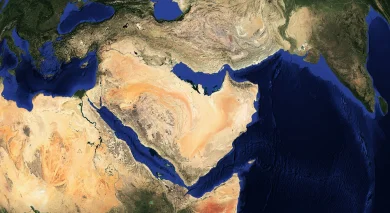
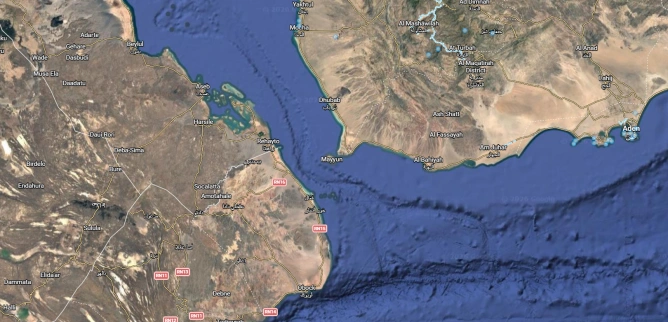
Bab-el-Mandeb is the gateway to the Red Sea and one of the most important “chokepoints” of global trade, and the sources cited describe it as a point through which a significant share of the world’s oil and trade passes. When the Houthi rebels (a group sponsored and supported by Iran) advance along Yemen’s southern coast and onto key islands in the strait, they increase their ability to control or block this maritime corridor. In practice, this means not only a military risk but also an economic lever over traffic between Asia, the Middle East, and Europe.
Impact on trade
The first effect is the diversion of ships onto longer, slower, and more expensive routes, which immediately raises fuel, logistics, and insurance costs. The sources indicate that Bab-el-Mandeb handles approximately 12% of global trade and around 7% of global oil flows, which explains why even a partial disruption has disproportionate consequences. In such a scenario, companies pay not only for transport but also for the risks of war, delays, and rerouting, and these costs spread into final prices. In short, the effect is not merely “more expensive,” but also “slower, more uncertain, and more fragile.”
The energy market
The most sensitive consequence concerns oil and petroleum products, as Bab-el-Mandeb adds to the pressure already exerted on other corridors, such as the Strait of Hormuz. Reuters reports that a blockade of the strait could further restrict approximately 7% of the world’s oil, while the cited analysis emphasizes that the energy market becomes vulnerable not only because of a physical shortage of oil but also because of the difficulty of transporting it to its destination. As a result, the shock is quickly transmitted to international quotations, refining margins, and pump prices. For importing states, the problem is twofold: access to crude oil and access to refined products simultaneously become riskier.
Political and military effects
For the United States and its regional allies, closing the strait creates a strategic dilemma: either intervene militarily and consume resources or leave regional partners to manage the crisis on their own. Reuters notes that a direct offensive against the Houthis could involve the extensive use of naval and air forces and air-defense interceptors, precisely at a time when U.S. stocks and priorities are already under strain. In addition, a harsher confrontation would expose American ships and aircraft to new drone and missile attacks from Yemen. Thus, Bab-el-Mandeb is not merely a navigation issue but also one of regional escalation.
Global economic costs
Rerouting ships around Africa lengthens supply chains and undermines the efficiency of maritime trade, hitting especially hard those sectors with low margins and “just-in-time” deliveries. Experts also discuss a “hidden” economy of Houthi attacks: losses from delays, insurance premiums, port costs, and additional inventories maintained by companies to offset uncertainty. In the short term, the impact is seen in prices; in the medium term, in more expensive contracts; and in the long term, in the reconfiguration of routes and supply strategies. If the blockage persists, the cumulative effect could resemble a global tax on transport and energy.
Regional risks
For Saudi Arabia, the threat is particularly sensitive because its oil exports also depend on routes through the Red Sea, not only the Persian Gulf. Yemen thus becomes a space where a non-state actor can influence the maritime security of the entire region, while Iran gains indirect leverage over two key straits, Hormuz and Bab-el-Mandeb. International analysts suggest that this dual pressure changes the calculations of all the state actors involved: Saudi Arabia, Iran, the United States, as well as Yemen’s internationally recognized authorities. Under such conditions, diplomacy becomes more difficult to separate from military deterrence.
Effects on Romania
For Romania, the main impact would come through energy and transport prices, not through a direct dependence on Bab-el-Mandeb. If oil and petroleum products become more expensive on international markets, the pressure is transmitted to fuel, distribution costs, and ultimately consumer prices. In addition, in an already tense regional context, any rise in international quotations aggravates the vulnerabilities of an economy in which road transport and imports have a large share. Experts are already warning that gasoline could exceed 10 lei and diesel 11 lei, precisely against the backdrop of disruptions on oil routes and rising transport costs.
What should be monitored
The relevant indicators to monitor are: the duration of the blockade, the level of attacks on ships, the military response of the United States and Saudi Arabia, as well as developments in maritime insurance and alternative routes. For the Romanian market, particular attention should be paid to pump prices, transport rates, and any potential effects on imported inflation. If the strait remains formally open but becomes too risky for navigation, the economic effect could be almost as severe as a complete closure. In this regard, Bab-el-Mandeb functions as a barometer of the fragility of global trade.
Analysis prepared with the help of Perplexity
Latest News
17:03
16:41
16:16
15:55
15:38
See more news
NEWS ON THE SAME TOPICS