The Houthi advance toward Bab al-Mandab is putting pressure on the Red Sea route, while ECFR is calling for stronger EU naval missions




Always see our news on Google
A policy alert by the European Council on Foreign Relations recommends more resources for Aspides and Atalanta, including counter-drone and mine-clearance capabilities. The UN confirms an intensification of fighting on Yemen’s west coast, but indicates that commercial flows through the Red Sea still appeared unaffected in mid-September.
The Houthi advance along Yemen’s west coast toward the Bab al-Mandab Strait is increasing pressure on a maritime route that the European Union is already trying to protect through the Aspides and Atalanta naval operations. Julien Barnes-Dacey, Cinzia Bianco and Ellie Geranmayeh, researchers at the European Council on Foreign Relations, recommend a rapid increase in the resources of these missions, including capabilities to counter drones and conduct mine-clearance operations. The proposals appear in a policy alert by the authors and do not represent an EU decision.
In brief
1.The ECFR authors recommend strengthening EUNAVFOR Aspides and Atalanta with additional resources to protect shipping, including counter-drone and mine-clearance capabilities, amid the deteriorating security situation in Yemen and the Red Sea.
2.The UN reported an intensification of fighting on Yemen’s western coast and the continuation of the Houthi advance toward Bab al-Mandab, including reports of the capture of several islands in the southern Red Sea. At the time of the assessment, however, commercial flows through the Red Sea still appeared unaffected.
3.EU leaders had already called in June for Aspides to be strengthened within the limits of its mandate and for Europe’s vulnerability to disruptions in the Strait of Hormuz to be reduced, including by diversifying energy supply routes.
4.Pressure on shipping is regional. The International Maritime Organization had verified 80 attacks on maritime transport in and around the Strait of Hormuz by 16 September, resulting in at least 22 deaths among seafarers, and confirmed the resumption of attacks in the Red Sea.
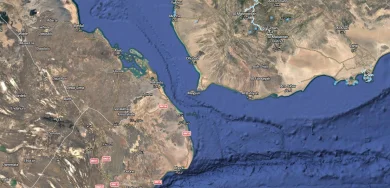
The situation at Bab al-Mandab deteriorated as fighting in Yemen drew closer to the strait connecting the Red Sea with the Gulf of Aden. Khaled Khiari, UN Assistant Secretary-General, informed the Security Council that fighting had intensified on the western coast, while Houthi forces continued their advance toward the strait and had reportedly taken control of several islands in the southern Red Sea. The UN nevertheless stated that maritime monitoring data did not yet indicate a reduction in commercial flows through the Red Sea.
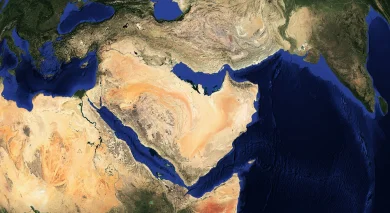
This distinction is important for assessing the risk. The military advance and threats to shipping increase the route’s vulnerability, but do not amount to a blockade of Bab al-Mandab. ECFR goes further in its assessment and considers that developments in Yemen could affect the route used for Saudi energy shipments at a time when navigation through the Strait of Hormuz is already disrupted. The authors thus place the two straits within the same European maritime and energy security issue.
The risk associated with Hormuz is already reflected in the EU’s official position. At the June European Council meeting, the leaders of the 27 member states called for EUNAVFOR Aspides to be strengthened within the limits of its mandate and stated that the Union must reduce its overall vulnerability to the Strait of Hormuz, including by diversifying energy supply routes. The same meeting supported continued diplomatic efforts toward a negotiated solution between the United States and Iran.
Aspides has a defensive mandate. The operation can escort and protect vessels, maintain maritime situational awareness, and respond to attacks on ships within the limits of its mandate and international law. The EU Council extended its mandate until 28 February 2027, with a financial reference amount of nearly 15 million euros for common costs during the March 2026–February 2027 period.
In March, the Council expanded some of the tasks of Aspides and Atalanta. Both operations can collect and share information on suspicious activities around critical submarine infrastructure, while Aspides can cooperate with the Yemeni coast guard and participate in training maritime forces in Djibouti. The Council also stressed at that time the need for sustained contributions of assets, including ships.
The operation continues in practice to escort and protect commercial shipping. The European External Action Service reported in August that Aspides had supported more than 2,390 commercial vessels since its launch and provided close protection for more than 720 vessels. In September, the mission published new examples of commercial vessels that had crossed the Red Sea under its protection.
ECFR considers that the current deterioration in the situation justifies reinforcing these capabilities. The authors propose more resources for protecting commercial shipping, mine-clearance and counter-drone capabilities, and closer maritime cooperation with regional actors. In parallel, they recommend that European governments support diplomatic efforts to reduce the conflict between the United States and Iran, arguing that a new military campaign in Yemen alone would not eliminate the Houthis’ ability to threaten maritime routes.
This recommendation goes beyond what the EU has decided so far. The mandates of Aspides and Atalanta have been extended and adapted, and the European Council has called for Aspides to be strengthened, but ECFR’s specific proposals regarding new capabilities and regional cooperation are options put forward by the three authors. ECFR states that its publications express the views of the authors and not a collective position of the organization.
Meanwhile, pressure on maritime transport remains broader than the situation in Yemen. The International Maritime Organization reported that, from the beginning of the regional conflict on 28 February until 16 September, it had verified 80 attacks on international shipping in and around the Strait of Hormuz, with at least 22 seafarers killed. The IMO separately confirmed that attacks in the Red Sea had resumed, and the most recent Houthi attack mentioned by the organization, on 11 August, resulted in four deaths.
For the EU, the distinction between increased risk and an actual interruption of traffic remains essential. UN data available in mid-September did not indicate a blockade of commercial flows through the Red Sea, but the proximity of the fighting to Bab al-Mandab, attacks on shipping in the region, and the existing pressure on Hormuz once again raise the question of the resources that European missions need to fulfill their defensive mandate.
Latest News
13:27
13:26
13:16
13:09
13:06
See more news
NEWS ON THE SAME TOPICS