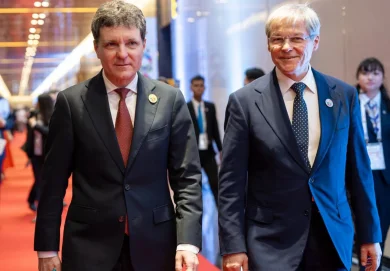
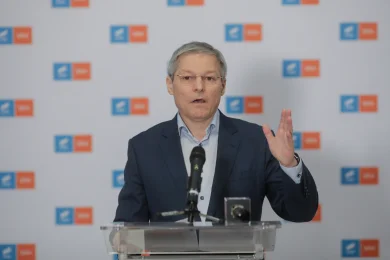
Dacian Cioloș and the race for the leadership of the International Organisation of La Francophonie: the stakes for Romania and its role as a balancing factor



Always see our news on Google
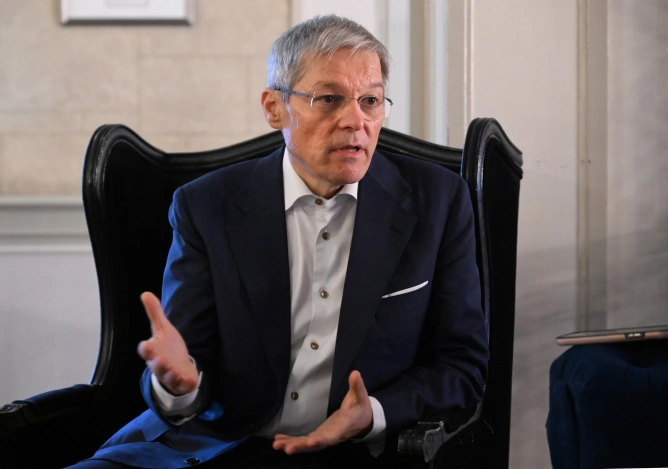
Against the backdrop of the dispute between the Democratic Republic of the Congo and Rwanda, the international press presents Dacian Cioloș as the only candidate with a real chance of defeating Louise Mushikiwabo in the race for the position of secretary general of the International Organisation of La Francophonie, and as the person who can assume the role of unifying La Francophonie. According to sources cited by AFP, the former Romanian prime minister “appears to be Rwanda’s main rival”; the two “seem to be pulling ahead” in the competition, while France 24 describes Kinshasa’s support for the Romanian candidate as a maneuver to counter Rwanda’s reelection.
His potential unifying role is confirmed by the dynamics of the negotiations: Kinshasa announced on Saturday, November 14, the withdrawal of its candidate, Juliana Lumumba, to promote “a consensus candidacy” in favor of Cioloș—a consensus openly supported by Paris and Ottawa, the organization’s main funders.
The decision will be made on Monday, November 16, at the 20th OIF Summit in Phnom Penh, where the leaders of the 53 member states will appoint the secretary general for the 2027–2030 term—for the first time possibly by a vote rather than consensus if negotiations fail.
Who the candidates are
There are four figures in the race.
Louise Mushikiwabo (Rwanda) – the current secretary general, in office since 2018, running for a third term;
Juliana Amato Lumumba (Democratic Republic of the Congo) – former Minister of Culture, daughter of Patrice Lumumba, the emblematic figure of anticolonialism and Pan-Africanism;
Coumba Ba (Mauritania) – physician and former minister, presented as the candidate of neutrality and African compromise;
Dacian Cioloș (Romania) – former prime minister (2015–2017), former European commissioner for agriculture (2010–2014), MEP and leader of the Renew Europe group, the only candidate who does not come from Africa.
According to AFP, two names have pulled ahead in the competition: Mushikiwabo and Cioloș, who has become the current secretary general’s main rival.
Why there is tension
The rupture stems from the conflict between the Democratic Republic of the Congo and Rwanda. Kinshasa accuses Kigali of supporting the M23 rebel group in the east of the country, while the rivalry between Presidents Felix Tshisekedi and Paul Kagame has tainted the entire race. The DRC—the second-largest Francophone country in the world, with 57.3 million French speakers, according to the OIF—has threatened to leave the organization if Mushikiwabo is reelected. Such a rupture would be devastating for the OIF, which had already lost three Sahel states the previous year: Burkina Faso, Mali, and Niger.
Tensions escalated during the summit weekend itself: Kinshasa declared that it was prepared to withdraw its candidate in order to favor a consensus and support Dacian Cioloș, while Kigali denounced Paris’s “pressure” and stated that it had rejected a request from President Emmanuel Macron to withdraw the Rwandan candidacy. At the opening of the summit, Macron called for “unity” and “consensus”, warning that La Francophonie must not become “a Francophonie of isolation or internal divisions.” Rwanda’s Foreign Minister, Olivier Nduhungirehe, nevertheless harshly criticized the DRC’s support for a non-African candidate, emphasizing that Africa accounts for 27 of the OIF’s 53 full members and 65% of the world’s Francophones.
Dacian Cioloș’s role
Announced by President Nicușor Dan in March 2026 and officially submitted on April 15, Cioloș’s candidacy was built around a vision of a “useful Francophonie,” in which French would become a “language of opportunities,” especially economic ones. Cioloș described himself as “a product of La Francophonie” and advocated maintaining the organization’s unity, balanced representation of Africa in decision-making structures, and mediation among members.
The decisive turn came on Saturday, November 14: the DRC withdrew Lumumba’s candidacy and announced a joint initiative in favor of Cioloș, following consultations with Romania. His candidacy also enjoys the public support of the Republic of Moldova, announced by the authorities in Chișinău.
The importance of the candidacy for Romania
If he wins, Cioloș would become the first Romanian to lead an international organization of such magnitude. Since the position was established in 1997, three of the four secretaries general have been African (Boutros Boutros-Ghali—Egypt, Abdou Diouf—Senegal, Mushikiwabo—Rwanda), and no Romanian has so far led the OIF. The only non-African exception was Canadian Michaëlle Jean, a former governor general of Canada of Haitian origin.
Nicușor Dan emphasized that Cioloș’s project, which he describes as “credible and ambitious,” would strengthen Romania’s influence in the Francophone world and its relations with member states, raising the country’s profile on the global stage.
In a recent interview with HotNews, Cioloș explained what is at stake: La Francophonie would enable Romania “to be actively present in areas from which, for various reasons, it has withdrawn in recent decades”—a reconnection with countries growing demographically, economically, and geostrategically.
A possible factor of unity and balance
The tensions between Kinshasa and Kigali themselves propelled Cioloș into the position of compromise candidate. The Congolese withdrawal in his favor shows that he is perceived as an acceptable figure for the camp opposed to Rwanda, without being hostile toward it, while consensus around him is sought by Paris and Ottawa, the organization’s main funders. Cioloș stated that his program could represent “a basis for compromise among member states” and declared himself open to “dialogue among all Francophone states and governments, in order to reach together a consensus that will strengthen the legitimacy and credibility” of the OIF.
There are risks, however: the Rwandan criticism that La Francophonie should not be led by a non-African, given that the organization’s center of gravity lies in Africa, could turn a Cioloș victory into an additional source of friction. Therefore, what is at stake is not merely winning the position, but legitimizing it through consensus.
Summary prepared with the help of Perplexity.
Latest News
14:15
13:56
13:35
13:14
13:02
See more news
NEWS ON THE SAME TOPICS
.webp)