Romania and Bulgaria receive EU satellite imagery following attacks on vessels in the Black Sea



Always see our news on Google
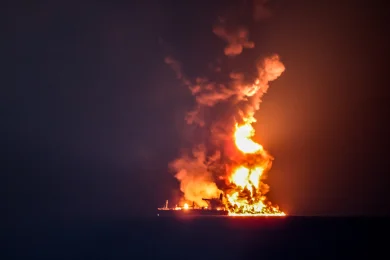
Romania and Bulgaria have requested European support through satellite imagery following recent attacks on commercial shipping in the Black Sea, and the data is in the process of being provided, according to the European Commission. The European Maritime Safety Agency has likewise offered assistance to increase monitoring capacity, but the Commission did not specify the type of imagery delivered and did not confirm all the details about the incidents cited during the briefing.
Romania and Bulgaria are receiving European satellite imagery to improve their capacity to monitor the Black Sea following recent attacks on commercial shipping, the European Commission confirmed on Wednesday, 7 October. Both states requested the imagery, and the Commission stated that its provision is already under way. The European Maritime Safety Agency (EMSA) separately offered support to the Romanian and Bulgarian authorities for maritime safety and situational awareness in the area.
In brief
Romania and Bulgaria requested satellite imagery following the recent attacks in the Black Sea, and the Commission says it is in the process of providing it.
EMSA offered the two states support for maritime safety and improving the operational picture of the situation at sea.
The Commission did not specify what type of imagery is being provided, the exact area covered, or whether it can establish the origin of the attacks.
The Black Sea Maritime Security Hub, developed by Romania and Bulgaria with EU support, aims to integrate surveillance data and protect critical infrastructure, but the Commission did not confirm at the briefing when it will become operational.
Details concerning all the victims, affected vessels, and the existence of an alleged safe maritime corridor mentioned in journalists’ questions were not fully confirmed by the Commission at the briefing and require separate verification with the competent authorities.
Christian Wigand, a spokesperson for the European Commission, said that EMSA had offered support to the Romanian and Bulgarian authorities within the scope of its responsibilities regarding maritime safety and situational awareness. He explicitly confirmed that both countries had requested satellite imagery to obtain a better picture of the situation after the attacks and that its provision is under way.
However, the Commission did not provide details about the satellite products delivered. It did not specify whether they are radar or optical images, what area they cover, how frequently they are provided, or whether they are being used to reconstruct the attacks or identify the origin of the drones. These elements should not be inferred from the mere confirmation that Romania and Bulgaria are receiving imagery.
EMSA ordinarily has surveillance services that combine imagery obtained through Earth observation with information about the position and movement of vessels and other maritime data. The Copernicus Maritime Surveillance service, implemented by the agency for the European Commission, can provide states with satellite information for maritime safety and security, while EMSA’s integrated maritime services allow this information to be combined with data from other systems. At the briefing, the Commission did not identify the specific technical service through which the imagery now requested by Romania and Bulgaria is being provided.
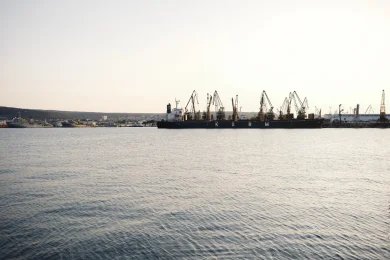
The support comes in a context in which incidents in the Black Sea have moved closer to commercial routes and the exclusive economic zones of member states. The Commission condemned the attacks on civilian shipping and linked the deterioration of maritime security to Russia’s war of aggression against Ukraine. However, the 7 October briefing did not present a technical demonstration regarding the perpetrator of each individual attack discussed by journalists, so this attribution should not be extended beyond what the competent authorities have established for each incident.
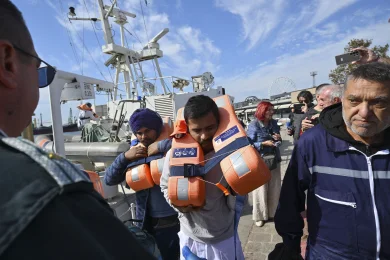
The same distinction applies to information about victims and vessels. Questions addressed to the Commission referred to deaths, sunken vessels, and other details concerning incidents in Romania and Bulgaria. The Commission’s answers focused on European support and navigational safety and did not constitute an independent verification of all the figures and circumstances presented by journalists. The tolls and causes of each incident must be established from communications by the maritime, rescue, and security authorities of the states involved.
The Commission also did not confirm the information presented at the briefing that Romanian, Bulgarian, and Turkish forces had established a safe corridor for commercial vessels close to the coast. Asked about this alleged corridor, the spokesperson said that the European executive needed to verify the information before responding. In the absence of subsequent confirmation, the existence and characteristics of such a corridor cannot be presented as an established fact by the EU.
The satellite support forms part of a broader European architecture for the Black Sea. Romania and Bulgaria are jointly developing the Black Sea Maritime Security Hub, an EU-supported project intended to improve maritime monitoring, information sharing, critical infrastructure protection, and the joint assessment of threats. The Commission and High Representative’s joint report from July describes the hub as a regional structure coordinated by the two countries, with planned links to European networks such as the Common Information Sharing Environment, implemented by EMSA.
The hub should not, however, be confused with the satellite support currently being provided. At the briefing, the Commission said that the project is led by Romania and Bulgaria and will contribute to maritime situational awareness and the protection of critical infrastructure, but it did not provide a sufficient update to confirm the date on which the structure will be fully operational.
In July, the Foreign Affairs Council examined the implementation of the EU’s strategic approach to the Black Sea. At that time, the EU reported 65 projects worth approximately EUR 200 million across the region. This amount represents the broader implementation portfolio of the strategy and not a new EUR 200 million package granted to Romania and Bulgaria following the October attacks.
The SAFE funding available to Romania and Bulgaria for defence investments was also mentioned at the briefing. However, the Commission did not announce a new SAFE allocation in response to the incidents in the Black Sea and did not state that the existing funding is intended entirely for maritime security. The spokesperson specified that the decision on the projects to be funded rests with the national authorities.
The Commission says it has simultaneously intensified operational support aimed at maintaining Ukraine’s exports and coordination with Ukraine, Moldova, and the neighbouring member states, including for the transport of grain and other products. The development of alternative transport routes is presented as a response to repeated attacks on Ukrainian ports and infrastructure.
However, the concrete new element on 7 October remains the immediate operational support: Romania and Bulgaria requested European satellite data following the recent incidents in the Black Sea, and the Commission confirms that its provision is under way.
Latest News
22:55
22:48
22:22
22:14
21:54
See more news
NEWS ON THE SAME TOPICS