The Parliament is preparing a European alert mechanism for organs processed before transplantation.




Always see our news on Google
New technologies allow for the preservation and evaluation of organs outside the body for longer periods and can make usable organs that would otherwise have been rejected. The SANT and ENVI rapporteurs want processed organs to remain under European rules regarding transplantation, voluntary donation, and the prohibition of commercialization, and serious safety issues identified in one member state should be able to be quickly communicated throughout the EU.
The European Parliament is preparing rules for the use of technologies that can maintain, evaluate, or modify organs outside the body before transplantation, at a time when machine perfusion and other forms of processing can extend preservation time and allow the use of organs that would otherwise have been rejected. The rapporteurs of the SANT and ENVI committees request that an organ remains legally an organ even after processing, that it cannot be transformed into a commercial product, and that it remains covered by the principles of voluntary and unpaid donation. In parallel, a European alert mechanism is proposed through which a serious safety issue identified in a member state can be quickly communicated to other authorities and the Commission.
In short The SANT rapporteur, Adam Jarubas, and the ENVI co-rapporteur, Marta Temido, are preparing the Parliament's position on updating EU rules for organ processing before transplantation. A processed organ should remain under the rules regarding quality, safety, voluntary donation, and the prohibition of profit-making from human organs. Technologies such as machine perfusion, which allow for the evaluation of an organ's function, extending preservation, and transport over longer distances, are being discussed. A proposal introduces a European alert mechanism for the rapid transmission of serious safety issues between member state authorities and the Commission. In parliamentary debate, it was shown that 19 patients die daily in the European region while waiting for an organ, and over 56,000 new patients are added annually to transplant lists.
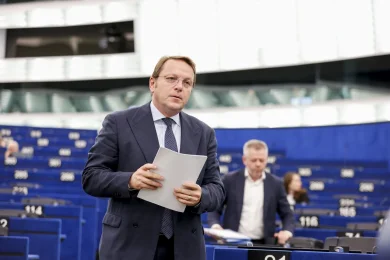
The joint SANT-ENVI report seeks to adapt the European framework for transplants to a significant technological change: organs no longer need to be just harvested, cold-stored, and transported as quickly as possible to the patient. Some can now be connected to perfusion systems outside the body, evaluated, and maintained functionally for longer periods, and certain technologies can modify the biological properties of the organ before transplantation. SANT rapporteur Adam Jarubas stated that such innovations can improve treatment outcomes, increase the number of available organs, and extend the time during which they can be preserved. However, he insisted that the development of biotechnology cannot be separated from patient protection and the ethical principles governing transplantation.
The position prepared by the rapporteurs is that processing should remain within the framework established by the 2010 Directive on the quality and safety of organs intended for transplantation. The technology used on an organ before transplantation should not, in itself, remove it from the applicable legal system for human organs. This delineation becomes important when processing involves drugs, medical devices, human-derived substances, or proprietary technologies. Each of these components may be covered separately by other European rules, but the combined effect on the organ may create risks that are not fully assessed in any of the individual frameworks.
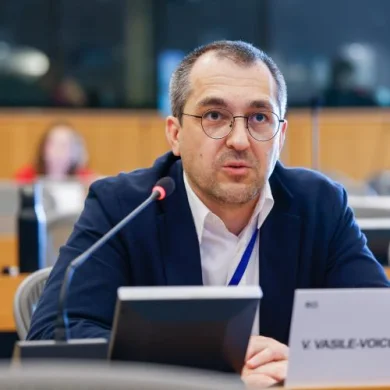
In the intervention presented on behalf of the S&D rapporteur for this part of the file, Marta Temido called for the authorization of processing to be based on a comprehensive benefit-risk assessment. This should take into account the organ, the technology applied, the clinical indication, the available scientific evidence, the benefits for the patient, and any additional risks posed by the interaction between the organ and the drugs or devices used. The same intervention proposes a European alert mechanism. If an authority discovers a serious safety issue related to a processing technology, the information should be able to reach the authorities of other member states and the European Commission quickly.
The reason is the cross-border nature of the European transplant system. An organ can be harvested in one state, processed in another, and transplanted to a patient in a third country, and a problem identified after using a certain method may be relevant to patients and medical centers in multiple states. Machine perfusion was one of the central examples of the debate. Unlike static cold storage, the technology can maintain the circulation of a liquid through the organ and allow doctors to observe whether it functions before transplantation.
MEP and surgeon Ignacio González Casares explained that, in traditional systems, the windows of use were very short: about four hours for the heart, seven for the liver, and 12 for the kidneys. Through hypothermic or normothermic perfusion, doctors can check if the heart beats, the liver produces bile, or the kidney produces urine, while the preservation time can be extended. This extension can also change the geography of transplantation. According to his intervention, an organ that previously could not be transported quickly enough between two member states may become available to a patient at a greater distance.
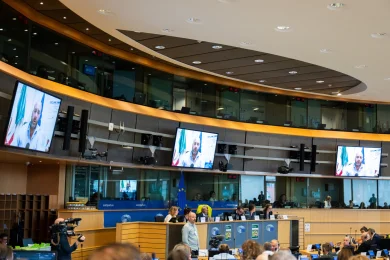
In the debate, the possibility of deeper European cooperation for patients in critical situations and for individuals difficult to match was raised. For patients with numerous antibodies, finding a suitable organ in a single country can be very difficult, while a cross-border system significantly expands the number of potential donors. The pressure on transplant systems remains high. During the meeting, a Renew representative stated that 19 patients die every day in the European region while waiting for an organ and that over 56,000 new patients are added each year to transplant lists.
Processing technologies can expand the donor pool because some organs that would have been considered unsuitable can be evaluated, treated, or improved before transplantation. They can also increase the time available to find the most suitable recipient. However, parliamentarians insisted that the commercial value of the technology should not be transferred to the organ. The fact that a perfusion system, a drug, or a procedure is patented and commercial does not mean that the processed organ should be transformed into a commodity that can be bought and sold. The principle appears in the interventions of several political groups. Donation must remain voluntary and unpaid, and the procurement of organs must continue to operate without profit.
The European Commission supported this delineation during the meeting. The representative of the European executive stated that organs undergoing processing must continue to be considered non-commercial human-derived substances and remain fully subject to the rules and ethical principles of donation and transplantation in the EU. The Commission believes that at the same time, new technologies can extend the available time for transplantation, increase the number of usable organs, and improve their quality. The assessment of benefits and risks should remain the responsibility of the competent authorities for transplantation, in cooperation with authorities from other fields when processing involves drugs or devices.
Data protection represents another component of the file. Processing and monitoring transplant outcomes may involve sensitive medical and genetic information, and Jarubas called for the future framework to guarantee the application of European data protection rules. The Commission believes that the current European framework for personal data already provides the necessary protections, but the rapporteurs want the obligations to be sufficiently clear in the applicable transplant system.
Another concern is equal access. New technologies can be expensive, and differences between medical centers or national systems can determine who actually benefits from them. Parliamentarians have called for an analysis of how costs, intellectual property, and the availability of technologies can influence access to transplantation between member states. The file is still in the stage of building the Parliament's position. The joint report contains amendments proposed by co-rapporteurs, and political groups can submit additional changes. The announced deadline in the meeting for amendments was September 3, 11:00. Therefore, the European alert mechanism and other guarantees are not yet adopted rules. They are part of the parliamentary negotiations on how the EU should allow the use of modern processing technologies without undermining the principles of safety, solidarity, and non-commercialization on which European transplantation is based.
The EU has had a common framework for the quality and safety standards of human organs intended for transplantation since 2010. The evolution of perfusion, bioengineering, and processing technologies has created situations that were not foreseen in detail when the current rules were developed. The update is discussed together with the legislative changes that also concern the European Biotech Act. In the case of human organs, the Parliament seeks to delineate the use of biotechnology from the commercialization of the human body. The final position of the Parliament must be negotiated later with the Council before any amendments can become European law. https://2eu.brussels/ro/news/parlamentul-pregateste-un-mecanism-european-de-alerta-pentru-organele-procesate-inainte-de-transplant-si-cere-ca-acestea-sa-nu-poata-deveni-produse-comerciale
Latest News
14:43
14:38
14:37
14:32
14:28
See more news
NEWS ON THE SAME TOPICS