European support for patients unable to pay upfront for treatment in another EU country, proposed in Parliament



Always see our news on Google
Patients who cannot afford to pay upfront for treatment in another European Union country could receive support through a European solidarity mechanism proposed during a debate of the European Parliament’s Committee on Public Health, SANT. The discussion in Brussels focused on the difference between the right to receive cross-border care and the actual ability to cover the medical bill, travel, and time spent away from home.
In brief The study presented to MEPs proposes targeted financial support for vulnerable patients, including children, people with rare diseases, and families facing high or repeated care costs. The mechanism could help with upfront payments and cover transport and accommodation. It does not yet have an established budget and does not represent a funding program available to patients. MEPs called for clearer reimbursement procedures, easy-to-find information, and better access to European reference networks, including for a second medical opinion. The European Commission stressed that there are two different routes for planned treatment in another Member State, with distinct authorization and payment mechanisms. Parliament is preparing its position on modernizing patients’ rights. The announced deadline for amendments is 10 September, 11:00.
The financial proposal is one of eight areas for action analyzed in a study conducted for the European Parliamentary Research Service, EPRS. The authors identify a persistent problem: a patient may meet the conditions for reimbursement of care and still lack the money needed to start treatment abroad. The situation is particularly difficult when care is expensive, involves repeated travel, or requires the presence of a companion.
The proposed support would target these specific expenses, including transport and accommodation for the patient or family members. Potential beneficiaries include people with limited incomes, patients with rare diseases, children, and people with disabilities. The study recommends exploring a European instrument adapted to these needs, without establishing an individual amount, a total allocation, or a procedure through which families could already submit applications.
MEP Tomislav Sokol requested clarification on the financing and cost of such a mechanism, arguing that these elements are necessary for negotiations on the future European budget. He maintained that some obstacles require changing the rules, since administrative simplification alone does not solve the problem of a patient obliged to advance an amount they do not have. The researchers acknowledged that the available information does not currently allow the cost of the solidarity mechanism to be calculated.
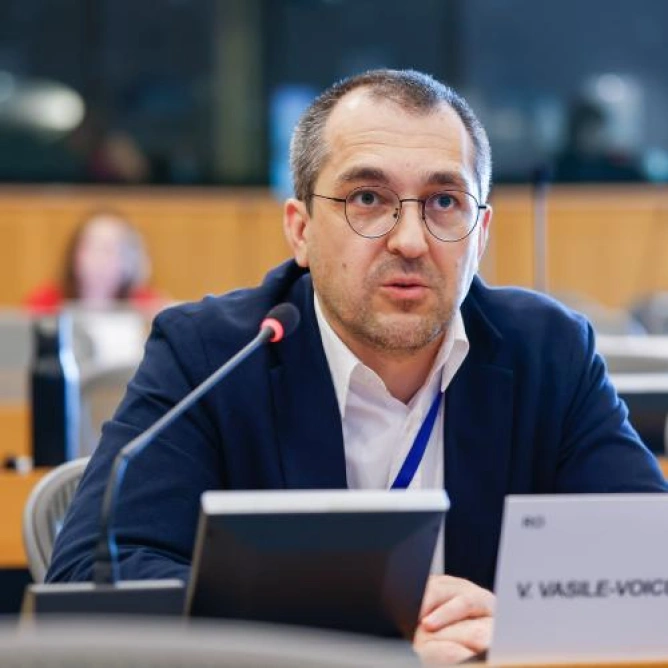
Vlad Voiculescu (pictured) insisted on the needs of children and patients with rare diseases, as well as on using the expertise already available in European reference networks. Victor Negrescu supported simplifying reimbursements, developing common information tools, and financing health in the future multiannual financial framework. He called for patient organizations and health professionals to be involved in defining solutions.
Another part of the debate concerned access to a second opinion. Sokol proposed that the expertise of European reference networks be used more easily when assessing the need for treatment abroad. These networks bring together specialists from several countries for rare or complex diseases, and a European assessment can provide knowledge that is not available in every national system. However, the possibility discussed does not amount to a new right to a second opinion or to automatic approval of reimbursement for treatment.
The study also proposes improving national contact points, information on costs, and prior authorization procedures. Before traveling, patients should be able to find out which treatment can be reimbursed, what documents are required, how much they might receive back, and how they can challenge a decision. Among the options, the authors include clearer rules for telemedicine and comparable information on the quality and safety of healthcare providers.
MEP Liesbet Sommen drew attention to protecting people seeking solutions after exhausting their treatment options. She called for better information about care provided abroad and reimbursement, warning about patients’ vulnerability to unvalidated and costly treatments. Expanding access to clinical trials was also supported in the debate, as an issue that should be developed in modernizing the European framework.
Philippe Roux, a representative of the European Commission’s Directorate-General for Health and Food Safety, explained the difference between the two existing routes for cross-border care. Under the directive on patients’ rights, reimbursement is linked to the tariffs applicable in the state of insurance, and upfront payment can create difficulties. The social security coordination system allows, under its conditions, settlement between the competent institutions for treatments authorized in the public system of the country of treatment. For this reason, the patient’s costs and obligations depend on the route applicable to their case.
Roux said that the European executive is finalizing implementation of the action plan resulting from the evaluation of the existing framework, with a focus on simplification, digitalization, and transparency. He also mentioned the integration of the 24 European reference networks into national systems, supported through the JARDIN Joint Action, which runs until 2027. The Commission presented these ongoing initiatives without announcing the establishment of the financial mechanism proposed in the study.
Patients’ rights to cross-border care have been regulated at European level since 2011, but the organization and financing of health systems remain the responsibility of the Member States. Practical access depends on the medical service requested, the authorization and reimbursement rules, and the patient’s ability to complete the procedures.
The parliamentary report on modernizing these rights is being prepared by Giorgos Georgiou. The debate and the study presented support the development of Parliament’s position; the researchers’ options and the MEPs’ requests do not, in themselves, change the rights or payment conditions currently applicable.

Latest News
23:00
22:55
22:47
22:39
22:33
See more news
NEWS ON THE SAME TOPICS