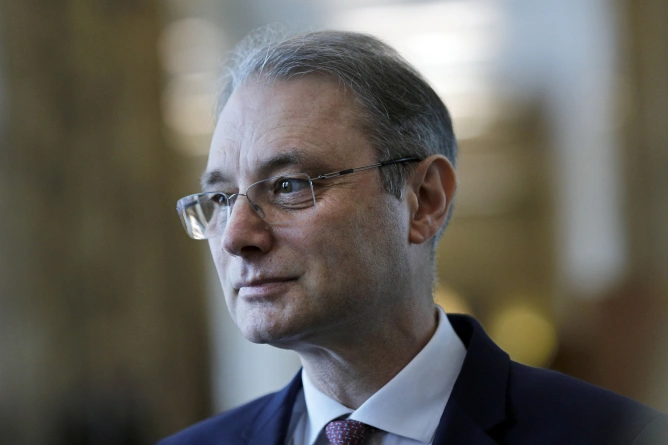
Who is Luca Niculescu, the diplomat with experience in France nominated by Nicușor Dan for the position of prime minister



Always see our news on Google
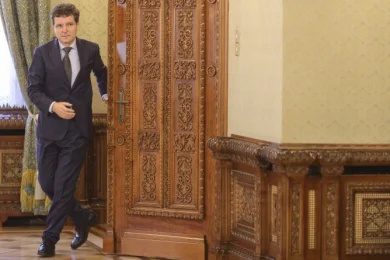
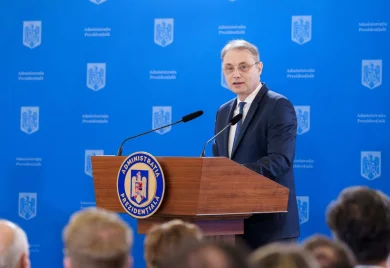
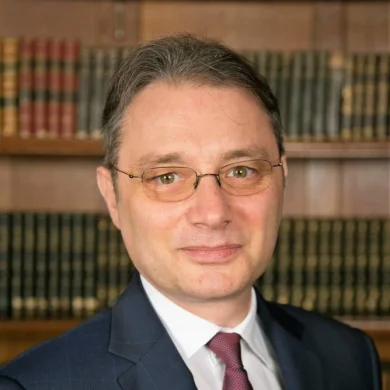
The name of Luca Niculescu, currently Secretary of State at the Ministry of Foreign Affairs and national coordinator for Romania’s accession to the OECD, was nominated by President Nicușor Dan for the position of prime minister, replacing Ilie Bolojan.
Niculescu represents the profile of a technocratic prime minister with a career built in three areas: the press, diplomacy, and management of one of Romania’s strategic foreign policy projects—the accession to the Organisation for Economic Co-operation and Development, OECD.
Luca Niculescu is 55 years old, was born on April 25, 1971, in Bucharest, and graduated from the Faculty of Journalism and Communication Sciences at the University of Bucharest in 1995. A year later, he obtained a master’s degree in European Journalism in Strasbourg, training that would later shape a career strongly connected to the French sphere and European issues.
More than two decades in the press
Before entering diplomacy, Luca Niculescu worked in journalism between 1992 and 2016. He was editor-in-chief of RFI Romania and produced or moderated analysis programs on Money Channel, TVR 1, and Digi24, being associated especially with foreign policy, economic, and European affairs topics.
His experience was not limited to the Romanian press. Niculescu was the permanent correspondent in Romania for several French media outlets, including France Info, France Culture, France Inter, TV5, and the daily Libération. He also had a weekly column in Dilema Veche magazine for five years.
In 2010, the European Institute of Romania awarded him the title of “European Journalist of the Year.” In 2008 and 2011, he also received the award of the Association of Television Professionals in Romania for the best talk show. His official profile also records the title of “Francophone Personality of the Year,” received in 2003, as well as the fact that RFI Romania was awarded the Order of Cultural Merit in the rank of Knight in 2015.
His transition from the press to administration and diplomacy distinguishes him from the classic profile of a party politician. On the one hand, this is an advantage because he brings public communication experience and familiarity with foreign policy files. On the other hand, precisely the absence of his own political base may become a vulnerability in a fragmented Parliament, where negotiations with the parties are decisive.
Luca Niculescu, ambassador in Paris
In 2016, Luca Niculescu was appointed extraordinary and plenipotentiary ambassador of Romania to France, a mandate he held until 2022. During the same period, he was also accredited to the Principality of Monaco and the Principality of Andorra.
The post in Paris holds particular importance for Romanian diplomacy: France is one of Romania’s main European partners, and the French capital hosts key international organizations. As ambassador, Niculescu represented Romania in dealings with the OECD and the International Organisation of La Francophonie.
Between 2019 and 2022, he was also president of the Group of Francophone Ambassadors in France. The position indicates a diplomatic network developed in the Francophone sphere, as well as experience representing a country in a multilateral environment, different from the daily confrontation of Romanian domestic politics.
The Paris period also brought him several distinctions. In 2019, he received the Order of Arts and Letters in the rank of Commander, awarded by the French Ministry of Culture, and in 2023 he was awarded the Legion of Honour in the rank of Commander by the President of France. In Romania, he received the Royal Cross in 2022.
The OECD file
Since September 2022, Luca Niculescu has been Secretary of State at the Ministry of Foreign Affairs and national coordinator for Romania’s accession process to the OECD.
Accession to the OECD is considered one of the major stakes of Romanian diplomacy and administration, as it involves sectoral assessments and alignment with standards in areas such as the economy, corporate governance, investment, combating corruption, education, the environment, competition, and fiscal policies. For a possible prime minister, this would be the main argument for administrative competence: Niculescu already works with ministries, institutions, and international commitments requiring coordination among multiple decision-making centers.
His profile would suggest prioritizing governance focused on external credibility, relations with European and Western partners, and accelerating the OECD project. However, this direction alone would be insufficient to solve the central problem facing any designated prime minister: building a functioning majority in Parliament.
Personal details and assets
According to information published by Digi24 based on the wealth declaration submitted while he was ambassador, Luca Niculescu owned shares in two forested plots of land in Balotești, as well as several real-estate properties, some acquired through inheritance: three apartments and a vacation home in Dâmbovița County.
The same material notes that Niculescu has spoken publicly about his family origins. His great-grandfather, Jean Niculescu, was a member of the PNL, a deputy, senator, and, briefly, Minister of Trade in an Averescu government. This is a biographical element that may fuel public interest, but it does not amount to the diplomat’s current political affiliation.
To date, his public career has been more institutional than electoral. He is not known as a party leader and has no direct experience leading a government or a ministry with a domestic portfolio, including budgetary and social affairs. Instead, he has worked in institutions and missions where negotiation, external representation, and management of complex files were central.
A technocrat, after the Veștea and Mureșan failures
According to the constitutional procedure, Niculescu must seek Parliament’s vote of confidence on the government program and the list of ministers. Investiture requires the absolute majority of parliamentarians—233 favorable votes out of a total of 465 deputies and senators.
Recent precedents illustrate how much this arithmetic matters. The Siegfried Mureșan government, supported by PNL-USR-UDMR, fell on September 30, after securing only 182 “for” votes. The Adrian Veștea cabinet was rejected in the investiture vote, with 189 votes “for” and 23 “against,” far below the required threshold of 233.
In the case of Eugen Tomac’s cabinet, which did not even reach a vote in Parliament, Niculescu’s name was indicated for the Foreign Affairs portfolio.
For Luca Niculescu, therefore, the decisive test would not be his diplomatic résumé, but the ability of President Nicușor Dan and the parties to turn a technocratic profile into a majority of at least 233 votes, five months after the Bolojan government fell.
Summary prepared with the assistance of Perplexity
Latest News
07:42
07:42
07:21
07:18
07:09
See more news
NEWS ON THE SAME TOPICS
.webp)