



Europe is marking vaccination progress against the backdrop of rising cases of measles and whooping cough.



Always see our news on Google
The European Commission, WHO Europe, and UNICEF warn, at the beginning of European Immunization Week, that the decline in vaccination rates in some countries and the spread of outbreaks threaten the health gains made in the last two decades.
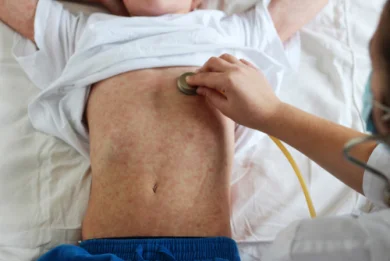
The European Commission, the WHO Regional Office for Europe, and the UNICEF Regional Office for Europe and Central Asia warn that the progress made through vaccination in the last two decades is under pressure from declining immunization rates in some countries and the increase in outbreaks of preventable diseases. In the joint statement published at the beginning of European Immunization Week, the three institutions state that in 2024, over 298,000 cases of whooping cough were reported in the WHO European region, the highest number ever recorded, and over 127,000 cases of measles, the highest level in the last 27 years.
In short 1. The European Commission, WHO Europe, and UNICEF warn that vaccination progress in the last two decades is threatened by declining immunization in some countries and increasing outbreaks. 2. In 2024, over 298,000 cases of whooping cough were reported in the WHO European region, the highest number ever recorded.
3. In the same year, measles cases exceeded 127,000, the highest number in the last 27 years.
4. The statement reminds that the WHO European region has been free of endemic poliomyelitis since 2002, and rubella cases have decreased by over 99% between 2000 and 2024.
5. The three institutions link the new outbreaks to a lack of information, misinformation, distrust in vaccines, and uneven vaccination coverage.
The joint statement is signed by the European Commissioner for Health and Food Safety, Olivér Várhelyi, the WHO Regional Director for Europe, Hans Henri P. Kluge, and the UNICEF Regional Director for Europe and Central Asia, Regina De Dominicis. The text marks the 20th edition of European Immunization Week and seeks to combine a favorable vaccination record with a call for political and health mobilization.
The document insists that vaccination has brought major results in the region. According to the statement, worldwide immunization has saved approximately 154 million lives since 1974. In the WHO European region, high vaccination coverage has significantly reduced the burden of vaccine-preventable diseases. The text reminds that the region has remained free of endemic poliomyelitis since 2002, that it was close to regional elimination of measles and rubella, and that between 2000 and 2024, rubella cases decreased by over 99%, diphtheria cases by 90%, and mumps cases by 95%.
The statement also shows that many countries have expanded their national programs to protect children against other serious diseases, including meningitis, pneumonia, and rotavirus. Almost all states in the region now include the human papillomavirus vaccine in their immunization programs, aimed at preventing cervical cancer and other types of cancer. The text also notes that pregnant women can now be protected against diseases such as whooping cough, influenza, COVID-19, and respiratory syncytial virus, which helps protect both mothers and newborns.
Against this backdrop, the signatories warn that the backlash in some countries is becoming increasingly visible. According to the statement, some of the current outbreaks can be explained by a lack of awareness, misinformation, and distrust in vaccines or health authorities. At the same time, the text emphasizes that the re-emergence of these outbreaks reveals uneven vaccination coverage, as well as deficiencies in immunization programs and primary healthcare systems.
This diagnosis is accompanied by a clear call for investment and institutional continuity. The statement says that investments in immunization programs are essential to maintain current gains and ensure the sustainability of ongoing efforts. The central formulation is direct: Europe cannot afford to take steps backward, and national and regional immunization programs must be strengthened, while coordinated actions at the global level must be accelerated.
The European Commission states that it has already allocated considerable resources to support immunization efforts both within the European Union and globally. Meanwhile, UNICEF, WHO, and the Commission say they will continue to collaborate with each other and with partners to address current challenges and reach marginalized communities that do not have equitable access to vaccines. The final message of the statement is formulated without ambiguity: vaccines work, save lives, and protect communities.
European Immunization Week was launched in 2007 in 53 countries in Europe and Central Asia, to raise awareness of the need and the right of every child to be protected against vaccine-preventable diseases. The joint statement published in 2026 uses the 20th anniversary of the initiative to link the positive immunization record to a clear warning about the weakening of vaccination coverage and the resurgence of outbreaks.
The political message from the Commission, WHO, and UNICEF is that the vaccination record can no longer be treated merely as a historical success of public health, but as a priority of health policy that requires investment, combating misinformation, and strengthening primary healthcare systems. In this sense, the focus shifts from celebrating the past to protecting the gains already made.
Latest News
11:15
11:12
11:04
11:02
10:58
See more news
NEWS ON THE SAME TOPICS












.webp)


