CEPS says that the Ebola outbreak tests the European Union's ability to build global health resilience.



Always see our news on Google
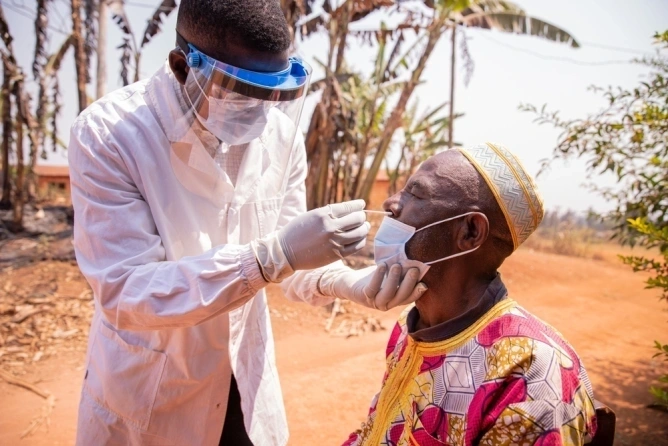
The current Ebola outbreak in the Democratic Republic of Congo and Uganda may become a test for the new European health resilience agenda, argues Cosima Lenz in a CEPS analysis. The epidemic has surpassed 670 confirmed cases and 135 deaths, but the real toll could be higher due to surveillance, testing, and reporting issues. The analysis warns that the reduction of American funding for global health has weakened the response capacity in the region, and the European Union must show whether it can transform its resilience strategy into coordination, public trust, and concrete support on the ground.
The current Ebola outbreak in the Democratic Republic of Congo and Uganda could become a decisive moment for the European Union's new agenda on global health resilience, argues Cosima Lenz in an analysis published by CEPS. The stakes are not just whether the EU can send money or equipment, but whether it can coordinate partners, support local health systems, and combat distrust and misinformation in a crisis where every delay can mean new transmission chains.
In short The current Ebola outbreak has surpassed 670 confirmed cases, primarily in the Democratic Republic of Congo, but also in Uganda. Over 135 deaths have been confirmed, but the CEPS analysis warns that the figures may only represent a partial picture. The outbreak involves a variant without an effective vaccine or treatment, according to the analysis. The reduction of American funding for global health in 2025 has weakened surveillance, testing, logistics, and response capacity in several countries. CEPS states that the European Union must demonstrate that its global health resilience initiative can work in practice, not just as a strategic document.
The Democratic Republic of Congo has experienced numerous Ebola outbreaks since the virus was identified in 1976, including the epidemic from 2018-2020, which caused over 2,200 deaths. The current outbreak, declared by the World Health Organization a public health emergency of international concern on May 17, raises different issues.
The CEPS analysis shows that the epidemic has surpassed 670 confirmed cases, primarily in the Democratic Republic of Congo, but also in Uganda, with growing concerns about a possible spread to South Sudan. Over 135 deaths have been confirmed, but the toll may be incomplete due to ongoing difficulties in surveillance, testing, and reporting.
The outbreak is concerning not only because of the disease but also because of the context in which it is unfolding. According to the analysis, the involved variant has no effective vaccine or treatment, and health systems in the region must respond at a time when traditional international support is weaker.
CEPS links the current vulnerability to the substantial reduction of American funding for global health in 2025. For decades, U.S. support has sustained epidemiological surveillance, laboratories, logistics, personnel training, and emergency response mechanisms. The cuts have eliminated key personnel, including a specialized Ebola response team.
In an Ebola outbreak, the ability to quickly identify cases, trace contacts, and convince communities to cooperate is crucial. If these mechanisms are weakened, isolation and case tracking become much more difficult, and the disease can spread before authorities have a clear picture of the situation.
The analysis cites warnings that funding cuts have left the region "dangerously exposed," with medical units lacking sufficient protective equipment or surveillance capacity. In such conditions, the response to the epidemic depends not only on treatments but on the basic functioning of the health system.
For the European Union, this outbreak becomes a test of its own global health agenda. After the COVID-19 pandemic, the EU has tried to present itself as a stronger actor in global health, including through the Global Health Resilience Initiative.
This initiative emphasizes health systems led by partner countries, crisis preparedness and response, diversification of supply chains and production capacities, trust in science, and a more coherent global health architecture. CEPS notes that these objectives align precisely with the vulnerabilities exposed by the current Ebola outbreak.
The EU has already provided financial and technical support for the epidemic response and has invested in recent years in African surveillance, research, and training capacity, including research on Ebola and wastewater surveillance. For CEPS, these investments are a practical expression of European objectives, but also a sign that expectations of the EU are rising as other donor allies withdraw.
The first major challenge is coordination. In health crises, money is not enough if international actors, local authorities, humanitarian organizations, and health institutions do not clearly know who does what, who decides, and how responsibilities are divided. The analysis shows that the United States has long been the main actor capable of convening and coordinating responses of this type, but their withdrawal has affected credibility and coordination capacity.
CEPS notes that the EU has already defined itself as a facilitator and coordinating actor in the 2022 Global Health Strategy and in the Global Health Resilience Initiative. However, formulating an ambition in a strategic document does not automatically mean the ability to deliver in an emergency, on the ground, with multiple actors and limited resources.
The second challenge is misinformation. In Ebola outbreaks, distrust in authorities, false theories about the origin of the disease, and suspicions towards external actors can block testing, isolation, contact tracing, and treatment. If people do not believe that the disease exists or think that medical interventions are dangerous, the health response can fail even when resources are available.
The analysis reminds that the World Health Organization has identified misinformation as a major threat to global health. The pandemic has shown how quickly public trust can be eroded, and Ebola particularly depends on community cooperation, as rapid identification and isolation of cases are essential.
CEPS observes that the European initiative on health resilience recognizes the importance of trust in science and combating false information. However, the analysis states that the document provides few details about the concrete mechanisms through which the EU will support public communication, local actors, and combat misinformation during health emergencies.
For resilience to work in practice, the EU must go beyond declarations. This means supporting credible local communication, engaging community leaders, strengthening the capacity of health authorities to explain risks and interventions, as well as preparing these mechanisms before a crisis breaks out.
The analysis insists that the question is not whether the EU can replace the United States or whether it can become the largest global donor in health. The real test is whether the EU can operationalize its own vision: coordination among partners, support for priorities set by affected countries, trust with communities, and rapid coverage of critical gaps in surveillance and response.
This approach requires flexibility. Long-term development frameworks are important, but in an acute outbreak, quick decisions, support tailored to the field, and the ability to respond when systems are under pressure are needed.
CEPS concludes that health resilience will not be measured by the strategies published by governments, but by their ability to act when outbreaks like Ebola arise. For the European Union, the question is whether it can turn its vision of resilience into a tangible reality.
https://2eu.brussels/ro/news-articles/ceps-spune-ca-focarul-de-ebola-testeaza-capacitatea-uniunii-europene-de-a-construi-rezilienta-sanitara-globala
Latest News
09:27
09:09
08:56
08:38
08:22
See more news
NEWS ON THE SAME TOPICS

.webp)