What we know so far about the global Microsoft outage. OpenAI and Anthropic affected



Always see our news on Google
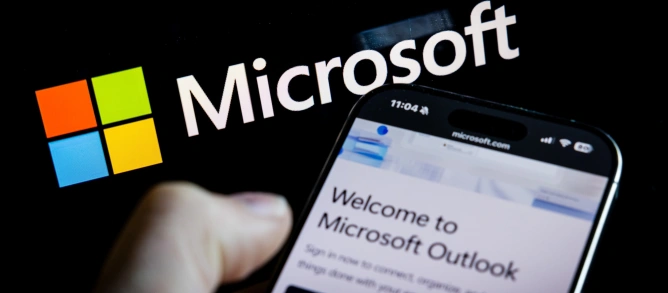
Microsoft’s global outage that began on Thursday, November 12, 2026, continued into Friday, affecting Outlook, Teams, and Copilot, as well as the activities of public institutions and companies, and OpenAI’s and Anthropic’s connections to Microsoft services. The company reported a partial recovery, but the initial interventions on the servers did not result in a lasting restoration.
Available information indicates a technical infrastructure problem, not a cyberattack. However, the detailed technical cause and the reason why recovery is taking so long had not been fully explained.
What caused the outage
Microsoft attributed the incident to server problems and announced that it had applied adjustments to the affected infrastructure.
According to Reuters, these interventions produced some regional improvements but did not ensure a sustained recovery.
The company said it was analyzing additional measures to increase infrastructure stability.
A central element is Exchange Online, the cloud messaging platform that provides email, calendars, contacts, and tasks.
In a service status update, Microsoft stated that Microsoft 365 features dependent on Exchange Online and email were affected, while elements without this dependency remained functional.
Therefore, this is not a complete shutdown of all Microsoft products.
This is not a cyberattack
At this time, there is no confirmation that the outage was caused by an attack. Microsoft said it was not aware of any malicious activity causing the disruption. Australia’s Minister for Home Affairs and Cyber Security, Tony Burke, likewise said that Microsoft believed it was not facing a cyberattack.
Burke reported that the situation could resemble, in some respects, an incident caused by an update that did not work properly.
Which services are affected and what is happening with OpenAI and Anthropic
Outlook, Teams, and Copilot are among the affected services, but the extent of the problems depends on the features used and their connection to the messaging infrastructure.
According to Reuters, OpenAI and Anthropic reported problems connecting their platforms to Microsoft services. The impact on these integrations should not be confused with a general outage of the two companies’ platforms.
The consequences extend beyond the technology sector. Indian airlines IndiGo and Akasa Air announced problems with email support services, while Reuters reported disruptions to fund administration activities at financial firms in Taiwan.
How serious is the outage
Downdetector data cited by Reuters indicate a peak of more than 130,000 reports of problems with Outlook in the United States on Thursday, around 1:00 p.m. on the East Coast, or approximately 8:00 p.m. in Romania. At 11:30 p.m. on the East Coast—Friday, 6:30 a.m. in Romania—there were still more than 18,000 reports.
Problems were also reported in India, Australia, and Japan. These figures measure reports, not the total number of people affected.
The outage affected institutions in several countries. The U.S. House of Representatives announced that its users were experiencing problems, while the Japanese government confirmed effects on its IT infrastructure.
In Australia, the affected organizations included the intelligence agency and the federal police.
In the United Kingdom, the BBC documented difficulties affecting general practitioners, pharmacies, and schools, as well as the communication systems of some public institutions.
However, these effects do not amount to a general shutdown of healthcare services: health organizations indicated that alternative procedures were available, while some clinical and operational systems continued to function.
Its duration is one of the reasons the incident has attracted experts’ attention. Gergely Orosz, author of “The Pragmatic Engineer” and a former engineer at Skype and Uber, told the BBC that a global outage lasting more than 12 hours is extremely rare for a service of this size.
“It is very possible that this is the most serious outage of business email services of all time,” he said.
Why it was not fixed sooner
Microsoft identified the affected servers and intervened on them, but the results were not lasting. Reuters reports that the adjustments produced a partial recovery in certain regions, without a sustained restoration of services. The company continued to evaluate additional measures to stabilize the infrastructure.
Remediation is therefore hampered by the difficulty of returning the infrastructure to stable operation. After several servers became unavailable, requests were handled by those that remained, which became overloaded.
The initial interventions brought only partial improvements, and some restored services encountered problems again. Microsoft is gradually reintroducing traffic, but it has not yet explained in detail what is causing these new disruptions.
Microsoft maintains that the system is gradually recovering, but this does not mean a simultaneous recovery for all users.
For delayed emails, the company extended the delivery waiting period to 48 hours, a measure intended to reduce the risk of messages failing to reach their destination before services recover.
Summary prepared with the help of Perplexity
Latest News
23:50
23:45
23:32
23:25
23:05
See more news
NEWS ON THE SAME TOPICS