



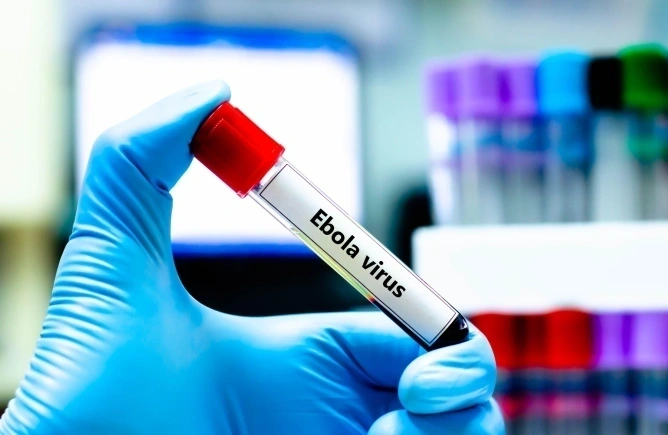
The European Union does not recommend entry checks for travelers returning from the Ebola outbreak area.
Liviu Brăteanu


EU
Foto: kitsawet saethao / Alamy / Profimedia

Always see our news on Google
The European Union does not recommend, at this stage, entry controls for travelers returning from the Democratic Republic of the Congo and Uganda, although the Ebola Bundibugyo outbreak in these two countries has been declared by the World Health Organization as a public health emergency of international concern. The EU Health Security Committee supports that there is no evidence that such measures would be effective in preventing the importation of cases into Europe.
The European decision is important because it separates two different levels of the crisis: the high risk in the affected area and the very low risk for the general population in the EU/EEA. Instead of generalized entry controls into Europe, European authorities support monitoring of well-implemented exit controls in the affected countries, informing travelers, and preparing European health systems for the rapid detection of any imported cases.
In short
The outbreak is caused by the Ebola Bundibugyo virus and affects the Democratic Republic of the Congo and Uganda. On May 24, WHO reported over 800 suspected cases and over 200 suspected deaths in the Democratic Republic of the Congo, of which over 90 cases and 10 deaths were laboratory confirmed. Five cases have been reported in Uganda, and WHO raised the risk at the national level in the Democratic Republic of the Congo to "very high," maintaining the regional risk at "high" and the global risk at "low." The European Centre for Disease Prevention and Control assesses the risk for the general population in the EU/EEA as very low. The European Union calls for the preparation of hospitals, laboratories, and public health authorities, but does not recommend entry controls into Europe or other special travel measures in the EU/EEA.
The current outbreak has triggered the activation of several European health coordination mechanisms. The Health Security Committee adopted, on May 22, 2026, an opinion on the EU's common approach to the Ebola Bundibugyo outbreak in the Democratic Republic of the Congo and Uganda. An ad-hoc high-level meeting then took place on May 24, with the participation of several European states, the European Commission, ECDC, EMA, WHO, HERA, ECHO, and other relevant structures.
Epidemiological data evolved rapidly within a few days. In the opinion from May 22, the Committee mentioned over 700 suspected cases and over 170 deaths, with 82 cases and seven deaths confirmed in the laboratory. In the report of the meeting from May 24, the toll indicated by WHO had risen to over 800 suspected cases and over 200 suspected deaths in the Democratic Republic of the Congo, of which over 90 cases and 10 deaths were laboratory confirmed.
Most cases have been reported in the provinces of Ituri, North Kivu, and South Kivu. Uganda reported five cases, after the document from May 22 mentioned two confirmed cases in Kampala, linked to exposure in the Democratic Republic of the Congo. The evolution shows why European authorities are closely monitoring the outbreak, even though the risk of sustained transmission in Europe is considered very low.
The Ebola Bundibugyo virus is part of the ebolavirus group that can cause severe forms of disease in humans. Transmission occurs through direct contact with the blood or bodily fluids of infected persons, living or deceased, with contaminated materials, or through contact with infected animals. The Committee's document reminds that Bundibugyo Ebola outbreaks have been previously reported in Uganda and the Democratic Republic of the Congo, and the species was first identified in 2007 in the Bundibugyo district of Uganda.
For Europe, the central conclusion of ECDC is that the probability of secondary transmission of the Bundibugyo virus in the EU/EEA and the emergence of sustained transmission chains is very low. The argument is that any potential cases would likely be identified and isolated quickly, and the recommended control measures would be applied. Even though the infection can cause severe illness in affected individuals, the impact on public health at the level of the EU/EEA population is estimated to be very low.
The Health Security Committee does not recommend entry controls in EU/EEA countries for individuals returning from the affected area. According to the adopted opinion, such controls would consume time and resources and would not effectively identify infected individuals. The absence of symptoms at departure or arrival does not exclude the onset of the disease later, which limits the usefulness of border screening upon entry into Europe.
Instead, the Committee supports the WHO recommendation for high-standard exit controls in the affected region. These can reduce the risk by identifying symptomatic travelers before boarding and can discourage sick individuals from traveling. The document notes, however, that even exit measures cannot completely prevent the export of cases, as symptoms may appear after departure.
The European Union calls on public health authorities in the EU/EEA to increase the level of awareness among health professionals regarding the evolution of the outbreak and possible symptoms among returning travelers, healthcare workers, or humanitarian workers. The Committee recommends reviewing infection prevention and control guidelines for suspected or confirmed cases and updating training materials where necessary.
An important stake is testing capacity. European laboratories are called to prepare for the rapid identification and diagnosis of possible cases. The European reference laboratory for emerging viral pathogens, zoonotic and rodent-borne, has provided recommendations regarding the diagnosis of the disease caused by the Bundibugyo virus, biosafety considerations, and available testing methods. A survey has also been launched regarding the capacity of national reference laboratories in Europe to diagnose the virus and their support needs.
The European response also includes support in the affected region. ECDC activated, on May 18, the EU Health Task Force to send an expert to Africa CDC, in Addis Ababa, for coordination and operational planning. The Commission, through its health, research, humanitarian aid, and emergency health preparedness structures, is pursuing both technical support and possible mobilization of equipment, mobile laboratories, and diagnostic capacities.
European documents highlight a major medical vulnerability: there are currently no vaccines or treatments with regulatory approval for the disease caused by the Bundibugyo virus. Vaccines are still in preclinical development, and some therapeutic options, including monoclonal antibodies or antivirals such as remdesivir and the oral form obeldesivir, are mentioned as possible candidates, depending on availability and further confirmations.
The Commission also mentions the research and development dimension. A contribution of 7.4 million euros to the WHO R&D Blueprint could accelerate clinical studies for vaccines and treatments, and the EU supports Africa CDC with 2 million euros for tracking the Ebola virus and other pathogens through wastewater surveillance. Additionally, through Horizon Europe, the Commission and CEPI co-finance the FILOVAX project, which aims to develop a multivalent vaccine against filoviruses, including the Bundibugyo strain.
European humanitarian support includes, according to the Committee's opinion, personal protective equipment, sample collection kits, mobile laboratories, and diagnostic capacities. DG ECHO, its field network, and EU delegations coordinate operational efforts, and the Union's civil protection mechanism can be activated by affected countries, directly or through WHO, for assistance requests.
The Bundibugyo Ebola outbreak is a severe health crisis for the Democratic Republic of the Congo and Uganda, but European documents indicate, at the same time, that the risk for the general population in the EU/EEA remains very low. The European response focuses on surveillance, hospital preparedness, diagnostic capacity, communication for travelers, and support in the affected region.
Authorities do not recommend generalized border measures in the EU/EEA, but call for health systems to be prepared for the scenario of imported cases. For the affected region, the stake is controlling the outbreak at the source, in a context described by the Committee as complicated by conflict, humanitarian pressures, and uncertainty regarding the true extent of transmission.
The European decision is important because it separates two different levels of the crisis: the high risk in the affected area and the very low risk for the general population in the EU/EEA. Instead of generalized entry controls into Europe, European authorities support monitoring of well-implemented exit controls in the affected countries, informing travelers, and preparing European health systems for the rapid detection of any imported cases.
In short
The outbreak is caused by the Ebola Bundibugyo virus and affects the Democratic Republic of the Congo and Uganda. On May 24, WHO reported over 800 suspected cases and over 200 suspected deaths in the Democratic Republic of the Congo, of which over 90 cases and 10 deaths were laboratory confirmed. Five cases have been reported in Uganda, and WHO raised the risk at the national level in the Democratic Republic of the Congo to "very high," maintaining the regional risk at "high" and the global risk at "low." The European Centre for Disease Prevention and Control assesses the risk for the general population in the EU/EEA as very low. The European Union calls for the preparation of hospitals, laboratories, and public health authorities, but does not recommend entry controls into Europe or other special travel measures in the EU/EEA.
The current outbreak has triggered the activation of several European health coordination mechanisms. The Health Security Committee adopted, on May 22, 2026, an opinion on the EU's common approach to the Ebola Bundibugyo outbreak in the Democratic Republic of the Congo and Uganda. An ad-hoc high-level meeting then took place on May 24, with the participation of several European states, the European Commission, ECDC, EMA, WHO, HERA, ECHO, and other relevant structures.
Epidemiological data evolved rapidly within a few days. In the opinion from May 22, the Committee mentioned over 700 suspected cases and over 170 deaths, with 82 cases and seven deaths confirmed in the laboratory. In the report of the meeting from May 24, the toll indicated by WHO had risen to over 800 suspected cases and over 200 suspected deaths in the Democratic Republic of the Congo, of which over 90 cases and 10 deaths were laboratory confirmed.
Most cases have been reported in the provinces of Ituri, North Kivu, and South Kivu. Uganda reported five cases, after the document from May 22 mentioned two confirmed cases in Kampala, linked to exposure in the Democratic Republic of the Congo. The evolution shows why European authorities are closely monitoring the outbreak, even though the risk of sustained transmission in Europe is considered very low.
The Ebola Bundibugyo virus is part of the ebolavirus group that can cause severe forms of disease in humans. Transmission occurs through direct contact with the blood or bodily fluids of infected persons, living or deceased, with contaminated materials, or through contact with infected animals. The Committee's document reminds that Bundibugyo Ebola outbreaks have been previously reported in Uganda and the Democratic Republic of the Congo, and the species was first identified in 2007 in the Bundibugyo district of Uganda.
For Europe, the central conclusion of ECDC is that the probability of secondary transmission of the Bundibugyo virus in the EU/EEA and the emergence of sustained transmission chains is very low. The argument is that any potential cases would likely be identified and isolated quickly, and the recommended control measures would be applied. Even though the infection can cause severe illness in affected individuals, the impact on public health at the level of the EU/EEA population is estimated to be very low.
The Health Security Committee does not recommend entry controls in EU/EEA countries for individuals returning from the affected area. According to the adopted opinion, such controls would consume time and resources and would not effectively identify infected individuals. The absence of symptoms at departure or arrival does not exclude the onset of the disease later, which limits the usefulness of border screening upon entry into Europe.
Instead, the Committee supports the WHO recommendation for high-standard exit controls in the affected region. These can reduce the risk by identifying symptomatic travelers before boarding and can discourage sick individuals from traveling. The document notes, however, that even exit measures cannot completely prevent the export of cases, as symptoms may appear after departure.
The European Union calls on public health authorities in the EU/EEA to increase the level of awareness among health professionals regarding the evolution of the outbreak and possible symptoms among returning travelers, healthcare workers, or humanitarian workers. The Committee recommends reviewing infection prevention and control guidelines for suspected or confirmed cases and updating training materials where necessary.
An important stake is testing capacity. European laboratories are called to prepare for the rapid identification and diagnosis of possible cases. The European reference laboratory for emerging viral pathogens, zoonotic and rodent-borne, has provided recommendations regarding the diagnosis of the disease caused by the Bundibugyo virus, biosafety considerations, and available testing methods. A survey has also been launched regarding the capacity of national reference laboratories in Europe to diagnose the virus and their support needs.
The European response also includes support in the affected region. ECDC activated, on May 18, the EU Health Task Force to send an expert to Africa CDC, in Addis Ababa, for coordination and operational planning. The Commission, through its health, research, humanitarian aid, and emergency health preparedness structures, is pursuing both technical support and possible mobilization of equipment, mobile laboratories, and diagnostic capacities.
European documents highlight a major medical vulnerability: there are currently no vaccines or treatments with regulatory approval for the disease caused by the Bundibugyo virus. Vaccines are still in preclinical development, and some therapeutic options, including monoclonal antibodies or antivirals such as remdesivir and the oral form obeldesivir, are mentioned as possible candidates, depending on availability and further confirmations.
The Commission also mentions the research and development dimension. A contribution of 7.4 million euros to the WHO R&D Blueprint could accelerate clinical studies for vaccines and treatments, and the EU supports Africa CDC with 2 million euros for tracking the Ebola virus and other pathogens through wastewater surveillance. Additionally, through Horizon Europe, the Commission and CEPI co-finance the FILOVAX project, which aims to develop a multivalent vaccine against filoviruses, including the Bundibugyo strain.
European humanitarian support includes, according to the Committee's opinion, personal protective equipment, sample collection kits, mobile laboratories, and diagnostic capacities. DG ECHO, its field network, and EU delegations coordinate operational efforts, and the Union's civil protection mechanism can be activated by affected countries, directly or through WHO, for assistance requests.
The Bundibugyo Ebola outbreak is a severe health crisis for the Democratic Republic of the Congo and Uganda, but European documents indicate, at the same time, that the risk for the general population in the EU/EEA remains very low. The European response focuses on surveillance, hospital preparedness, diagnostic capacity, communication for travelers, and support in the affected region.
Authorities do not recommend generalized border measures in the EU/EEA, but call for health systems to be prepared for the scenario of imported cases. For the affected region, the stake is controlling the outbreak at the source, in a context described by the Committee as complicated by conflict, humanitarian pressures, and uncertainty regarding the true extent of transmission.

Latest News
17:07
Călin Georgescu loses challenge against the seizure of his villa. Bucharest Tribunal: application dismissed as unfounded
17:00
The “Rear Admiral August Roman” corvette conducted its first live-fire exercises with its onboard guns in the Black Sea
16:53
France estimates its lowest wine production of the century, hit by drought and extreme temperatures
16:45
Mikel Arteta has extended his contract with Arsenal/ The English champions retain their manager
16:39
The Kremlin's reaction after France's nuclear test: “It is a dead-end road”
See more news
NEWS ON THE SAME TOPICS

Personalized news feed, AI-powered search, and notifications in a more interactive experience.
















.webp)


