



ANALYSIS France’s overlapping crises and the lessons for Europe and Romania



Always see our news on Google
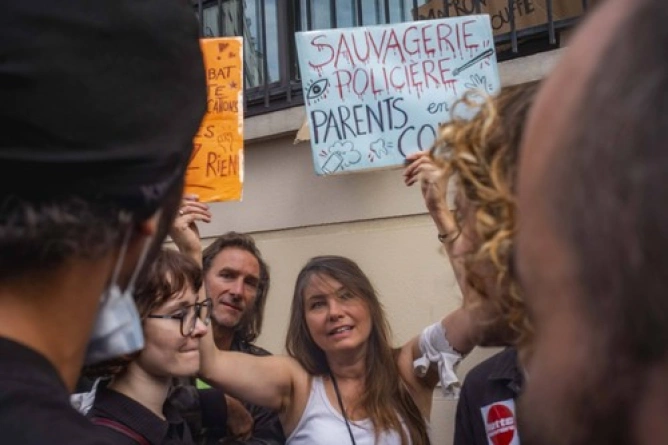
Student protests, strikes against austerity, and blockades over the past year did not come out of nowhere: they are symptoms of a France caught between public debt, exhausted public services, persistent inequalities, and a gridlocked political class.
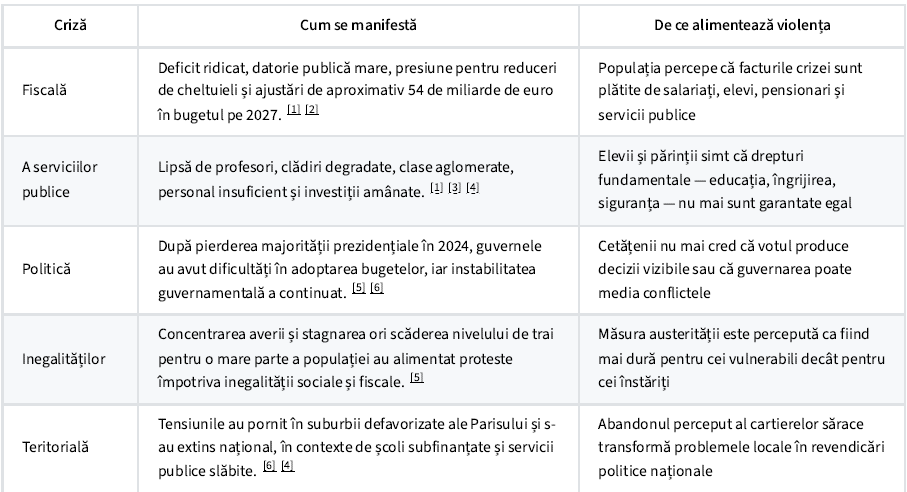
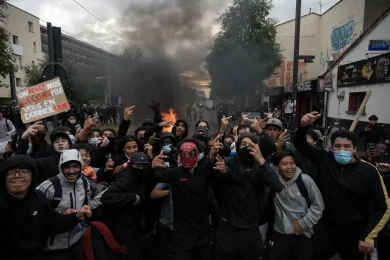
Over the past year, France has not faced a single social uprising, but a succession of mutually reinforcing crises: a fiscal crisis, a public services crisis, a crisis of political representation, and a territorial crisis of inequality. When the government announced budget cuts of approximately 44 billion euros, thousands of people took to the streets under the slogan “Bloquons tout” — “Let’s block everything” —, and the following year high school student riots showed that discontent had reached the heart of public institutions.
Violence should not be attributed to a single cause. It emerges when economic frustration, the perception of state abandonment, weak social dialogue, and political polarization converge at a time of budgetary pressure.
Why the anger erupted
The immediate trigger for the wave in 2025 was the budget proposal of François Bayrou’s government, which provided for massive cuts in public spending. The “Bloquons tout” movement, born on social media, mobilized against austerity, the freezing of pensions, cuts in healthcare, and the proposal to eliminate two national holidays.
Protesters were not merely demanding more money. They challenged a political idea: that fiscal adjustment should be carried out through cuts that, in their view, hit the least protected first. Reports and accounts from the protest period indicate that many demonstrators believed austerity measures disproportionately affected the poor.
In 2026, the spark shifted to high schools. Students in Créteil, on the outskirts of Paris, initially protested the lack of teachers and resources; the movement quickly spread through social media, and the demands included deteriorating buildings, overcrowded classrooms, teacher shortages, and school days that were too long.
This is where the central mechanism of social violence can be seen: a concrete problem — a school without enough staff — becomes a symbol of a broken social contract. Students are not protesting only for building repairs; they are challenging the idea that the state can demand effort and discipline from them without providing conditions they consider minimal for education.
The political class’s deadlock
France has a strong tradition of protest, but the current context is particularly explosive because the government has limited fiscal space and Parliament is fragmented. After allies of President Emmanuel Macron lost their majority in the 2024 legislative elections, passing budgets became a permanent political struggle, while government instability fueled the perception of a ruling class incapable of responding to social demands.
At the same time, the government must reduce the deficit and face structural pressures: rising pension and healthcare costs, an aging population, defense spending, and higher borrowing costs. Thus, every cost-saving measure becomes not merely a technical decision, but a test of the state’s loyalty to its citizens.
When social dialogue fails, the streets become the only place where many believe they can be heard. But marginal violence — arson, clashes with police, blockades — risks shifting attention away from legitimate demands toward public order, reinforcing polarization and authoritarian rhetoric.
The consequences for France
The first consequence is political: the government enters a vicious circle. It needs fiscal consolidation to calm markets and fund public services, but every package of harsh measures generates protests, instability, and difficulties in passing budget laws.
The second consequence is social: trust in institutions is eroding. When students, teachers, unions, and parents perceive that the state can no longer ensure decent educational conditions, it is not merely a wage or budget conflict, but a crisis of public legitimacy.
The third consequence is electoral. Discontent with austerity, inequalities, and government paralysis is fueling both far-left and far-right parties ahead of the presidential elections. France thus risks turning an administrative crisis into a crisis of representative democracy.
Lessons for Romania
The first lesson is that austerity is not merely an accounting operation: when cuts hit education, healthcare, transport, or social protection, they produce long-term political and social effects.
Protecting essential public services. Schools, hospitals, and public transport cannot be treated exclusively as budget-adjustment variables; their deterioration produces inequality and a loss of trust in the state.
Explaining sacrifices transparently. Without a clear social contract — who pays, how much, why, and what protections vulnerable people receive — fiscal measures are easily perceived as unfair.
Do not let territorial inequality grow. Differences between major cities and disadvantaged areas, between good schools and abandoned schools, create resentments that can quickly escalate.
Fiscal consolidation must be accompanied by credible reforms. Cuts without improving the state’s efficiency, combating tax evasion, and making visible investments in services produce only anger without lasting results.
Social dialogue is not a sign of weakness. Unions, parents, students, local authorities, and the business community must be consulted before discontent reaches the streets.
The European lesson
For Europe, France shows that welfare states must be realistically financed and responsibly reformed. Sudden or perceived-as-unfair cuts to education, healthcare, and social protection can generate protests, polarization, and political instability. And the European Union faces similar pressures: demographic aging, defense spending, the energy transition, global economic competition, and high public debt.
The challenge is not to choose between fiscal discipline and social cohesion, but to combine them. A Europe that reduces debt through blind cuts risks provoking revolts; one that postpones every reform risks losing its ability to fund social protection. France is a warning that both extremes can lead to the same destination: a more polarized, less governable society that is more vulnerable to violence.
Analysis produced with the support of Perplexity
Latest News
16:07
16:01
15:58
15:54
15:51
See more news
NEWS ON THE SAME TOPICS











.webp)


